Greetings from…Talinn, Estonia!

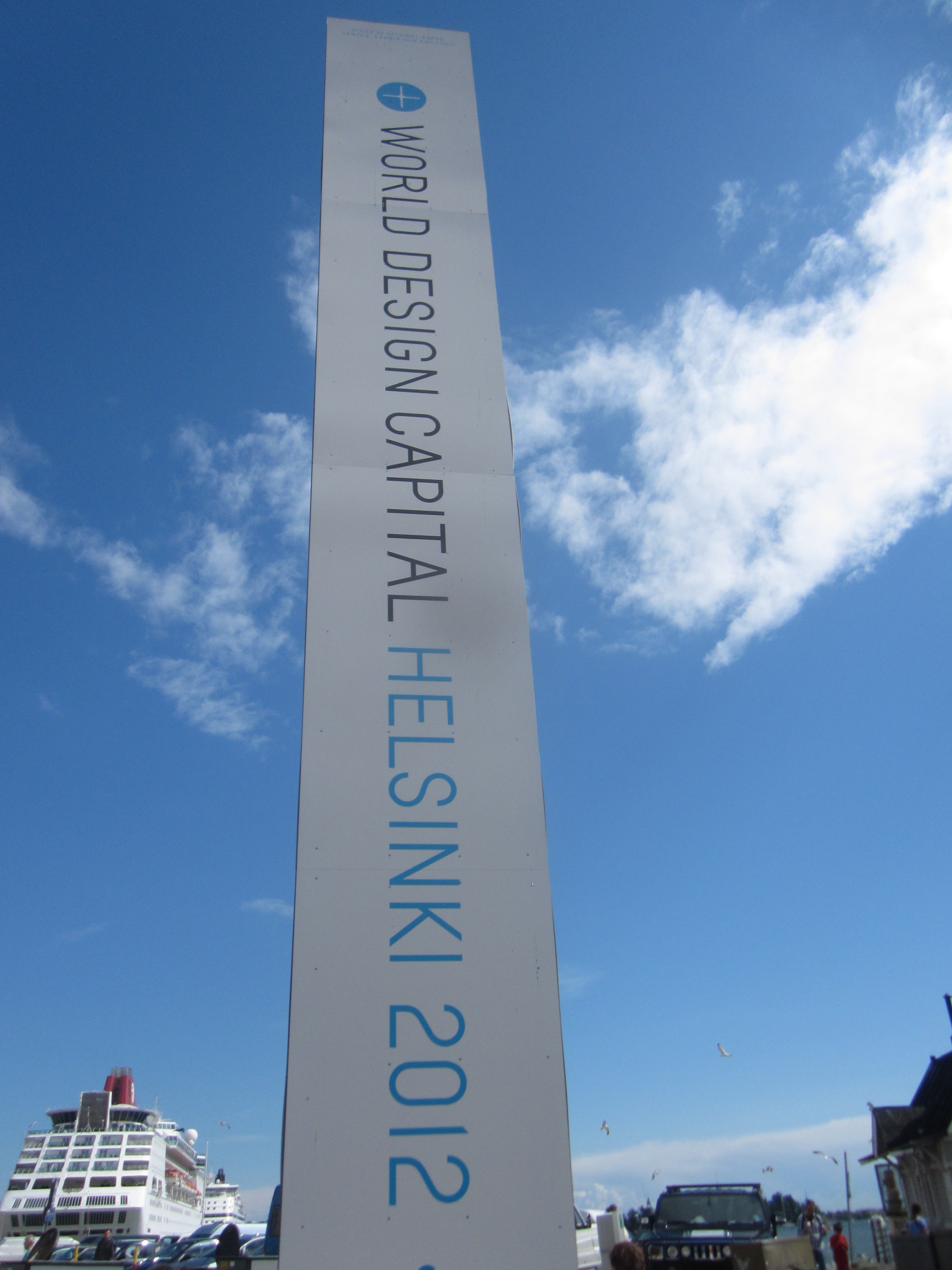
Despite having only one evening in Talinn and arriving in a driving rainstorm, while being both sick with a flu and seasick from a turbulent ferry crossing the Bay of Finland that caused 95% of the passengers to turn blue (never, ever take the Linda Line from Helsinki to Talinn), the charm of Talinn immediately reversed my mood. Most visitors, including yours truly, only know Talinn as a quaint medieval old town that seems like a slightly less touristy, slightly larger version of a San Gimignano or Carcasonne. Yet there is much, much more to this capital city of nearly one and a half million people that was Europe’s Capital of Culture in 2011 (not to be mistaken with Helsinki being the 2012 World Capital of Design…).

Arguably the most overlooked fact about Talinn is that it is home to Skype, the online global communication giant that is the savior now for worldwide businesses, journalism, and of course, study abroad students. Silicon Valley may be the heart of online giants like Facebook and Google, but it is important to give some credit to not so little Talinn. Talinn is much, much more than old medieval bell towers, orthodox churches, candle lit taverns, and winding, narrow streets that guarantee to get you lost at least once during a visit. The Estonian National Opera happens to be one of the most impressive  opera houses arguably in Europe, with a world class company to perform inside. Even the modern rock musical Spring Awakening performed in Talinn this summer. The modern city center provides a dramatic contrast to the Old Town’s historic sights (Toompea Castle, St. Alexander Nevsky Cathedral, St. Olaf’s Cathedral, Town Pharmacy, Town Hall…). A visit to both areas of the city allows for a full understanding of the scope of Talinn’s recent rise.

Old Town Hall

Shockingly despite the attempts of Portugal, Spain, and Greece to drive down the value of the Euro and Europe’s economy with it, Estonia recently switched to using the Euro. From the first quarter of 2012 to the second quarter, the country’s unemployment rank declined over a whole percent from 11.5% to 10.2%.

Yet, during my visit Talinn still seemed somewhat free of tourists in the heart of the summer travel season. It was a shame to dine at restaurants that could thrive in Paris or New York, with only three to four tables occupied in each. These were not off the beaten path discovery restaurants either.Continue reading “Greetings from…Talinn, Estonia!”

Monday’s Neighborhood: The Plaza, Healdsburg, CA

At the convergence of four different major wine growing regions, Healdsburg can be considered Wine City USA. And yes, none of those wine regions are known as the Napa Valley. It is at this not-so-quaint feeling quaint town where the Alexander Valley to the north, the Dry Creek Valley to the west, the Russian River Valley to the south, and the Sonoma Valley to the east/south east (really the Sonoma Valley is further south of Healdsburg, but the Chalk Hill and Knights Valley appellations are often considered part of the Sonoma Valley).

None of these region boasts the fame and the tourist traffic of next door Napa to the east. At least not yet. And that’s a good thing as Martha would say. This is prime zinfandel territory, with some of the country’s premier renditions coming from the likes of Unti and Forchini. Further west is the Sonoma Coast, the prime Pinot Noir rivals to the Willamette Valley and Santa Ynez Valley. I’d call a draw between Skewis Pinot Noir of the Sonoma Coast and Penner-Ash up north in the Willamette for the year’s most impressive Pinot Noir.

So of course, there is good wine to be found at the vineyards all around Healdsburg. There is also plenty of excellent wine, both local and from beyond, to be found right in the center of town, along with a shockingly high number of wonderful places to eat for a town of barely 11,000. It almost seems like there is one restaurant or winery for each of the town’s residents.

The closest comparison for Healdsburg would be Yountville over in the Napa Valley. Both are tiny towns with a beyond enviable population of high caliber restaurants. Yountville has The French Laundry and Thomas Keller’s other restaurants. Healdsburg has Douglas Keane’s imaginative luxurious cooking at Cyrus (for the moment…that may end very soon due to a landlord issue). Yountville has Bouchon Bakery. Healdsburg has the Downtown Bakery & Creamery, along with Flying Goat Coffee. Yountville boasts Bottega from Michael Chiarello. Healdsburg is home to Scopa and Scopa’s little sister, Campo Fino. Both towns obviously are focused on the food and wine industry and the discerning palates of the tourist crowds the industry draws. Yountville has more of a classic, rustic small town feel, while Healdsburg certainly strikes you with its recent glossy re-model juxtaposed to the older sleepy days.

Does Yountville have a central plaza or destination worthy craft cocktail bar or Yucatan restaurant? How about one of the country’s top craft breweries? No. Healdsburg does.Continue reading “Monday’s Neighborhood: The Plaza, Healdsburg, CA”

Greetings from…Helsinki!

A century from now, 2012 may turn out to be a landmark year for the capital city of Finland, Helsinki. Indeed, who knew that Helsinki is so stylish? Stylish to the level of three years ago being voted the World Design Capital for 2012. Who exactly votes on such a name is exactly as vague and contentious as how the food community vigorously debates the merits of Noma and El Bulli being crowned in the past few years as the world’s best restaurants. Stockholm has the sparkling architecture and beautiful blondes (and scenery). Copenhagen has its eccentricities, the Little Mermaid, and  a continually evolving world class dining scene. Oslo is expensive. Helsinki? Well, Helsinki is très chic.

It’s hard to call Helsinki the forgotten one amongst Scandinavian cities because Finland isn’t even always considered part of Scandinavia. Prior to a few years ago, I mainly knew Finland because it is the home of hockey player Teemu Selanne. If “Teemu” is not the most fascinating name in the world, then please send another suggestion. And don’t even get me started on what a stunning word “restaurant” is in Finnish: ravintola.

Even the Finnish language is stylish, using far more double vowels, “v”‘s, and “j”‘s in peculiar places than you have ever seen. Finland gets mighty cold most of the year as you’d expect being so far to the north. In the summer, the sun may not ever set. Now it’s 2012 and the world’s design capital has done its part to celebrate under the bright lights and on the runway. Helsinki’s population is joining the excitement, volunteering at tourist booths to help clueless visitors such as yours truly, and dressing up each day with a subtle nudge towards what is in vogue, yet also comfortable for the few days of summer this part of the region enjoys. The design forte of Helsinki actually isn’t in the fashion sense. Yes, the Kluuvi shopping district between the train station and the Esplanade boasts window after window of designer clothing creations. The heart of the Design District lies in the quieter streets, such as Bulevardi and Fredrikinkatu, just west-southwest of the city center.

There, the design is for your home and your office. Furniture never looked so sharp. The concepts are less minimal than what you usually think of with Scandinavian designs. Like the city’s fashion sense, nothing is irrational. Yet there is a desire to lean towards creativity and flair, even eloquence at times.

Luomo’s Tour of the World

Of course major design pieces also set Helsinki apart: Eliel Saarinen’s Central Station guarded by a pair of giants, outside and on the canvasses inside the Kiasma Modern Art Museum, the new Helsinki Music Center, and the still highly acclaimed for some reason beyond me, Alvar Aalto’s now dull appearing late 60’s design for Finlandia Hall. Many of these can be found on what I termed the Architecture walk, all in a row along the Töölö Bay Park (can I buy another ö please?). It’s also the Helsinki version of New York’s Central Park Reservoir for joggers of all shapes and sizes. At the opposite end of the park from the train section is the Olympic Stadium. Used for the opening and closing ceremonies of the 1952 Summer Olympics, the stadium’s tower boasts a terrific panoramic view of the city. It provides you the opportunity to understand just how small Helsinki is, how few tall buildings there really are, and how much water surrounds you, with the vast Gulf of Finland beyond.

With this new found energy, some of the world’s most stylish people and boutiques, and being the capital of the country with the world’s highest rated public education system (more on that later), how does the dining scene of Helsinki match up?Continue reading “Greetings from…Helsinki!”

Wine of the Week: MJA Vineyards Serene Cellars 2010 Sauvignon Blanc, Santa Cruz, CA

A funny thing happened on the way to the 2011 Sauvignon Blanc from MJA Vineyards. The 2009 version came out very peach and apricot forwards, tasting almost as if it more of a Viognier mixed with some Roussanne to round it out. The 2010 Sauvignon blanc sports plenty of fruit– that would be one of the most grapefruit forward wines I have ever encountered. And that’s not a bad thing as the grapefruit blends beautifully with some slate and even lint and lime for a fascinating sensation. Then the 2011 Sauvignon Blanc…well, it tastes like a Sauvignon blanc. It’s really a blend of sweet fruit in 2009 and the grapefruit of 2010.

It’s the 2010 Sauvignon Blanc, though, that thrilled me most. I eat anything, but I do squirm when faced with plain grapefruit. Why not just eat an orange? This is a beautiful wine, flowing with not too sharp minerals, the obvious grapefruit presence, and hefty floral dose. The combinations bring to mind fields of spring, yet also has a bright, tropical touch that could be the heart of a long, summer day. Chilled, this wine was meant for Labor Day weekend.

Immediately it transported me back to a Kim Crawford Marlborough Sauvignon Blanc, except with slightly less stone to the palate. This bottle is flexible, as a refresher, or a perfect compliment to grilled halibut or a simple pasta with basil-heavy pesto.

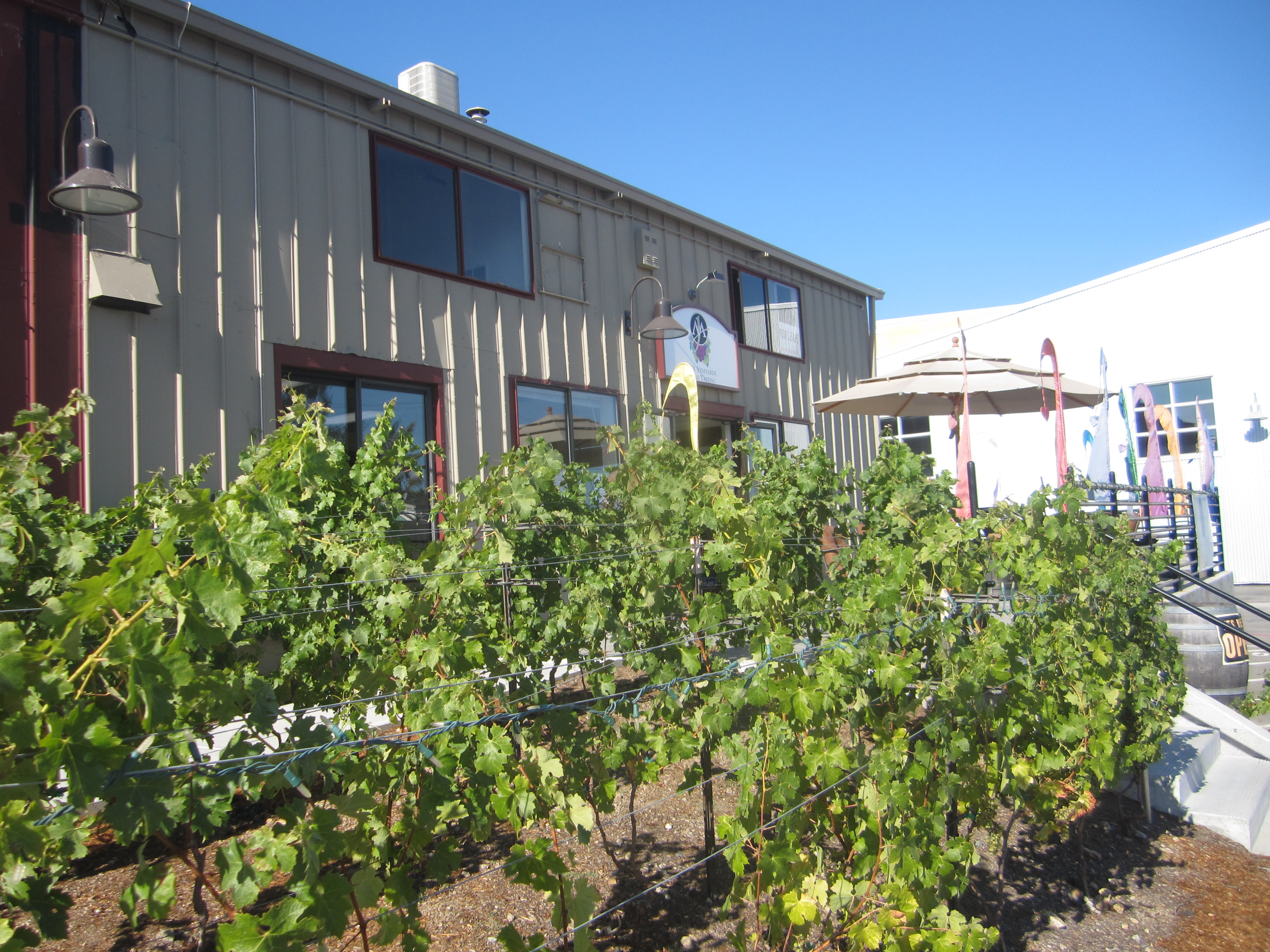
That tropical dosage harkens back to the namesake for MJA Vineyards…Marin Artukovich who lives part of the year in Hawaii and grows and sells Kona coffee beans, in addition to wines from the Napa Valley. Talk about a perfect duo- Hawaii coffee and Napa wines. MJA’s grapes mostly grow in the Napa Valley, then are sold under either the Serene Cellars or Davine Cellars at his “hang loose” feeling tasting room in Santa Cruz, part of a collection of tasting rooms in an industrial part of the city, including Bonny Doon Vineyards.

Only at MJA can you buy Kona coffee beans, munch on chocolate covered coffee beans when tasting the Cabernet Sauvignons from Howell Mountain in the Napa Valley on the tasting room patio (complete with fireplaces, a great thing in Santa Cruz!), and enjoy a beautiful Sauvignon Blanc that shows the varietal need not be the boring grape of the wine world.

Mahalo nui loa for that!

Greetings from…St. Petersburg, Russia!

While visiting St. Petersburg, I happened to be (attempting to read) reading for the first time Dostoevsky’s imposing novel on human honesty and character, Crime and Punishment. Amidst the glittering canals and thousands of camera toting tourist groups during the end of the city’s famed annual White Nights Festival, I kept imagining St. Petersburg in Dostoevsky’s gritty world. At every street corner Raskolnikov would seem to stroll by and give me his stare of anxiety. For those who have read the novel, that means it’s time to sprint away as fast as possible.

Fortunately, the literary world is the literary world. St. Petersburg is indeed one grand city. When I announced my intention to visit the Federation earlier this year, my friends and colleagues who had been to Russia recently or even back in the old USSR days said there is no reason to visit. Except for St. Petersburg. St. Petersburg is the western most, culturally speaking, city in Russia. If there is a city that seems more progressive in Russia, it has yet to be found, most likely in distant Siberia. When you visit St. Petersburg after spending time in Moscow, you understand what everyone is talking about. It’s a more extreme case of visiting the calm splendor of Florence after the chaos of a Rome or Naples.

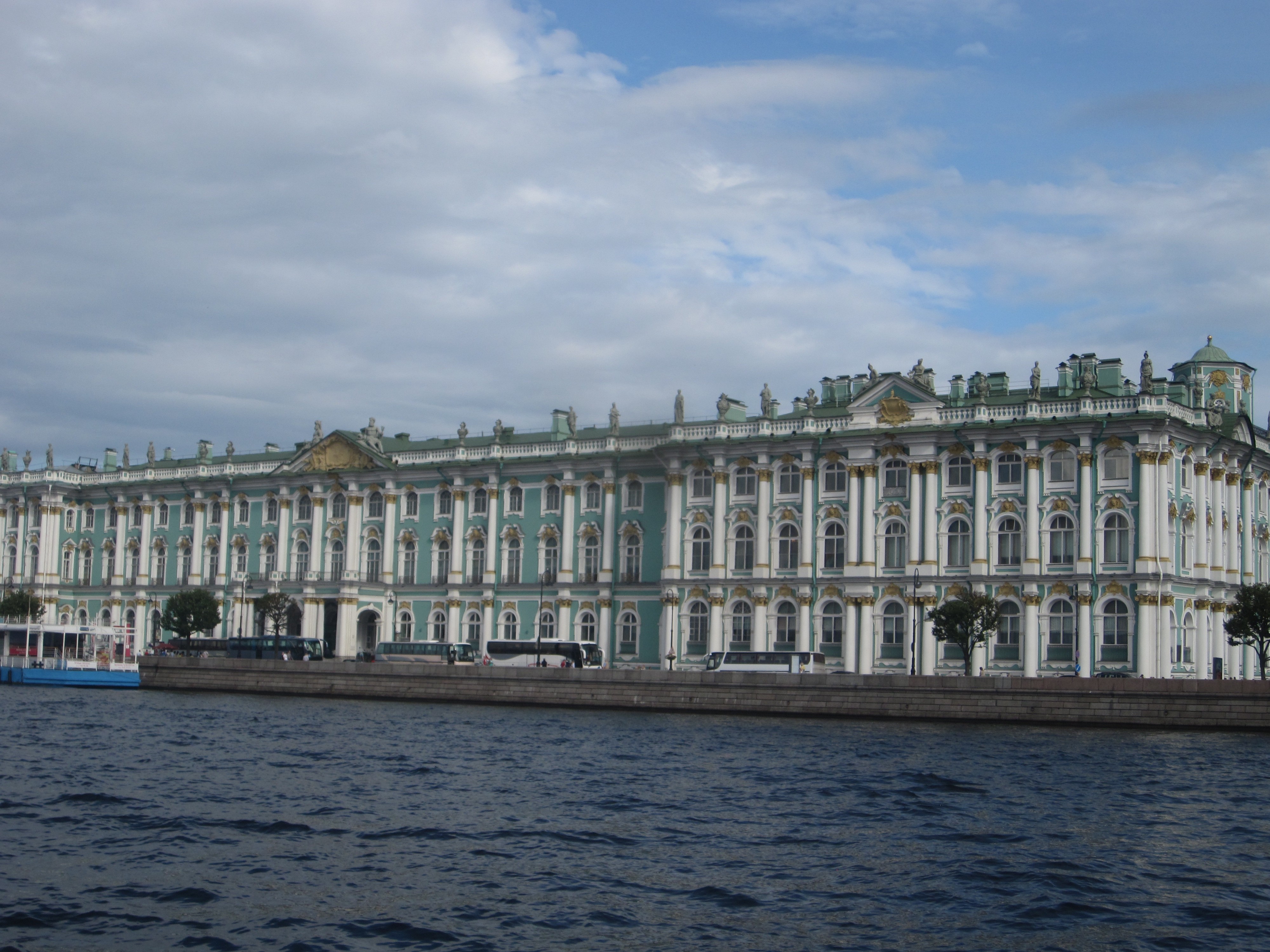
The Hermitage, along the Neva River

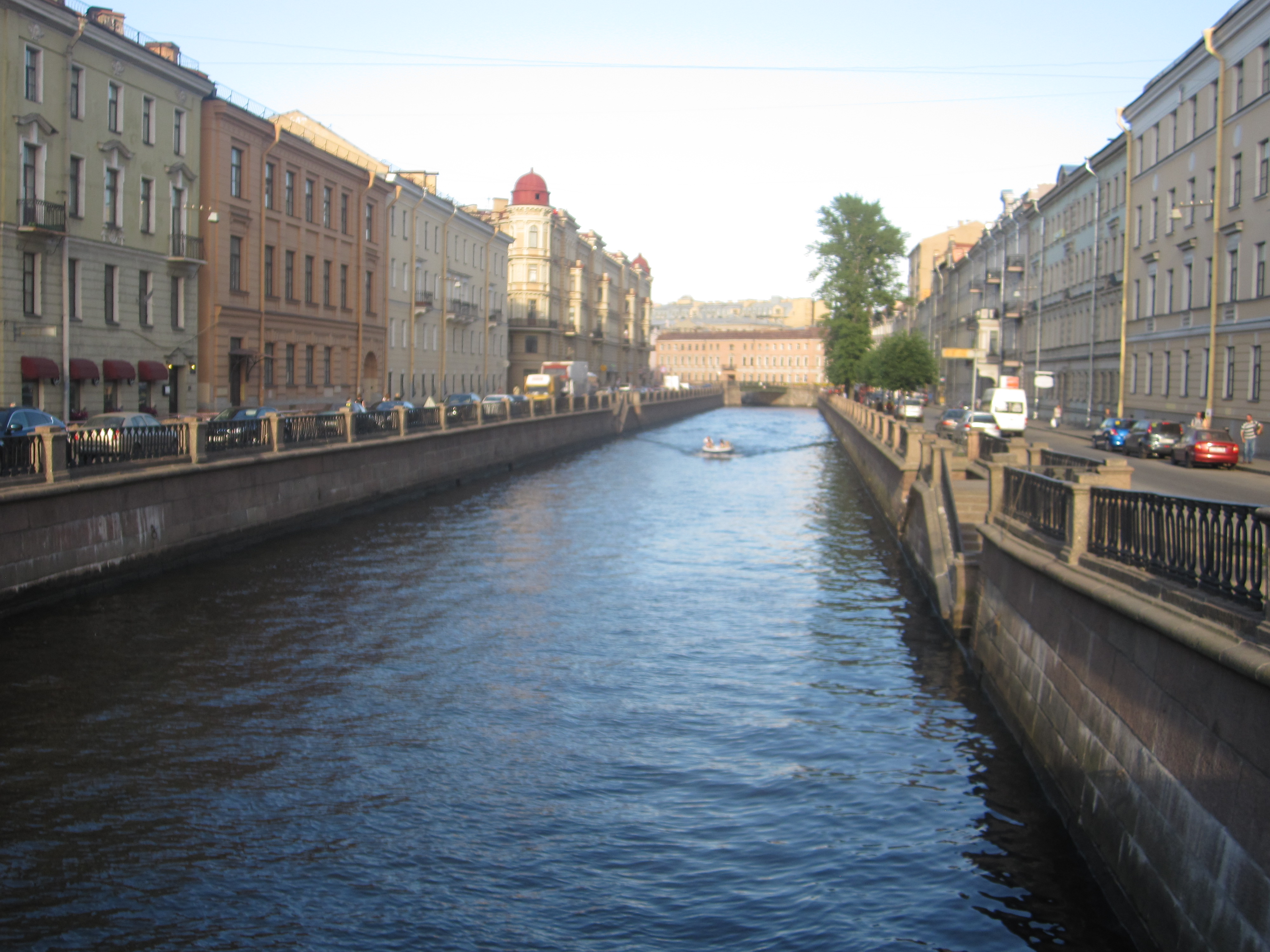
St. Petersburg is many cities put together. With its dozens of canals weaving all around the city, St. Petersburg is one part Venice. It is one part Amsterdam too with those canals, a heavy bike culture, and a ring-like street design. Paris certainly comes to mind with the striking architecture, the “Champs Elysée of Russia” (The Nevsky Prospect), and its dramatic riverside setting, where couples stroll along the Neva, much like Gene Kelly and Leslie Caron did along the Seine. Then there are those old Soviet scars here and there, more so away from the Neva River area. Those remind you more of Moscow, as does the hyper-efficient metro system with the stations so deep you could swear you reached the center of the earth (Stalin’s intention was for metro stations to be nuclear bunkers). Despite no longer being the capital of Russia, St. Petersburg would fit right in as a prominent Western European capital city.

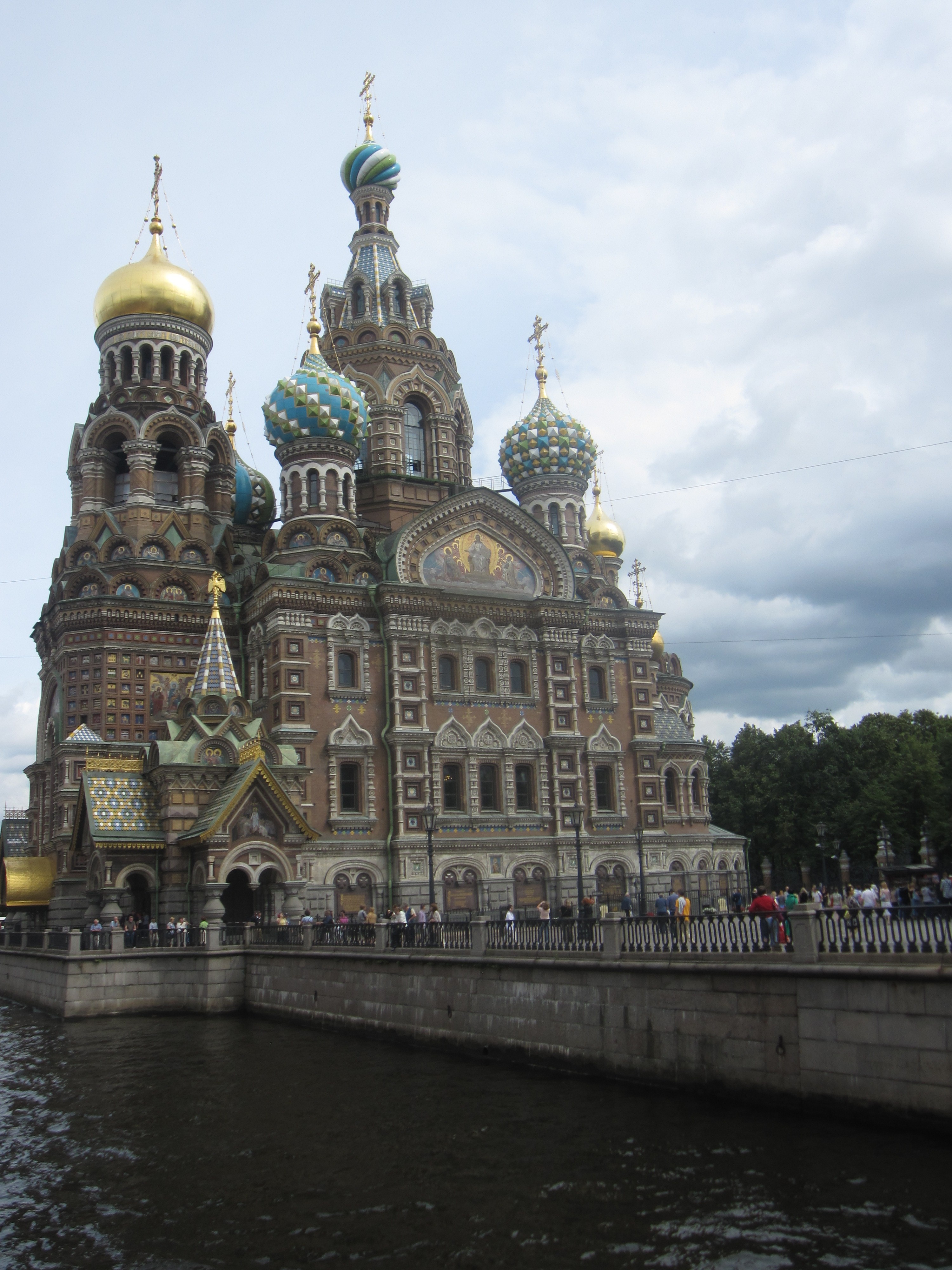
Church of Spilt Blood

Culturally speaking, St. Petersburg is every bit on par with the premier destinations in Europe. You of course have the Hermitage, home of da Vinci’s Madonna Litta, and roughly 150,000 other works on display, including some 24 Rembrandts. Just like the Louvre, The Hermitage is housed in a former palace, here the stunning sky blue painted Winter Palace. The Hermitage can only be discussed in the same sentences as the Louvre and Prado for European equivalents. Stunning bridges abound across the canals and Neva abound. The same with cathedrals, especially the Church of Spilt Blood and Saint Isaac’s. The world’s second most important ballet theatre, the Mariinsky, is in town, where yours truly witnessed a spectacular Stravinsky double bill. Arguably the world’s most impressive summer arts festival, The White Nights Festival, takes place each late June to July here. Along the Gulf of Finland resides the Versailles of Russia, Peterhof, reached by a forty minute hydrofoil boat trip from the Hermitage.

When Peter the Great founded St. Petersburg in 1703, he set out to make Europe’s grandest city. It might not be there quite yet over three centuries later. Still, a stroll along the Neva or through the Summer Garden proves you are in one of the world’s premier cities.

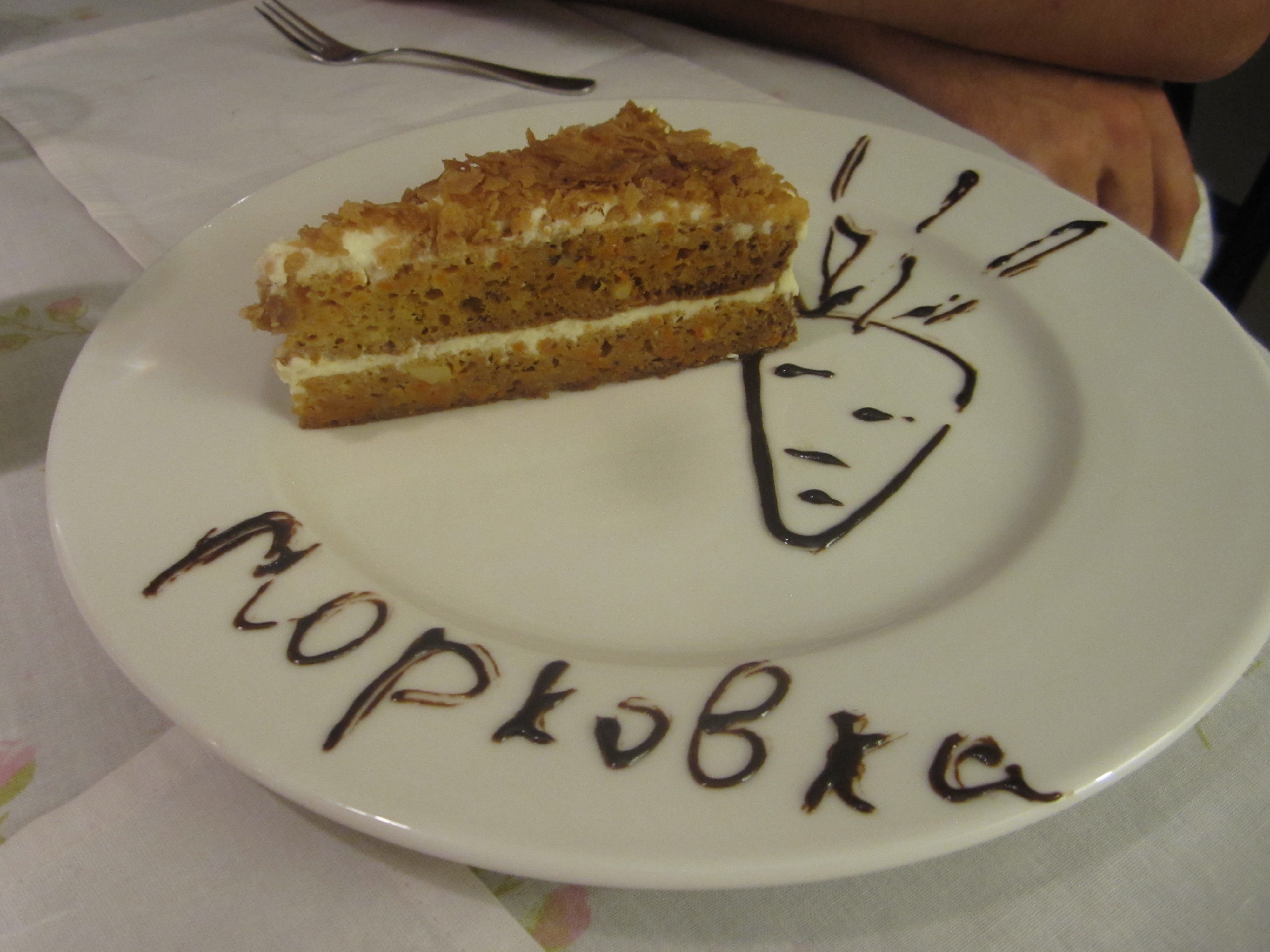
You guessed it. Teplo’s (dry) Carrot Cake

But is St. Petersburg one of the world’s premier cities for dining, like it is for the arts?

Continue reading “Greetings from…St. Petersburg, Russia!”

Plat du Jour: Wednesday August 29, 2012: Noteworthy End of August Dishes From Texas BBQ to Flour + Water

It has been ages since we last presented a dishes of the week segment. Amidst the travels around the U.S. and Europe, here are some recent highlights from San Francisco. This being the week before Labor Day, how about some good ol’ Texas barbeque too from the capital of bbq in the Lone Star State, Lockhart, Texas.

Farallon: Pan Roasted Halibut with Lobster Brodo, Blue Lake Beans, and Heirloom Tomato Raviolis

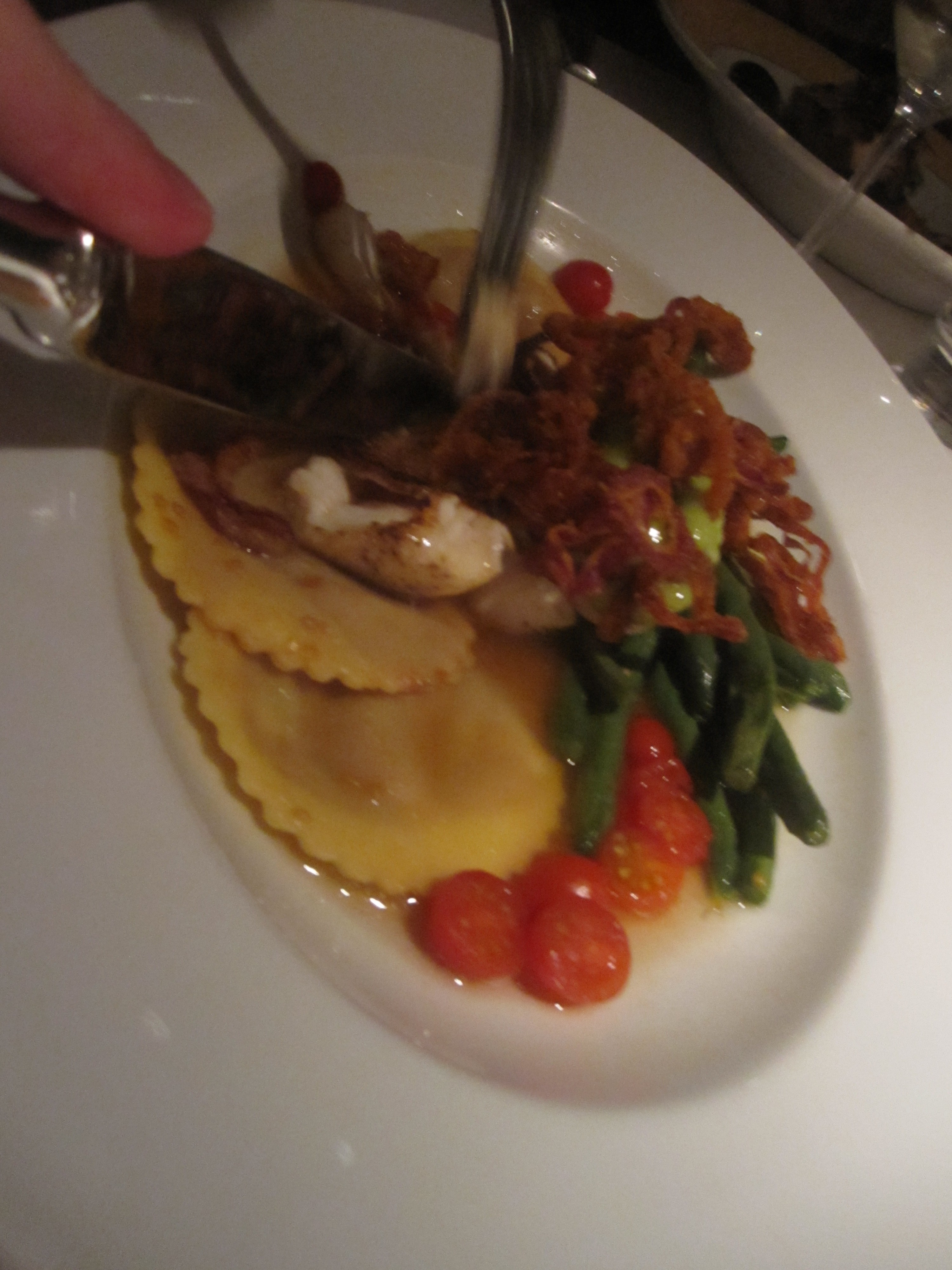
Pan Roasted Alaskan Halibut with Heirloom Tomato Ravioli, Blue Lake Beans, and Lobster Brodo

Amidst the aquatic splendor of Pat Kuleto’s oceanic kingdom of a restaurant design, Mark Franz crafts some of San Francisco’s most memorable seafood combinations. Too often halibut is overcooked and lobster broths barely taste of lobster. Here the, halibut is spot on moist, the lobster broth transports you to a picnic area on the Maine coast, and summer abounds in the heirloom tomato filling for ravioli, accented by halved cherry tomatoes. This should be a signature dish for Farallon.

Continue reading “Plat du Jour: Wednesday August 29, 2012: Noteworthy End of August Dishes From Texas BBQ to Flour + Water”

Monday’s Neighborhood: Westheimer, Houston, Texas

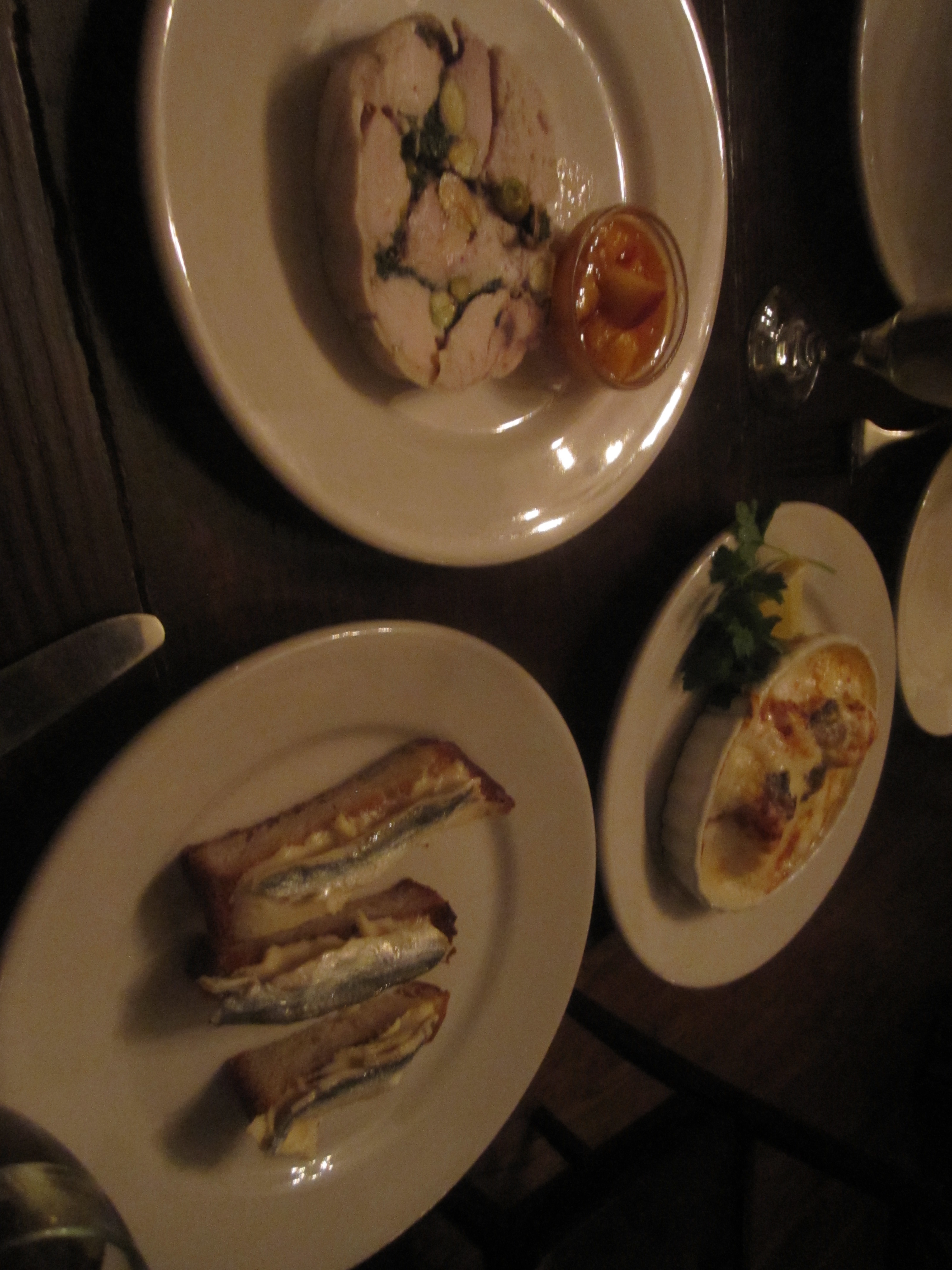
Clockwise from Top Right: Feast’s Scallops, Exmoor Toasts, and Chicken Galatine with Peach Chutney

For those of us who meticulously hand select specifically where we dine and drink when visiting a new city, we often don’t even take into account where a restaurant or bar actually is located. I happened to select Hugo’s, Feast, Anvil, and the Hay Merchant as destinations to visit.

I had no idea that they not only were in the same neighborhood, a bit to the west of Downtown Houston, but they all were on the same street!

Westheimer Road is a narrow, winding, pot hole ridden four lane road, that is far more important a thoroughfare than its appearance would make it seem. The roughly mile long stretch runs through the Montrose neighborhood of Houston. It’s residential everywhere with Downtown to the east, the Galleria and River Oaks to the west, and Rice University, Museum District, and the Medical Center District all to the south. The being sprawling Houston, nothing is walking distance. Especially in humid 98 degree heat.

Hugo’s

Fortunately, the residents only need this one street. Westheimer boasts one of the country’s most impressive, intensely concentrated stretches of important bars and restaurants. These are national headliners, not just Houston headliners.Continue reading “Monday’s Neighborhood: Westheimer, Houston, Texas”

Greetings from…Bergen, Norway!

Edvard Grieg, the famous son of Bergen

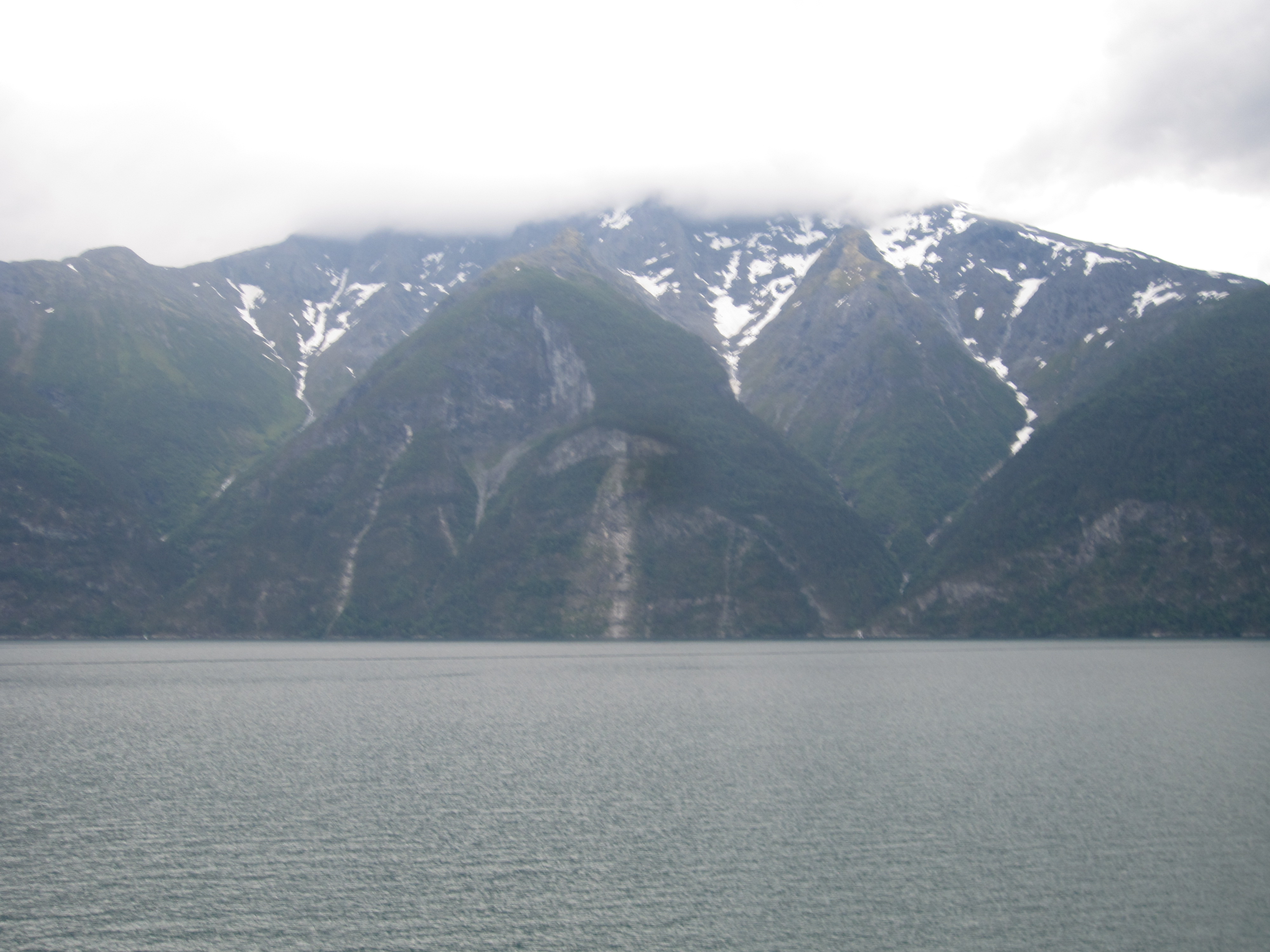
Almost directly west of Oslo some eight hours by curvy mountain road or an equally windy journey by train, Bergen is Norway’s second largest city and the gateway to one of the world’s magical natural treasure regions: Norway’s Fjord country. Whether it’s the expansive Sognefjord and its claustrophobic narrow side fjords or the equally impressive, more majestic Hardangerfjord, every where you look everything is stunning and there is water everywhere. The drive around the fjords to and from Bergen is a non stop adventure of tunnels, twists, turns, waterfalls, breathtaking vistas, mountain passes, goats on the wall, and then everything else an amusement park might throw into a ride. Except this is the real deal. Yes, Norway is expensive and the tolls for the roads are everywhere. However, in order to construct and maintain these roads for our benefit, tolls are needed. And they seem to spend that money wisely.

Obviously, the fjords are the highlight here in Western Norway. You’ll eat well, if expensively exploring the fjords. One dinner in Ulvik was a satisfactory buffet spread at a most scenic hotel, with the price tag of a high end dinner in Paris for smoked salmon and edible steam table cuisine. A lunch in the tiny town of Vik (not right next to Ulvik…) presented the opportunity for a needed capuccino and to taste the region’s cheese: Gamalost. A dark orange skimmed cow’s milk cheese aged roughly a month, Gamalost is very stiff and chalky with a not altogether pleasant, sour taste.

But there is some special food and certainly special beer to be found in Bergen. With a metropolitan population at 391,000, much of the dining in this city focuses on, you guessed it, the tourists. The tourists come by the masses every day to see the fjords or on cruise ships the size of Bergen for day trip stop. Bergen has some lovely parks and is the home town of Edvard Grieg.

The Sognefjord

That usually is an asterisk for the tourists who stick to the funicular that takes you up a mountain for a knockout panoramic view of Bergen and the Bergen Fjord, and to the ticky-tack wharf area that makes Pier 39 seem designed for locals. The wharf area, known as Bryggen, is where you can sample fresh seafood not prepared with care in the fish market, then cross the street where McDonald’s and various Irish pubs await your arrival.Continue reading “Greetings from…Bergen, Norway!”

Restaurants: Farallon, San Francisco

What happened?

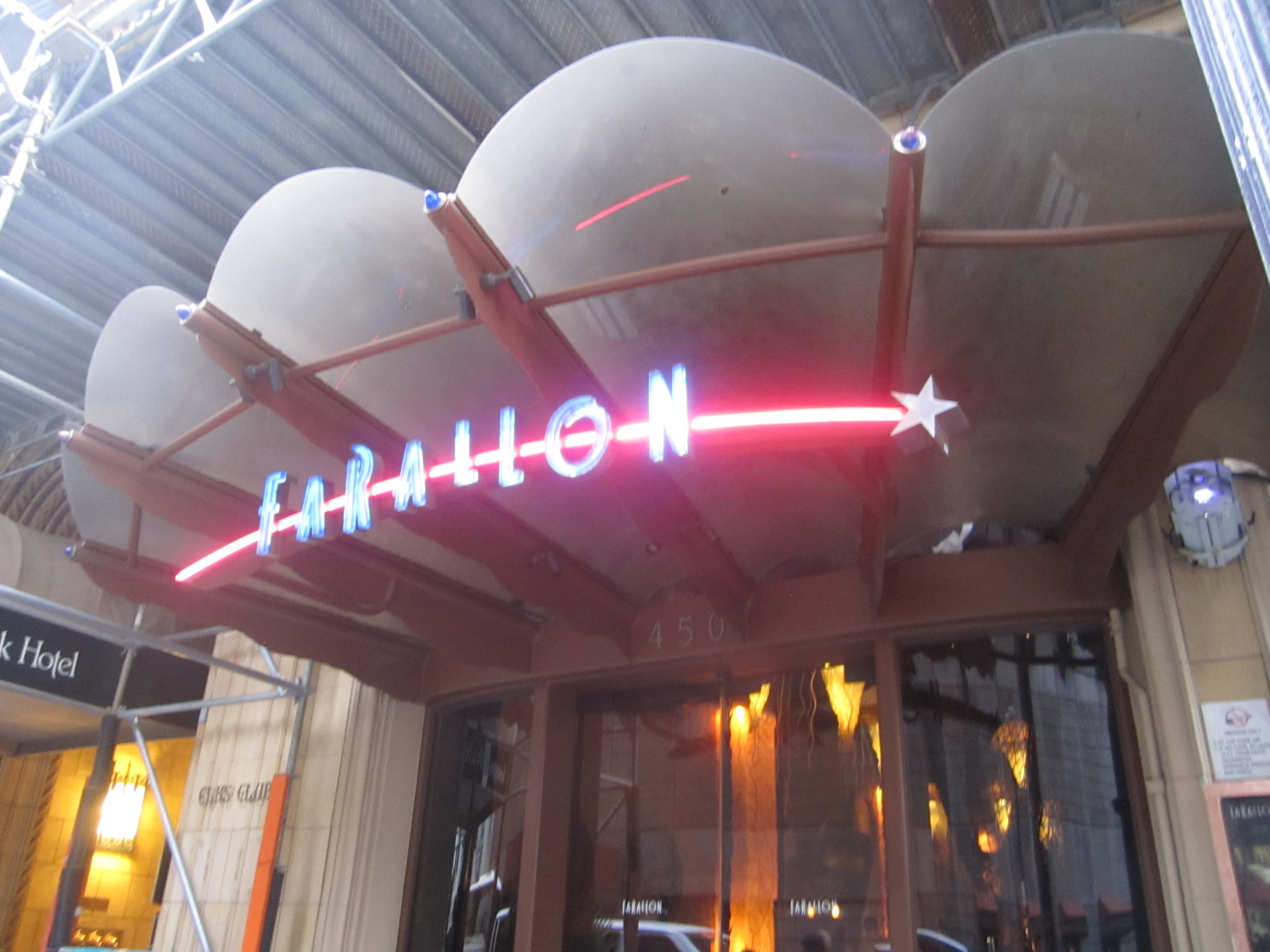
That’s all our table could say at the conclusion of a recent dinner, shrugging our shoulders and staring into the marine fantasy world that is San Francisco’s ever popular Farallon Restaurant. The powerhouse trio of architect Pat Kuleto, chef Mark Franz, and pastry chef Emily Luchetti opened Farallon in 1997, and despite more recently opening a duo of sleeker restaurants along the Embarcadero (Waterbar and Epic Roasthouse) and undulating waves of critical praise then pans then praise (how fitting for such an oceanic minded restaurant…), Farallon is still performing to a packed house night after night.

And what a house it is. Kuleto’s stunning, whimsical setting steals the show no matter how impressive Franz’s creations can sometimes be. Those plates from Franz can actually be spectacular–the chef could teach the definitive course on caramelized scallop perfection, as soft as the finest silk scarf.

But wow, what happened? I’m talking about that key component to a restaurant that diners and restaurateurs sometimes look the other way at, even if this is the hospitality industry after all.

Continue reading “Restaurants: Farallon, San Francisco”

Cocktail of the Week: Margarita from Mansion del Rio, San Antonio

A margarita on the San Antonio Riverwalk as the cocktail of the week? There goes any thoughts of Trev’s Bistro’s high standards.

Nope, this is the real deal. Margarita perfection can be found on the banks of that Americana touristy extravaganza known as the Riverwalk. Yes, Riverwalk cocktails tend to be more like what your fraternity parties served back in the day. Well drinks often are considered the high brow drinks.

Step out of the blazing 100 degree Texas sun into this formal yet relaxed oasis inside the Omni Mansion del Rio Hotel, one of the old hospitality lions of San Antonio. The margarita can be found both at the hotel’s bar and in the Las Canarias restaurant with beautiful Riverwalk views, yet a world away from the Riverwalk’s atmosphere.Continue reading “Cocktail of the Week: Margarita from Mansion del Rio, San Antonio”