Tuesday Project: Holzheimer Chocolate Cake

Every family has their special recipes passed down generation to generation to generation. We certainly have a few dishes passed on from the two or three past generations, but none have lasted as long, or continue to endure as strongly, as the Holzheimer Chocolate Cake. It’s my great-great grandmother’s chocolate recipe that now is the official family birthday cake. It’s not a birthday celebration without it. Even when living in France, my family brought me a slice of one they baked (of course they kept 3/4 at home and enjoyed it themselves…).

The cake is very simple, yet far moister and a bit richer than most traditional chocolate cakes. It’s two twin cake mixes that sandwich a layer of chocolate frosting with more chocolate frosting coating the top and sides of the cake. Then, go crazy with icing decorations.

For the cake: 2 cups brown sugar

1/2 cup (1 stick) butter

1/2 cup hot water

1/2 cup buttermilk (1/2 cup milk with 1/2 tsp vinegar)

2 cups unsifted flour

2 eggs

2 unsweetened chocolate squares (2 oz.)

1 heaping tsp. baking soda to mix into buttermilk

Start by greasing 2 9 inch layer pans with canola oil and a very, very thin layer, almost a dusting, of flour. Cut the stick of butter into small slices, then cream the butter with the brown sugar. At the same time, on low-medium heat, melt the chocolate in the hot water. Be careful not to over melt the chocolate to the point of burning and sticking to the sides of the small pot.

Once all the clumps of butter are gone, add the eggs and mix. Then add the chocolate mixture. I noticed after mixing the chocolate into the butter-sugar mixture that a small swirl of the butter-sugar mixture refused to go away, despite having the blender on “cake mix” for three minutes. Don’t worry about it if that happens, it seems to be more an appearance issue than recipe issue.

Sift the two cups of flour after measuring and place it on some wax paper. In four stages, alternate between adding the flour and the buttermilk. As always with flour, lower the blender speed to avoid a flour storm.

After this five minute or so process, the batter should be ready to split into the two pans. A little hint when taking the beaters out of the mixture– slow the blender speed gradually while slowly lifting the beaters out of the mixture. The dishwasher appreciates it (though it’s less batter for them to sample!).

Bake for 25-30 minutes at 350, careful not to make the batter dry!

Then let the cake sit for a good six hours minimum before adding the frosting.

The frosting is so easy, it’s called the “easy chocolate frosting.”

Melt four squares of unsweetened chocolate (like Baker’s, the equivalent of four oz.) with three tablespoons of butter. Meanwhile, sift 3 cups of confectioner’s sugar and mix it with 1/8 teaspoon salt, 7 tablespoons of milk, and 1 teaspoon vanilla.

Add the hot mixture to the bowl of the dry mixture and mix the two together thoroughly with no clumps evident at all. Let the frosting rest for at least 30 minutes, even an hour, giving a quick stir here and there to keep the frosting good and loose.

Then with a pastry cream spreader knife (my name for the utensil, not sure of the real term), cover the top of one of the cake batters. Then place the other cake batter on top the frosting, and spread the chocolate frosting all over the top and sides of the cake. Treat yourself to a snack with any leftover frosting.

Do some grand icing decorations, the candles, and there’s the perfect birthday cake! Or…a perfect chocolate cake for any dessert.

Now five generations have enjoyed this in my family and the next five certainly will too!

Plat du Jour: Tuesday April 17, 2012: Third Wave Coffee

On The Subject of Third Wave Coffee Roasters and Cafes

It’s always fascinating to see the various waves of dining and drinking trends coming and going in America’s metropolitan centers. Some chef in New York starts making pork belly a hit and then every neighborhood bistro from La Jolla to Pittsburgh has a riff on pork belly. A bartender starts making his own syrups and fruit juices in Portland, then the term mixologist is born and used nationwide. The same can be said of course for a myriad of trends: farm to table/local/sustainable ingredients, upscale pizza, upscale burgers, gastropubs, communal tables, izakayas, pop up dinners, anything with the word “artisan” in it, the list goes on…

However, one of the most striking trends and least talked about, is the “third wave” of coffee movement the past few years, that has had astounding exponential growth just in 2011-2012. A quick little primer on the waves of coffee movements: the first was in the early 20th century when Folgers and Hillstone Brothers in San Francisco started serving coffee…not good coffee, just coffee. Peet’s in Berkeley and Starbucks in Seattle in the 70’s launched the second wave, which now one can find in any mall or street corner of the U.S. It’s a wave that brought “artisan” coffee into the American mainstream and of course your triple soy macchiato lattes with low fat whip into our language. The third wave has no definite starting place or time. It really has been the past decade where young baristas in Portland, Seattle, L.A., San Francisco, Chicago, New York, and all across the country started challenging the status quo of what coffee should taste like. Instead of being a passive drink, it should be a captivating one, whether drip coffee, espresso shots, espresso drinks with foam art, or even challenging that iced coffee need not iced cubes to dilute the beverage.

These baristas started putting the care into their bean sourcing that an expert winemaker does into selecting the particular grapes for a particular vintage of a particular wine. Except coffee bean sourcing is on a much, much massive scale than wine grape sourcing. Show up at a third wave coffee bar like the outstanding Sightglass in San Francisco’s SoMa and the beans will come from Uganda, Bolivia, Madagascar…you name it. Third wave coffee bars often sport coffee filtration systems, like the one for the Kyoto iced coffee at Blue Bottle in San Francisco’s Mint Plaza, or the drip coffee filter at Balconi in West L.A., where the machine belongs more in a lab at M.I.T. than a cozy neighborhood cafe.

There are a couple requirements for a third wave coffee cafe with the first being that you roast your own beans. Don’t just roast your beans, roast them by hands in a machine easily visible in your main cafe. It’s the same effect as an open kitchen in a restaurant. Customers today want to see the source. At the same time like with produce, a shorter roaster to cup time for the bean, the more vivid the coffee flavor will be. That is the other main requirement for third wave coffee: a much stronger, bolder flavor bean than anything the generation before would recognize. These coffees are the Dogfish Head-jolly Pumpkins of craft beer and the wines created by daring, meticulous winemakers throughout the country today. Starbucks is Two Buck Chuck and Coors. The third wave coffee roasters present big, brash, but fully rounded flavors that demand attention like how Eric Asimov would approach a wine. The espresso at Four Barrel is a tad sour and nutty, while at Blue Bottle there is more stone fruit and cardamom hints…third wave coffee is a more affordable, approachable way of wine tasting. Unlike with wine, you can taste in the morning and all day too!

Then there are the unofficial requirements of a third wave coffee cafe, which may explain why much of the population over the age of 30 or so still doesn’t know much about the changes in coffee culture. The wardrobe of a cafe is skinny jeans or “jorts” with flannel shirts. The music of cafes switches between house, ska, Adele, Regina Spektor, and plenty of alternative bands you’d find at Coachella. There is no car parking, but plenty of bike parking. There is probably wi fi and a few dogs chilling on the floor. There is no menu per se, usually just a listing of where the beans were sourced. Of course you’ll pay on an ipad.

What I am describing is of course how the third wave coffee movement is directly related with the hipster culture seen nationwide. Decades from now we food historians will look back on this movement and see exactly how the two became inter-connected. How did biking become related to latte art? There is some reason I believe to the rationale I use, with the source of this third wave coffee trend being in Portland and Seattle, where the hipster trend also began around the same time.

The number one complaint of coffee drinkers about this trend is that the expert baristas often find themselves so into their coffee and their own personal “coolness” that service badly suffers.  Recently I found a bad case of this at Barefoot Coffee Roasters in a Santa Clara mini mall in the Bay Area, not exactly one of the region’s more hipster neighborhoods by any stretch. The music was hypnotizing in the bad way that dreadful techno does. The barista not once made eye contact with me or smiled. He was just swaying and nodding his head, making me very unsure if he had any idea I was talking to him. Despite these hurdles, there’s no doubt this is excellent coffee. There may be a lack of service industry skills among these young baristas, but they know how to make coffee.

Then comes the question of why in the world are the majority of cafes still serving watery, bland espressos, and drip coffee that may as well be tea. I’ve recently been to too many supposedly great cafes boasting of their Lavazzo espresso and their Illy espresso from Italy. Both were airplane quality. In Italy, is espresso simply more watery? I went to Peet’s the other day though, the same watery mess.

Luckily, the new generation is changing how we view coffee. I used to only drink coffee when in cold climates to stay warm. Now, thanks to the third wave coffee movement, coffee is as fascinating and dense a subject to taste as fine wines and riveting cuisine. It’s a wave that has rapidly expanded recently, so here’s hoping it continues to reach more and more cafes in cities everywhere, without some of the attitude. Think of this third wave as the wave to end bland, watery coffee and espresso.

Monday Neighborhoods: East 4th St./ Ballpark District, Cleveland, Ohio

Welcome to Cleveland, the city America loves to poke fun at. Perhaps it’s because Drew Carey is the most famous advocate for Cleveland or because LeBron took his talents to South Beach, or because the Cuyahoga River literally once lit on fire, Cleveland certainly has a reputation for being bullied by its fellow larger, more sun-filled, less industrious cities.

I spent a year of college in Northeast Ohio and after a year of living in flat cornfields with bone-ripping Lake Erie winds, I grew to tremendously appreciate Cleveland for being a very acceptable cosmopolitan oasis with professional sports, and more so today than half a decade ago, with trail-blazing chefs. The locavore and celebrity chef movements, everywhere across the country today, certainly has found Cleveland too.

Steak Tartare with Grilled Snap Peas, at Greenhouse Tavern

I first visited Lola Bistro in 2004 when I heard about this exciting young chef, actually from Cleveland, doing some astonishingly bold cooking in this tiny bistro across the Cuyahoga from Downtown, in the warehouse Tremont District. Symon moved Lola from the Tremont to the new East 4th St. district just before I arrived in Ohio in Fall 2007. The original Lola changed to the more casual, small plates oriented Lolita. Since Lola’s move, Symon has been a force on the national restaurant scene, collecting James Beard awards, winning Iron Chefs, and most recently, attempting to breathe life into a struggling network television, food themed daytime talk show, “The Chew.” Symon is the rare celebrity chef who still can actually be seen cooking. He is not, however, immune to the celebrity chef over-expansion problem with a failed restaurant in New York. Today, Symon has Lola, Lolita, three B Spot Burgers across suburban Cleveland, and Roast in a Detroit casino. Symon has found his niche and now thrives.

Food and sports, the holy duo of my life, are what created the nightlife heart of Cleveland, the block of East 4th Street between Euclid and Prospect. It’s a block similar to a miniature Gaslamp District of San Diego, almost desolate in the day, but bumping at night. Strings of lights hang over the pedestrian only street. There’s a House of Blues, Pickwick and Frolic which is a massive center with everything from a champagne bar to a comedy club, and even a bowling alley attempting to bridge the gap between bowling alley and sleek bar.

Yet, it’s the food and the sports that matter here, and created East 4th. The block is right in the shadow of Progressive Field, home of baseball’s Indians. Back in 1994, as Jacobs Field, the stadium was one of the first of the new age, retro but modern, ballparks. Today it is no longer in the top tier, nor is the baseball team (though the Red Sox never should have traded Justin Masterson to the Indians!). The crowds are much thinner than those days, but East 4th still gets foot traffic win or lose, before, and after games. The same with the Cavaliers who play next door at Quicken Loans Arena. The hype is not like it was in the LeBron days when I was in Ohio, but the arena still consistently is sold out.

The sports crowd brings the casual, sports bar influence to the neighborhood. The food of Michael Symon and Greenhouse Tavern’s Jonathan Sawyer brings the big city sophistication to the plates they serve and to the block. At night, there’s a mixture of a few suits and a few Jimenez jerseys to the block. In the day, Greenhouse Tavern and Lola have a business power lunch here and there, but mostly fill with casual hipsters and local residents, often launching start-ups.

Lola is the more ambitious destination restaurant, Greenhouse is the 2012 restaurant with its own rooftop greenhouse and a focus on local and sustainable ingredients. The dishes are far less complicated, but equally as satisfying at Greenhouse, such as the terrific steak tartare I enjoyed once lunch with some impossibly tender grilled snap peas from their garden. I last dined at Lola on my birthday, where it was the only restaurant we could find even open during a massive blizzard with three feet of snow. It was probably the only time you could walk into Lola with no reservation on a Saturday night. Symon’s outstanding beef cheek pierogies can only be found now at lunch, the scallops in a sunchoke puree are no longer on the menu, but one of my favorite desserts of all time, the “6 am special” with brioche french toast next to caramelized apples and maple bacon ice cream, remains.

The restaurants and sports influence on East 4th Street have awakened Cleveland.  The city is no joke anymore.


Plat du Jour: Monday April 16, 2011

Happy Middle of April Monday everybody! With summer temperatures in New England for the Boston Marathon and beautiful springtime sunshine here in the west, it seems like the perfect day to start cleaning off the patio furniture to eat al fresco once again!

The big stories of the day revolve around restaurant critics coming and going. I did not get the LA Weekly restaurant critic job, which went to Besha Rodell, formerly food editor of Creative Loafing Atlanta. Best of luck to Rodell as she fills the big shoes of Jonathan Gold, the only food critic in the country to win a Pulitzer Prize. Los Angeles is such a massive and fascinating food community and I’m sure Rodell will continue Gold’s trail-blazing path of discovering the small gems amongst the miles and miles of freeways and mini malls.

It’s interesting to see how the Village Voice Media owned La Weekly announced today the hiring of a new critic. Village Voice publications remain free, even jokingly referring to but not specifically naming the Los Angeles Times and New York Times creating pay walls for their online content.

At the other end, the San Francisco Examiner dismissed longtime restaurant critic Patricia Unterman after two decades writing about the Bay Area’s magnificent restaurant scene. Unterman was one of the “big four” in San Francisco (with Michael Bauer of The San Francisco Chronicle, Jonathan Kauffman of SF Weekly, and Josh Sens of San Francisco Magazine) who decided the fates of the city’s restaurants. They could often be found at the same new, high profile restaurant openings on the same nights, and almost never fully agreed in unison on an establishment’s merits (exept Benu, Coi…). That’s restaurant criticism though, no two experiences are the same.

The real message from the Los Angeles hiring and San Francisco dismissal is where the print industry is leading. Unterman’s dismissal looks clearly like a new publisher implementing a cost cutting method of cutting ties with a higher paid veteran writer. This seems to be happening all the time with newspaper food writers and over in broadcast television with sports announcers and news anchors. This is not a case of a food section closing. The Examiner has been the longtime second fiddle to the Chronicle as a general newspaper and in food sections. Since more and more people are refusing to pay for newspapers, this type of cost cutting will happen more and more until all metropolitan areas have one major newspaper, exclusively online behind a pay wall. I’m guessing food sections will be cut  before every newspaper resorts to be online behind a pay wall, however.

Yet, how do the Village Voice newspapers survive and actually still thrive, while being free? The restaurants reviewed do tend to be more of the bargain, ethnic eateries instead of Providence and Urusawa. Those are the reviews that people seem to be more interested in now. Professional restaurant reviews certainly help decide for diners which destinations restaurants are worth visiting for special occasions. It’s the every day restaurants that are hidden, affordable, usually hole in the wall mom and pop joints that Village Voice newspapers are so talented at uncovering, and diners are less willing to try without validation by a professional. Village Voice has found this niche and is thriving within it. I’m no expert on this business model of a free, weekly print newspaper-magazine. It seems to work and is very helpful in restaurant searches. We’ll keep reading Unterman’s reviews in San Francisco, even if they are no longer in a print newspaper.

Leaving the sticky world of comings and goings, let’s return back to the spring sunshine and think of…an afternoon glass of rosé on the patio. Eater New York has the opinions of many top New York sommeliers on what rosé you should be sipping this spring and summer. It’s interesting to see a Canary Islands listing, two from Corsica, and even one rosé from Germany. The most often mentioned region for rosé production, Bandol, Provence, France, does have a producer mentioned too with Chez Tempier.

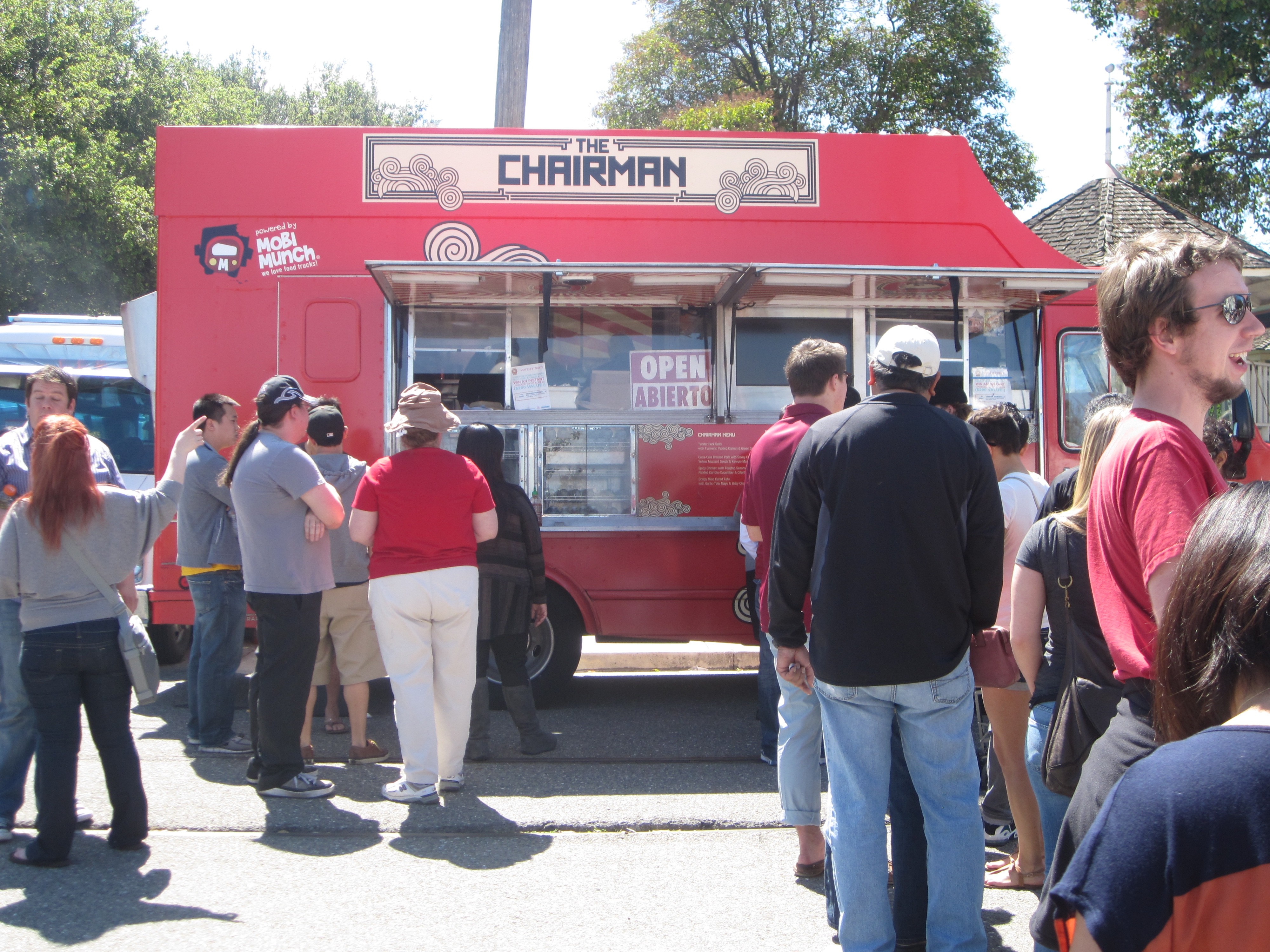
If it’s spring time, that means it must be outdoor food festival time. I visited Northern California’s largest food truck festival, the San Jose Taco Festival, this past weekend. The festival had some two dozen food trucks, ranging from the classic Korean barbeque tacos copying Kogi to Louisiana blackened catfish tacos. There were of course some regular tacos from actual taco trucks on hand too.

I’d be able to write more of a review if I didn’t spend my entire time at the festival standing in line. Most popular food trucks require a 30-45 minute wait in a line of anxious diners. The problem with a food truck festival is that you want to sample. So one taco per line means…a lot of standing in lines. Once you get one taco, eat in the next line. Every truck sold tacos for $2, along with various other items that they normally sell (such as gumbo and jambalaya in the case of San Jose’s Louisiana Territory Truck). The entrance fee was quite steep just to set foot in the festival at $10 a person, too much in my opinion for the quality of the festival, which was nothing but food trucks, a couple loud, amateur bands, and a terrible beer and wine selection (a food festival where the best beer offerings are Negro Modelo and Stella Artois?!).

Louisiana Territory's blackened catfish and creole "seafood" tacos

I sampled from The Louisiana Territory and the Chairman Bao from San Francisco. Louisiana’s blackened catfish taco was excellent, with a beautiful cornmeal coating of the flaky, moist fish. The creole seafood taco was a watery mess, the tomato based broth covering your hands before the first bite. Strangely in my seafood taco, the main filling was andouille sausage. I could only find one tiny shrimp and none of the advertised scallops.

The Chairman Bao's crowd awaits

The Chairman Bao in theory makes “tacos,” since the steamed buns boast a clam shell to wrap around a filling. I appreciated the tender pork belly with turmeric pickled daikon and green shiso, though the meat needed a stronger, sweeter glaze. A tasteless coca cola braised pork got lost in a cloud of savoy cabbage and kewpie mayonnaise. On the other hand, the spicy chicken did provide punch and was perfectly tender, bathing in a soothing sesame seed puree topped pickled carrots and cucumbers. It was the hands down winning “taco” of the day.

Lastly for this Monday, here’s a hilarious trip around New York with new New Yorker, Andy Ricker, the revolutionary chef and visionary behind the Thai street food staple restaurant in Portland, Oregon, Pok Pok. The fish sauce chicken wings, the boar collar, and the durian custard still haunt my dreams from dinner at Pok Pok a year ago. I almost booked a ticket to Phuket right after that meal. Ricker just opened a Pok Pok and Pok Pok Wings in New York.

This week we’ll have reviews of Aziza and Mission Chinese Food in San Francisco, cocktails from Los Angeles, a neighborhood trip to Cleveland, and much more at the Bistro!


Bites of the Week

O.k., so this really is the bites of last week, but since there were so many last week in Kauai and not too many this week, we’ll make this a Kauai only edition. If only I could go back for more of these…

Banana Joe’s: Banana- Pineapple Frosty

A fascinating, completely healthy icy treat where a super juicer turns frozen pineapple and banana into the most vibrant tasting soft serve like refresher.

Bar Acuda: House cured Chorizo with Grilled Apples

Too many of the tapas underwhelmed, but not this excellent, spicy charcuterie, full of meaty depth, acceneted perfectly by the sweet, soft apples.

Josselin’s Tapas Bar and Grill: Kekaha Shrimp-Duck Confit Taco with Papaya Salsa

Josselin’s creativity on perfect display with juicy shrimp, tender meat, and a shell that holds up without being too strong.

Josselin’s: Slow Cooked Butterfish with Stir Fried Vegetables and Soy Mirin Reduction

And here we have Josselin’s deft skill with fresh fish creating a marinated, soft beyond compare butterfish. This is a toss up with the mahi mahi in a nori vinaigrette. A masterful preparation.

Lappert’s: Kauai Pie Flavor in Chocolate Macadamia Nut Waffle Cone

Roll call please. Coconut flakes. Kona Coffee. Chocolate. Macadamia nuts. Vanilla cake crunch. It all equals an unstoppable, very rich ice cream flavor.

Puka Dog: Polish Sausage with Papaya Relish

The sausage is juicier than usual and the papaya relish perfectly compliments it. The perfect lunch in paradise.

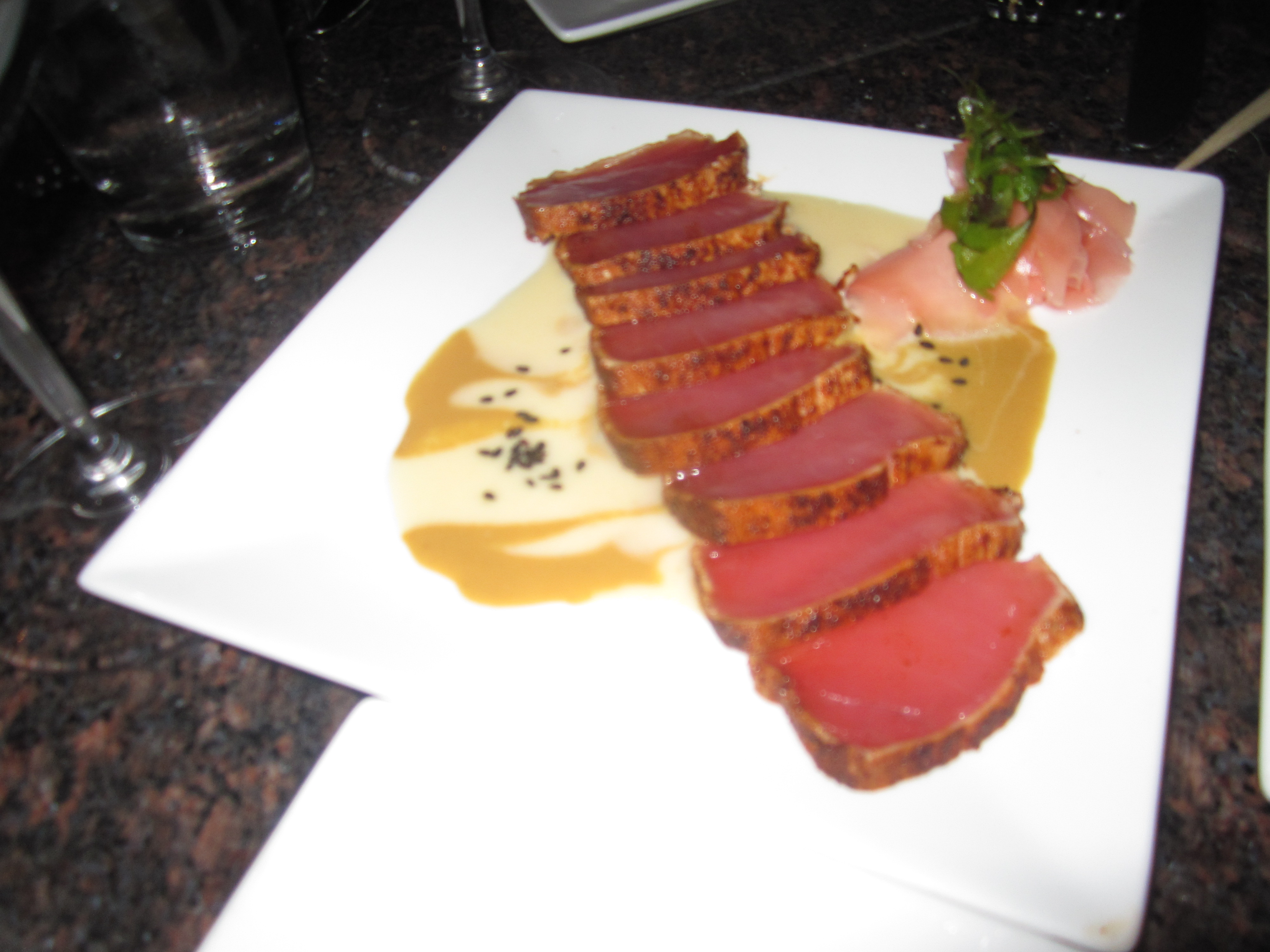
Roy’s: Blackened Ahi Tuna Sashimi with Spicy Soy Mustard and Beurre Blanc

The classic ahi preparation, with pristine, thin medallions of ruby red ahi, over the invigorating sauces.

Roy’s: Lemongrass Kaffir Lime Mahi Mahi with Forbidden Rice, Green Papaya Namasu, and Kaffir Lime Tamarind Coconut Curry

So Roy’s has two incredible standards, so I chose a third: this roller coaster of a ride entrée, blasting with kaffir lime flavors, and a curry of Waimea Canyon depth.

Roy’s: Melting Hot Chocolate Soufflé with Raspberry Coulis, and Vanilla Bean Ice Cream

Still, the liquid center chocolate souffle I measure all others by. Not too crispy on the outside is the key. The moment when the liquid center explodes is as exciting as your first kiss.

Tahiti Nui: Mai Tai

George Clooney approved local bar in Hanalei that makes the essential mai tai: just the right rum, nuttiness, and fruit, the perfect cocktail for paradise.

End of the Week Round-Up: The Other Kauai Experiences

We’ve covered what I consider the Big 4 of Kauai restaurants: Roy’s, The Beach House, Josselin’s, and Merriman’s. Plantation Gardens is also a reliable choice in Poipu that I usually visit, but didn’t this time, nor did I get to try the new Kauai Grill at the St. Regis in Princeville, with a menu partly created by Jean-Georges Vongerichten.

Banana Joe’s: An excellent fruit stand just past Kilauea along the highway. Choose some fresh papaya and one of the few places to sell Hanalei Poi Co.’s poi. The real reason to come is for the “frosty,” a treat where frozen fruit (banana and pineapple) are forced through a juicer machine creating a refreshing, soft serve ice cream like treat, but much, much healthier.

Bar Acuda: Jim Moffat, one of the leading chefs of San Francisco in the 90’s, moved to Kauai a few years ago for the surfing, and also created a tapas place, Bar Acuda, in Hanalei. Hanalei is certainly what you would call a sleepy town, except at Bar Acuda (and Tahiti Nui). Moffat brought with him a dash of urban sophistication that makes dining at Bar Acuda a loud, sleek, festive affair, not far from an experience in SoMa or SoHo. This really is a tapas place, where a party of four essentially orders the whole menu. One or two larger plates could help. Prices are steep for what you get: a single, somewhat rubbery scallop over mashed potatoes and a strong truffle reduction was $14. The white on white on white appearance of the dish was none too pleasing either.

Grilled flank steak skewers had a terrific honey-chipotle chili marinade, but the meat was tough. I appreciated the slow braised bbq pork shoulder, which did not need the tasteless potatoes alongside. Whole roasted tomato bruschetta is intriguing, neither better or worse than the traditional style. I love dates more than anyone, but even to me a couple of medjool dates with celery shavings, parmesan, and aged balsamic isn’t worth $10. The one dish I would return to again and again is the superb housemade chorizo. These are fine tapas, yet more is expected from a restaurant that should have grander ambitions than this. Also, since these are tapas, do not order everything at once, or pacing will be quite the adventure.

Brennecke’s: The classic kid-friendly, happy hour friendly beach broiler right on Poipu Beach. Don’t come for a game with the tiny selection of beer or tiny televisions. Don’t you dare order the mai tai, a travesty. Don’t order a salad or it’s $14 for overcooked ahi and a bed of greens. At least service is harming, the view great, the vibe celebratory, and the ahi tacos are decent.

Hamura Saimin Stand

A Guy Fieri approved hole in the wall in Lihu’e, this former laundromat serves some top notch saimin (not too far off from ramen). The fried saimin noodles didn’t move me, but the Saimin Special, filled with tender pork shoulder, fish cake, and hard boiled egg is satisfying on a cold day or any day in Kauai (no such thing as a cold day). It’s popular, cramped, and perfectly old school. An institution in Kauai that the tourists are just now getting to. It’s amazing how three women do all the serving, cooking, cleaning during the lunch rush. A must stop in the county seat of Kauai.

Kauai Coffee

On the west side of the Island, an excellent stop for some serious coffee sampling from Kauai’s dominant coffee grower and roaster. The flavored roasts steal the show, especially the banana nut. Lots and lots of free, good coffee. I could make it a daily habit.

Kauai Kookies

Based in Waimea, the cookies are similar to shortbread, not at all soft or gooey. They beg for milk to soften up. The guava macadamia nut has no guava taste and a sliver of a macadamia nut inside. The chocolate chip macadamia nut seems to always forget both ingredients too. The corn flake crunch cookies can be quite special though.

Koloa Rum Distillery

New to Kauai, this award winning distillery now has a tasting room in the Kilohana Plantation to sample their rums and create a mai tai shot for happy hour in the middle of the day. The dark rum is wonderfully deep and robust, but oh how that white rum is not meant for sipping on its own…

Lappert’s Ice Cream

The late Walter Lappert’s ice cream chain branched out to the mainland, where a few outposts still exist, but those no longer are affiliated with the ones in Hawaii. The ice creams are made in Hanapepe and tend to be awfully rich in butterfat…a good thing. Flavors veer toward the traditional with many featuring macadamia nuts, coconut, and Kona coffee. The Aunty Lilikoi passion fruit is shockingly good. However, Kauai Pie, a mix of everything Hawaii with Kona coffee, chocolate, coconut flakes, macadamia nuts, and vanilla cake brunch, is the masterpiece. I’m not a cone guy, but when I do, it’s always the chocolate macadamia nut waffle cone at Lappert’s.

Living Foods Market

Jim Moffat’s import of Portland or San Francisco foodie locavorism to Kauai in the form of this charming, very expensive market in Kukui’ula. An excellent selection of sandwiches, wood fired pizzas, plus fresh produce, and a tiny, but high quality selection of local meat (even duck confit!) and fish. This is the place for fresh baked raisin focaccia bread or a superb morning coffee, though the espressos veer to the watery side. Living Foods sells many Kauai products too from Aunty Lilikoi passion fruit habanero mustard to Monkeypod coffee jelly.

Papalani Gelato

Trying to challenge Lappert’s, gelato in the Poipu Shopping Village. The strawberry is subpar, but others are fascinating such as kulolo (taro-coconut-brown sugar bread pudding) or avocado. The gelato itself is excellent consistency, pure, with no icy spots.

Puka Dog

Right next to Papalani Gelato, the veteran Puka Dog now has lines around the corner thanks to its Travel Channel fame. The hot dogs luckily are better than ever, topped with mango relish or coconut relish or the superb papaya version, especially with some lilikoi mustard too. No need for the too watery lemonade. A Kauai classic.

Taro Ko Chips Factory

Hidden in a run down shack in quiet Hanapepe, this family has been creating some life-changing taro chips and potato chips for decades. It’s hard to find, but well worth seeking out for your beach lunches. The li hing mui covered sweet potato chips may be the most delicious food item on Kauai.

Plat du Jour: Friday April 13, 2012

Friday the 13th! Oh no!

Let’s think of some non-spooky items for the end of the week. How about wine and wine bars? Eater National has a very useful guide to the best wine bars across the country. Wine bars are an all too often neglected subject in the restaurant-bar world, probably because what really is a wine bar? Can a wine bar serve more food than just cheese and charcuterie? Obviously the wine list must be prominent and there must be a bar. Is A.O.C. in L.A., an exquisite small plates restaurant from Suzanne Goin and Caroline Styne, also a wine bar as it suggests? Any restaurant with a bar can have a wine bar since the wine list will most likely be comprehensive, unlike many restaurants’ cocktail and beer lists. The debate goes on…

I’m always fascinated by Bloomberg‘s restaurant critic Ryan Sutton’s articles on price increases at restaurants. Saison in San Francisco received attention this week for increasing its wine included chef’s counter menu price to $641. Today the price went back down to a more affordable $498.

This of course raises the question of at what point does it even matter what the price is? The French Laundry tasting menu is currently only $270. The El Bulli menu at Next in Chicago is $473, all inclusive (The French Laundry is not). Some people would claim that once a dinner is over $40 per person, or even $20 a person, it’s all the same exorbitant gastronomy with sous vide this and caviar dashi broths.

It’s not. Like Grant Achatz likes to do, I compare fine dining to Broadway plays and sporting events. Think of a meal at Saison or Next as an opera at La Scala or Game 7 of the World Series. Nobody probably plans to dine at Saison once a week. For the labor, the ingredients, and all the other costs of a restaurant to produce at Saison’s level, I am not at all surprised, as chef/owner Joshua Skenes claims, that restaurants of this caliber barely make a profit, if any at all.

The one little side note to this article is the question of SeatMe, a new rival to Opentable and Urbanspoon, charging a fee for reservations. It’s for the credit card fee used to reserve a table at Saison, so no big issue there. I’m curious to learn more and see how SeatMe does in challenging Opentable and Urbanspoon in the reservation engine wars at work in San Francisco. There’s no doubt already that SeatMe provides the most useful information and pleasing visually site amongst the trio.

Discovery of the day: how to eat a passion fruit. I absolutely love the name of it, love the juice, but prior to today had never eaten or even seen the interior of a passion fruit. I highly recommend trying it, learning like I did from this editorial. It’s quite simple and refreshing with the juice mingling with the crunchy seeds. Eat the seeds, but not the skin or the somewhat tough inner membrane.

Finally, being a passionate fan of hoppy double IPAs like many of America’s hop heads have become from the recent craft beer movement, I’ve wondered how these powerfully flavored beers can ever actually accompany food, instead of dominate it. Here are some excellent matchings from Serious Eats. Pliny the Elder with pâté…I can certainly toast to that and toast to the weekend!

We’ll wrap up the week of Kauai in a few moments. Lots of excitement next week, including reviews from Aziza and Mission Chinese Food in San Francisco. Have a great weekend!

Roy’s Poipu Bar and Grill, Kauai

It’s rare to find a restaurant chain with 29 locations across the country worthy of significant praise, but Roy’s is that rare empire to deserve a round of applause for its continued high caliber consistency and creativity. Long after the fusion wave of the 90’s dot com boom era that chef Roy Yamaguchi rode to an international empire from Guam and Tokyo to Denver and Philadelphia, Yamaguchi’s empire has trimmed somewhat, becoming even stronger over a decade later. Today, there are 29 Roy’s across the country, with one in Guam still and one in Tokyo’s Roppongi Hills. The original Roy’s founded in 1988 remains, in the outskirts of Honolulu. Gone is the Austin, Texas outpost right at the start of that city’s dining boom and gone is the Denver restaurant in Cherry Creek, where my entire extended family feasted on mahi mahi and ono amidst sub zero temperatures outside. At least it was paradise inside! Gone is the Philadelphia Roy’s where I enjoyed his Hawaiian fusion cuisine in the shadow of the Liberty Bell and no longer can my Dad bring the hibachi grilled salmon with citrus ponzu sauce back to me from the Roy’s in the Seattle Westin. Yes, even smelling it through a rain delay at Sea-Tac, my Dad was a trooper and brought his demanding eight year old or so son the Roy’s salmon on the plane. Nowadays maybe he can bring the porchetta sandwich from Armando’s Salumi next time he goes to Seattle…

After Jean-Marie Josselin left The Beach House a decade ago and Josselin’s A Pacific Café closed shortly thereafter, Roy’s quickly became the premier dining experience on Kauai. With six Roy’s across the Islands, including one on each of the four major islands, a night of Hawaiian fusion dining at Roy’s is as essential an experience to a Hawaiian trip as snorkeling and watching the sun set with a mai tai in hand. I’ve tried numerous Roy’s across the country. The San Francisco one is terrific, but it’s just not the same eating the misoyaki butterfish on Mission Street in the Financial District. The Pasadena branch is excellent, as is the one I visited most recently in Downtown Los Angeles, the perfect pre-Lakers game dining spot.

However, there is nothing like eating at Roy’s in Hawaii. The Kauai Roy’s resides inside the quaint, charming Poipu Shopping Village, a far cry location wise from its ocean side peers in Poipu. The prominent view is of the bustling open kitchen in the central portion of the dining room and of the parking lot from the window enclosed front dining room.

With no ocean view, the food must thrill. And it does.

The Poipu Bar and Grill does not have any of the new sushi creations that Yamaguchi has been placing on mainland Roy’s menus. Still, the appetizer menu is over a dozen listings strong, almost impossible to choose from since each item is more and more tempting. Think back to the Clinton years when restaurant menus had 30 items to choose from, nearly each one had “wasabi” or ginger” as an ingredient, and each dish has at least five parts listed in its description.

The mandatory appetizer order is the famed blackened island ahi sashimi over both a beurre blanc and fiery wasabi soy mustard. Every part of the dish thrives, bordering on too much heat from both the seasoning and the sauce, but not going overboard. Of course the key is the ruby red medallions of ahi that could be served by Jiro. The starter portion uses the higher grade tuna than the main course sized portion, making the choice easy.

The problem is there are too many appetizers to choose from. Some are Roy’s classics like seared white shrimp sticks with house made kim chee, the Hawaii Kai crab cake, and the Szechuan pork ribs. The Canoe for Two is a wise choice for sampling the stand-bys, but the reason Roy’s remains so exciting is how each of its outposts creates various new dishes, unique to that day at that location. There could be sizzling salmon belly sashimi sprinkled with Hawaiian alae salt or blue crab and garlic baked oysters with a tomato ogo relish. Roy’s even hops on the comfort food gone upscale with the Hawaiian gluttony classic loco moco re-invented with a crispy beef oxtail croquette, slow poached egg, and Hon-shimeji mushrooms. Potsticker dishes tend to be too doughy with dry fillings. That was not the case with white shrimp gyoza, cleverly combined with diced lup cheong sausage in an intriguing spicy xo lobster sauce. The only clunker was an uninspired salad of hearts of palm, not moist compressed watermelon, macadamia nuts, and two dots of brie cheese. The pieces didn’t come together into anything, the dish more appropriate at a routine hotel restaurant.

Lobster sauce makes another appearance with the macadamia nut crusted shutome (Hawaiian swordfish), a Roy’s standard that usually features mahi mahi. You can always get the reliable hibachi grilled salmon with citrus ponzu sauce, the dish that made me a young ardent Roy’s supporter. This being Kauai, fish is the name of the game. Some artistry is on display with gremolata crusted ono with pureed Okinawan purple sweet potatoes, and two mango guises: with scallops in a ceviche and in a brown butter mango sauce. I always rave about the misoyaki butterfish in sizzling soy vinaigrette. Butterfish is a stronger tasting fish with flesh as delicate as a ballerina’s step. Nobu’s famed miso black cod has a competitor. The jade pesto steamed Hawaiian snapper in a bread-sopping required sizzling ginger peanut oil is one of the less exciting sounding dishes, yet is just as exciting in reality as it was two decades ago. The pesto is the key here, fresh with pungent arugula and green herbs. The real show-stopper was the special lemongrass kaffir lime mahi mahi over forbidden rice with something similar to a green papaya salsa and a kaffir lime tamarind coconut curry with stunning depth. Like sunset at Polihale Beach, each moment with the mahi stops time.

There is a sous vide rancher’s steak for the meat lovers and molecular gastronomy lovers. I’m sure it’s a winner. In the mainland there’s enough sous vide meat though on neighborhood bistro menus, so go for the fish of Kauai’s sea.

As the case with all Roy’s, there is never a discussion for dessert. Order ahead of the time the melting hot chocolate souffle. The dish is a cliché from the days Roy’s started expanding, but nobody performs the textbook version as well consistently as Roy’s. It’s the standard I’ve  always judged others by. With a warm liquid center, crisp but not burned exterior, and some vanilla ice cream to cool your burning tongue, this is dessert as its meant to be. The only glitch is I’ve never understood why the raspberry coulis with the souffle always tastes like cough syrup. It tastes nothing of raspberry. Avoid it and steal all the chocolate from your friends instead.

Service initially was very rocky. There was first a fifteen minute wait after our reservation time despite numerous open tables. Then we were led to the desolate bar patio area across the sidewalk from the restaurant despite our request to be in the restaurant when making a reservation. Ten minutes later we were led to an actual table in the actual restaurant. The waiter was clearly in the weeds, ignoring us for fifteen minute periods between receiving menus, ordering wine, receiving wine, and ordering food. Eventually I had to summon the closest waitress and say we were ready to order, a task finally accomplished over an hour after our reservation time. Luckily, things smoothed over from there.

Another brilliant idea by Yamaguchi: edaname to munch on while perusing the menu. Other restaurants should follow.

Roy’s is the rare restaurant empire as consistent in L.A. as it is in Bonita Springs. There is nothing like eating at Roy’s in Kauai. It sure isn’t like any other restaurant chain.


Cocktails of the Week: The Good, the Bad, and the Ugly of Mai Tais in Kauai

The mai tai is a fascinating cocktail, created back in 1940 by Victor Bergeron, the “Vic” of Trader Vic’s, at the Trader Vic’s in Emeryville, CA, near Oakland, not exactly a real bastion of tropical tiki culture one might say. His original recipe called for dark Jamaican rum, orgeat (an almond syrup), curaçao (an orange liqueur), and a dash of rock candy syrup.

Wait a second. Aren’t mai tais usually filled with tropical fruit juices such as pineapple and passion fruit mixed with light rum and a dark rum float on top, a sliced pineapple on the rim of the glass, and an umbrella?

Not the actual mai tai as it was meant to be. It was meant to be mainly a rum drink with a touch of citrus. Over the years the mai tai has become less a focus on rum and more the type of refreshing fruit driven drink you dream of having on a tropical island. Mr. Boston‘s varation on the mai tai is quite simple, but very different than Vic’s:

1 oz. Light Rum

1 oz. Gold Rum

1/2 oz. Orange Curaçao

1/2 oz. Orgeat

1/2 oz. Lime Juice

The quality of the rum, the touch of orange, and the slight nuttiness from orgeat are pivotal for a mai tai. Sampling mai tais around Kauai, it’s very easy to tell who puts effort into their creation and who simply thinks that mixing passion fruit, grapefruit, and orange juice, with a dark rum float will taste good. It’s revolting (cough, cough Brennecke’s).

The local watering hole in Hanalei on the North Shore, Tahiti Nui, now known from the George Clooney film The Descendants, makes the hands down best mai tai on the Islands, perhaps that I’ve ever had. The description is vague, nothing more than secret recipe of fruit juices with light and dark rum. That secret recipe is a perfect blend though, with a little sweet, a little nut, and then a little booze from the dark rum float. Served with pineapple in a classic pina colada glass, this is how mai tais should be. George Clooney must have improved.

Equally as good I’d say, but far more dressed up, is the ultimate mai tai at the Honu Beach Bar at Poipu’s Marriott Waiohai. The bar now has grass beneath the tables instead of sand, but this is no dressy establishment despite the changes to this mai tai. Instead of orgeat, there’s amaretto. Instead of curaçao, it’s grand marnier. It’s stronger than any other version not surprisingly, but is a truly balanced, well constructed drink. Of course it’s even better when enjoyed at the Honu, one of the most impressive views on Kauai.

I gave Merriman’s a very hard time earlier this week, but they do know how to craft a terrific mai tai. The fruit juices veer heavy to the pineapple and I detected perhaps a touch of nutmeg amidst the mix. The high quality Koloa rums make this a more elegant mai tai, like the one at Honu. They should be sipped instead of downed as a post beach refresher.

At the other end of the spectrum are the “world famous” mai tais at Brennecke’s, a bar-beach broiler at Poipu Beach with a terrible lack of tvs to be a sports bar and a lacking beer list to match. The mai tais must be world famous for all the wrong reasons. An off kilter mix of juices in all the wrong quantities makes this taste like grapefruit juice past its expiration date. The Koloa rums increase the price, but not the taste.

Of course, the best mai tais on Kauai are the ones my Dad creates. Yes, he used Mr. and Mrs. T Mai Tai Mix and Bacardi Gold rum (when you combine light and dark rums it equals this, right?). The mix is incredibly sweet, like that rock candy syrup would be Trader Vic used back in 1940. Yet it has a nice fruity touch and a hint of nuttiness that is awfully delicious, far superior to the Trader Vic mix. Yes, the ingredients are mainly:

high fructose corn syrup, citric acid, sodium citrate, sodium benzoate, gum acacia, and “Natural and Artificial Flavors,”

but hey, those chemists know how to make a great mai tai! The mix from Kukui Brands sold at the Koloa Rum Distillery tasting room at Kilohana Plantation is impressive too, but lacks enough fruit power.

Oh how the mai tai has evolved since Trader Vic created it. Of course all of these mai tais taste even better when watching the sunset at Poipu Beach.

Beach House Restaurant, Poipu, Kauai

The Beach House is the most controversial restaurant on the island of Kauai amongst the passionate food community of locals and frequent visitors. Its location a mere ten yards removed from Lawaii Beach with a striking view west toward the sunset each night is truly spectacular, paradise found. It is the quintessential Kauai restaurant for honeymoon dinners, birthday dinners, anniversary dinners, celebration for being on Kauai dinners.

The magnificent setting is not controversial, not up for debate. The merits of the restaurant itself, however, can be fiercely heated. Is any of The Beach House food worth the price tag? The debate continues. Having dined at the Beach House all my life, the quality does fluctuate tremendously year to year. In the late 90’s when Jean-Marie Josselin ran the kitchen, The Beach House was the pinnacle of paradise dining with the food to match the view. When the new Maui based restaurant group in charge of the Plantation House in Kapalua took over The Beach House about a decade ago, the experiences went one step down, but still was far above the usual oceanfront, romantic tourist trap.

Slowly over the past few years the menu has stayed the same, but preparations sloppier, the service less polished. Now in 2012, the Beach House has hit the bottom with an experience that makes myself and my guests who have dined at the Beach House for decades, including a couple who have visited since their honeymoon in 1982 (two hurricanes ago, since then The Beach House has crept inches and inches away from the coast for safety reasons), for whom the name The Beach House conjures majestic, awe-inspiring views and meals remembered for a lifetime, have decided this destination may not merit a return meal for some time.

Not all of the blame goes to what is served on the plates. The fresh Island ahi sashimi is fine with far high quality ahi at least than the exact same preparation at nearby Merriman’s. Nothing is special with the dish, the wasabi soy dipping sauce similar to any other on the Island and the fish sitting atop a useless bed of cabbage. Nicely marinated ceviche mixing a mystery Island fish, scallops, and tiger prawns arrives dramatically in an open coconut. Even the unoriginal crab cake is superior to many versions, actually containing more crab than breading. A salad of asparagus and local tomatoes from Kilauea, and goat cheese is fine, but lacking any plating creativity with the goat cheese displayed in a scoop like potato salad at a school cafeteria, and the ingredients overpowered by the too acidic soy sherry vinaigrette.

The Beach House’s main plates focus on, like most restaurants on Kauai, the fresh fish. Instead of crafting the preparation to the fish, The Beach House’s chef Marshall Blanchard has three set fish of the day preparations and simply plugs into those three whatever the fishermen bring in.

We would have ordered the miso marinated shutome (Hawaiian swordfish) over shitake mushrooms in a complex sounding, Southeast Asia inspired, ginger and fish sauce filled broth. However our waiter, using his visits to Vietnam and Thailand as rationale for his advice, says the chef is from Colorado and the broth is weak and nothing exciting like the description says. True or not, it’s brutal that the waiter has to admit a dish’s faults, especially if it’s to dumb down a dish for diners.

Monchong comes crusted in a wasabi crust that tastes of nothing but panko crumbs, sitting in a pool of lemongrass lilikoi beurre blanc with no detectable lilikoi or lemongrass. The same goes for the macadamia nut crusted mahi mahi in a citrus aka miso beurre blanc that tastes like the same beurre blanc. Both fish are perfectly flaky, with some ceremonial asparagus on top, and a pointless, tasteless scoop of rice next to the fish as if this were Red Lobster. Did I mention its $40 for these two fish?

At least the mahi mahi and monchong weren’t grilled to a dry oblivion like the ono in a lemon basil aioli. The accompanying Kamuela tomato stuffed with sauteed spinach, boursin, and parmesan cheese was the type of cold, flavorless side you’re very likely to find untouched at a convention banquet. The fire roasted, over the magnificent Kiawe wood native to Kauai, ahi in both a ginger lime beurre blanc (yet another variant of that beurre blanc…yet they all taste like butter…) and black bean sauce (that you can actually detect) is the most consistent dish on the menu the past few years. The furikake mashed potatoes with the ahi though always lack any taste of the umami rich furikake.

In short, too many indecipherable beurre blanc sauces, too many presentations that look the same, the grilled ono with the stuffed tomato shouldn’t have made it past the first cut, and please, above all else, do not serve a lackluster side of rice pilaf with the fish. These problems make The Beach House seem more like being fed by a catering company at high end New York dining room prices.

Returning back to the service, whether it was because we had a “late” (8 pm?) reservation and everybody wanted to go home by 10 or not, never hit its stride. Orders weren’t taken until at least a half hour after we were seated. Water glasses were unfilled too many times to count. Plates were taken away before everyone at the table was finished and in one case, before a diner was even done with an appetizer. Our main server was helpful, but also seemed to be talking down to us, whether it was advocating for a $12 more expensive malbec than our first choice or about his travels and how the miso marinated shutome was not up to par. It’s not as if his recommended monchong and mahi mahi ended up being any more original.

Matters were made worse when The Beach House ran out of requested desserts wines and even had run out of flourless chocolate tart, which everyone had been greatly anticipating. How do you run out of your signature chocolate dessert? You don’t. The chefs simply didn’t want to make another tart because it takes time. At Roy’s and any other successful restaurant with a souffle to be baked, they ask long before the dessert time, whether or not to fire up the souffles. There’s no excuse. There also is no excuse for the recommended replacement, a dry, pointless carrot cake with a scattering of macadamia nuts. The waiter even pushed into this saying that the chefs want to go home and he would just go cut the slice himself. A destination restaurant doesn’t serve that carrot cake, doesn’t run out of chocolate tarts, and certainly doesn’t say the chefs want to go home. Isn’t fine dining supposed to make the diner feel special?

It’s a shame The Beach House has declined to this level. No longer does it have that majestic connotation. Instead, it spells tourist trap loud and clear. The good news is the restaurant can only go up and the prices can only go down. If you want to watch the sunset at Lawaii Beach, set up in front of The Beach House on the gorgeous lawn between the restaurant and the ocean. It’s the same view, without the comedy of errors going on in the dining room.