Plat du Jour: Tuesday June 26, 2012– Tastings at Russian River Brewing and Cerveceria de Mate Veza

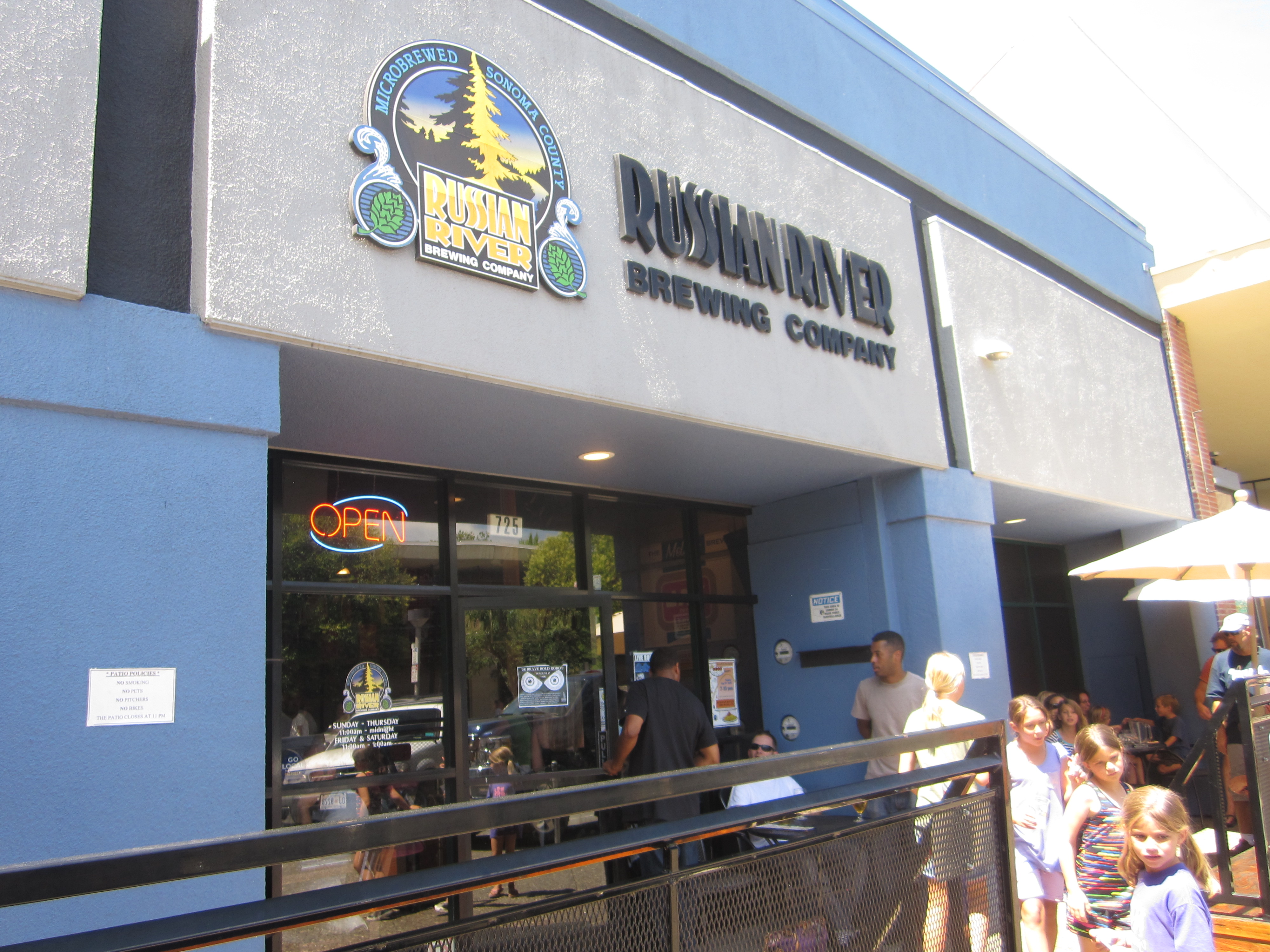
Russian River Brewing Company in Santa Rosa, California, about an hour’s drive north of San Francisco, can quite possibly be credited with taking America’s recent fanaticism with everything craft brew and hop related, and turning the passion into epic fervor as powerful and vast as the Roman Empire during Pliny the Elder’s lifetime.

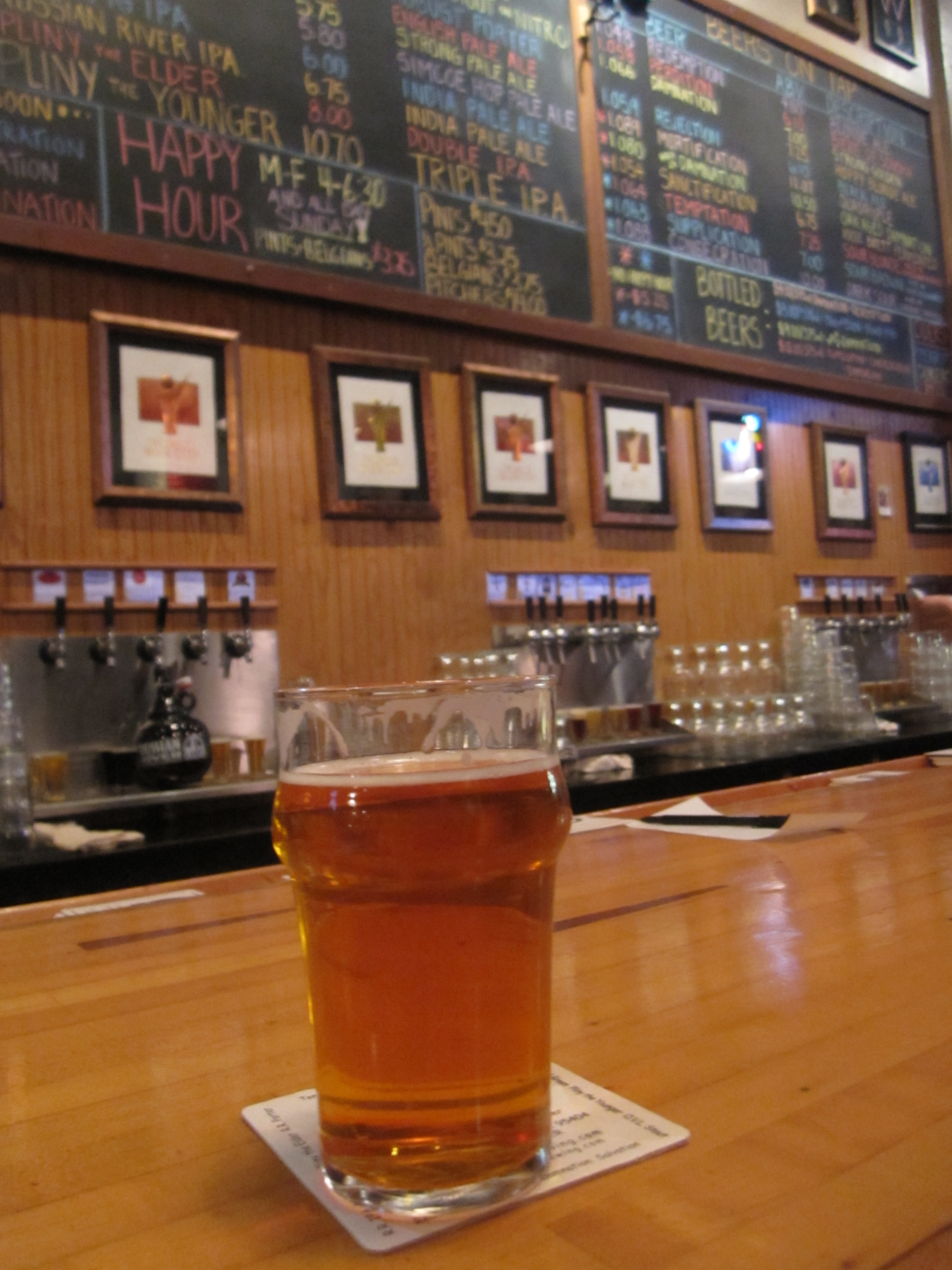
Well, that fervor could be more courtesy of its most famous beers: Pliny the Elder and Pliny the Younger. The Elder is the elder statesman for the brewery, providing it with its initial fame. The rebellious Younger debunked prior brewing traditions by creating a triple IPA that is now considered the quintessential beer and hopheads worldwide indeed do participate in pilgrimages to its hallowed grounds for the two weeks of the year Younger is produced each February. That, and the fact that it’s an excuse to visit California in the heart of winter.

Prior to earlier this month, my lone visit to the brewery’s tasting room and brewpub attached to the brewery itself in Santa Rosa, was in February for Pliny the Younger. Indeed, it is a truly sensational beer. It is immensely focused, hints of nutmeg and citrus in the aroma, and very strong without tasting in the least boozy at 11%. At triple the amount of hops than a typical IPA, the Younger actually seemed less hop driven than the double IPA Elder. Pliny the Elder strikes you as much more bitter and hop focused, a classic double IPA that every microbrewery now strives to replicate.
Pliny the Younger

Was Pliny the Younger worth a 2 hour drive and 4 hour wait outside “freezing” California style? Of course. That doesn’t mean you need to do it again. It’s an experience.Continue reading “Plat du Jour: Tuesday June 26, 2012– Tastings at Russian River Brewing and Cerveceria de Mate Veza”

Tuesday’s Project: Negroni Variations


Barrel Aged Negroni at Clyde Common

Something about a pitch perfect negroni hits the spot every early evening as the sun sets and the nighttime activities commence. An apertif is meant to be a simple, easy way to get nightlife under way. Be it a tawny port or a pastis, or even some prosecco, accompanied by a few slices of mortadella and some toasted nuts, everything is meant to be calm after the hectic day. A negroni continues that trend, with a hint of ambition on the side.

You can of course go the herbal apertif route and just enjoy a straight Campari on the rocks. There is no harm in that except from my experience it will completely deplete your taste buds for wine tasting with dinner afterwards. The typical negroni is almost as basic the straight Campari: a one to one to one ratio of sweet vermouth, Campari, and gin (obviously Bombay Sapphire will upgrade your negroni over Gordon’s). That holy trinity and ratio truly does work, as if Da Vinci created it. He just might have created it. Stir together and serve either rup or on the rocks, and there you go.Continue reading “Tuesday’s Project: Negroni Variations”

Monday’s Neighborhood: 9th Avenue and Irving, Inner Sunset, San Francisco

The Sunset District of San Francisco doesn’t see the sunset too often with the near constant fog that blankets the neighborhood, especially this time of year. Indeed, the most common description to this area of the city is not about its diverse culture. The usual response has something to do with wearing ski jackets and preparing for the fog. By no means is the Inner Sunset a hectic, rush hour grinder like the Financial District and Civic Center areas. In fact, rush hour seems to be the 3pm post lunch and school rush when the cafes are bustling and the MUNI street car and bus stops overflow with shoppers and students.

The Sunset District refers to the mostly residential numerical avenues in the western part of the city, south of Golden Gate Park. The north side of the park is the Richmond District. The two get confused frequently. 19th Avenue is the main thoroughfare through both neighborhoods, along with being the very slow main approach to the Golden Gate Bridge from the peninsula. To the east of 19th Avenue is the Inner Sunset and to the west resides the more sleepy Outer Sunset.Continue reading “Monday’s Neighborhood: 9th Avenue and Irving, Inner Sunset, San Francisco”

Russian Cuisine For A Rookie

Preparing for an upcoming first visit to Russia, over the weekend I joined a friend who was born in Moscow get a quick crash course in Russian Food 101. So often Russian food falls into the same category of bland, heavy, comfort cooking with no life and no adventure that other cuisines like German fall into. As I have been researching where to dine in Moscow and St. Petersburg, the most frequent response is to sample the other cuisines from former Soviet republics such as Georgia and Armenia. Another usual response is that all the high end “critical favorite” dining restaurants are really just forma, decent French and Italian restaurants, the type of stale Continental cuisine that was prevalent all around the world back when Eisenhower was President.

The research goes on as to where to eat while not visiting the Kremlin or catching a ballet. As to there being more than caviar and vodka to Russia’s cuisine, the answer is very much: yes.

Cinderella Bakery & Cafe in San Francisco’s Richmond District is a postage stamp sized operation, with twice as much seating outside along Balboa Street looking at parking meters than the two tables inside next to the cashier and lavish display cases for piroshki, pastries, and bread.

This is the humble, “peasant” style of cooking often seen in Russian homes. For special occasions, meals can last easily four hours, complete with Beluga caviar in the middle, enough vodka for a year, and dancing off the goose entree before dessert. Indeed, Russian cuisine is heavy for the most part and does rely heavily on sour cream and cream in general. There is plenty of life to spark up a traditional meal, however.Continue reading “Russian Cuisine For A Rookie”

Cocktail of the Week: The Old Cuban (Champagne Mojito), Bemelmen’s Bar, New York City

It doesn’t come cheap at a lovely $21. Nothing is a bargain in these parts on the Upper East Side of Manhattan at the corner of East 76th St. and Madison Ave. This would be where you find one of the grande dames of the New York hotel scene, the Carlyle Hotel.

Stately and grand, such special surroundings demand for an extraordinary bar with accompanying extraordinary cocktails. Bemelmen’s Bar along the Madison side of the Carlyle is truly a destination bar. It’s not a craft cocktail bar nor is it a locals bar or pub where everybody knows your name. It’s about one of the great decors in the world of bars, with dreamy murals and painted lamps designed by Ludwig Bemelmens, the creator of the children’s book series Madeline. It’s his only public commission. The murals themselves are worth the price of admission, something you’d find a bit north at the Met. Add the black granite bar and the 24 karat gold leaf ceiling, and you have opulent surroundings on par with the Harry’s Bar in Venice and Hemingway Bar in the Paris Ritz’s of the fine drinking world.

Luckily, Bemelmen’s crafts what I consider quite possibly the perfect cocktail (it better be…). It’s far from the most exciting creation. Instead, every note is pitch perfect, the drink complex while maintaining a refreshing edge. The Old Cuban is indeed a mojito with champagne, served up handsomely in a martini glass. None of that dainty flute action here. Hemingway would be quite proud. The champagne is joined by muddled mint, Bacardi 8 rum, fresh lime juice, and angostura bitters for a cocktail that is refreshing, deeply flavored, and the perfect sipper in such spectacular surroundings. Indeed, mojitos can be bold drinks that don’t get watered down on the rocks with a hint of mint. You taste every ingredient vividly here.

They don’t need premier cocktails in these dazzling surroundings at Bemelmen’s. Fortunately, the drinks are every bit on par with the atmosphere to make this truly New York’s special occasion watering hole (especially if Woody Allen’s jazz group is performing that evening).

Restaurants: Nojo, San Francisco

The barely year old Nojo is a labor of intense focus restaurant for the young chef/owner Greg Dunmore. After years as the chef de cuisine at Ame, the grand, swanky dining room of San Francisco’s St. Regis Hotel, learning under the tutelage of one of the country’s pioneering East-West cuisine chefs Hiro Sone, Dunmore struck out on his own. Traveling through Japan, the humble, pristine quality of yakitori bars and izakayas (essentially Japanese gastropubs with less of a focus on pork belly) hit Dunmore and popped a light bulb above his head.

In Japan, thoughtful simplicity is paramount. Even at the premier sushi bars of Tokyo, the decor isn’t much more than a sculpture of a ram on the side (the case at Ishikawa) or a small lace curtain hiding the back kitchen (Mizutani, Jiro Ginza…). The sushi itself is about the most vivid ruby tunas, a technicolor orange to the sea urchin,  and a glistening snow white tako. This same principle, as Dunmore learned at Ame can be applied in opulent surroundings, but really makes its mark at the down to earth noodle bars, yakitori stands, and the like that make Japan such a wealth of culinary brilliance, without the extravagance and flash of new age, modern cooking, or old traditional European style gastronomy. In essence, Japan’s purity in cuisine is California cuisine except centuries older and wiser.

The yakitori and izakaya hybrid restaurant trend is in full launch phase nationwide, much like gastropubs beforehand and Mediterranean small plates before the nose to tail community popped up. Yet, it is hard to imagine a more dedicated, striving to be authentic izakaya than the one Dunmore has created fronting Franklin Street near San Francisco’s Hayes Valley. The space sports a handsome dining bar fronting the kitchen, with bright lights putting the focus of the room on the chefs. The tiny dining room is mostly for two tops, aside for the occasional large group where a host of two tops get put together (no reservations except for parties of 6 or more. tip: call ahead 1 hour ahead of time and you can most likely reserve a spot). The tinted windows give the dining room the awkward austerity that can also be sampled at Gary Danko. There is no waiting area per se at the door or a host stand, just show up and if you wait, it can be a tad off feeling pacing around in circles.

Like in Japan, the focus is on togetherness. It’s about bringing together the teamwork of chefs and service, the togetherness of friends and family dining together, and the fusion of focused, natural flavors, without that 1990’s cuisine mash-up trend known as fusion. There is a fair amount of Moosewood- Cheeseboard Collective- “we’re all in this together type of communal feeling” going on here.Continue reading “Restaurants: Nojo, San Francisco”

Beer of the Week: Craftsman Brewing Heavenly Hefe, Pasadena, CA

Summer officially started a couple hours ago. That means it’s time to put aside the sours and Baltic porters, and cool down with a refresher. Often that means a watery, easy to down beer that tastes vaguely of malt and hops. Lawnmower beers, hefeweizens, lagers…too often are crafted by brewers for the sake of crafting something light and consumed by beer drinkers for the sake of consuming something light.

Hefeweizen can be the ugly duckling of this crowd with its wheat base. I grew a fondness for hefeweizen when visiting Munich one spring, needing to pace myself through the beer tents of Frühlingsfest, while also adhering to local tradition of hefeweizen with breakfast. They’re intense in those parts.

Upon returning home to Los Angeles, I discovered a nuanced hefeweizen with extraordinary character for the genre from a tiny, just beginning brewery with no pub or tasting room in Pasadena. I’ve grown to appreciate many of the brewing efforts by owner and brewmaster Mark Jilg, but none can compare yet with that Heavenly Hefe. Found more frequently these days across Los Angeles at bars such as Father’s Office and a few select bars in San Diego and San Francisco occasionally, this is a hefeweizen worth seeking out. Craftsman doesn’t bottle beers, so to the bar and find that keg you must go.

Heavy banana and clove notes with a vague mango touch add tremendous depth to the full, structured body. This is a light, wheat beer with gusto. Leave the sliced oranges behind. The body sports a brilliant golden hue, the sign of a happy, healthy, if I may heavenly hefe. With today’s debut of summer, I wish Craftsman could send a pint of this my way to cool down with this 90 degree heat.

Wine of the Week: Dover Canyon Bella Zinfandel 2008, Paso Robles, CA

Now is the time to uncork a 2008 Zinfandel, especially if a summer barbeque lurks on the horizon. The tannins are at the right structural level after four years, the spices have mellow gracefully, and fruit notes now bolder and more pronounced. That’s the case with this stellar offering from Dover Canyon Winery, a masterful red wine producer in the northwest corner of Paso Robles, owned by winemaker Dan Panico.

It’s hard to choose amongst Dover Canyon’s blends, Syrah, Zinfandel, and even a terrific Zinfandel Port. Each is softly focused instead of being a chewy, rich offering that hopes to lure you towards a corner and knock you on the head with a heavy flavor blast. This Zinfandel is beautifully rounded, with a peppery nose leading to raspberry and some fig notes, then a touch of ash to coat the palate. Balancing the fine line of heavy and light that Zinfandel always does, this is a perfect wine for lamb or grilled pork chops or grilled chicken. Even a grilled steak with portobello mushrooms would appreciate teaming up with this wine.

The grapes are from vines off property near the Salinas River at the westside Zinfandel Bella Vineyard, where the climate is a tad less harsh than many of Paso Robles’ heavily sun exposed vineyards. The wine is unfiltered, leading to more sediment at the bottle’s bottom. At the same time,  a lusher texture is achieved without the heady, sticky tannins. There is technique on display here, an artist’s touch to a rugged Zinfandel.

Of course the wines are the highlight of any visit to Dover Canyon. However, you won’t leave without an introduction to the winery’s mascot and inspiration (don’t think he’s the winemaker or cellar master though…) Thunder, the St. Bernard. I’m not sure what Thunder thinks of the Old Vine Zinfandel. He and his winery colleagues did craft a superb 2008 Zinfandel that is ready to be enjoyed this summer.

Tuesday’s Project: Barbeque Jerk Chicken

Jerk chicken is one of those mythical terms I often always am gravitated towards on menus and cook-outs. As a kid, I always thought the name itself was reason enough to order the dish. Being (hopefully) more mature now, jerk chicken conjures images of the tropics mingled with the moistest, vibrant chicken imaginable. The answer to how to make the usual hum-drum chicken actually an exciting meat: a jerk marinade.

Of course there are many other similar types of marinades and sauces to turn chicken’s image upside-down. Thailand’s satays, Armenia’s chicken kebabs, Peru’s wood-fired pollo a la brasa are the first examples that sprout into mind. Jerk chicken is one of the iconic dishes of Jamaica, often part of cook-out parties on the beach or at homes. The marinade is a perfect blend of spice, fruit, and earth from the adobo seasoning added, an element to the marinade that is straight out of Mexico’s marinade playbook for the pork dish al pastor.

Then comes the question, thigh meat or breast meat?

12 garlic cloves and 15 small habaneros in this marinade?Continue reading “Tuesday’s Project: Barbeque Jerk Chicken”

Plat du Jour: Tuesday June 19, 2012: Nashville, Barbeque Chicken and Speakeasies

Bourbon & Branch

It’s the heart of June, which means it’s prime time to head to the grill for cooking dinner tonight. Coming up today for this week’s Tuesday’s Project: barbequed chicken with a jerk marinade bolstered by too many jalapenos to count. Fortunately the overnight marinade allows the jalapenos to not be as potent as this many of them have the potential of.

But, speaking of barbeque chicken, one of the age old questions for grilling it whether to use breast meat or thigh meat. Breast meat is more likely to dry out due to its thickness. On the contrary when grilled to the right temperature, it can be as tender as beef cheeks. Thigh meat is the inverse. Being more compact and less dense, there is a higher probability for success. With a marinade such as the jerk seasoning used in today’s project, the more compact the meat, the more likely each bite will be infused with a higher quantity of marinade. Continue reading “Plat du Jour: Tuesday June 19, 2012: Nashville, Barbeque Chicken and Speakeasies”