Restaurants: Noma, Copenhagen

The pair of pine tree branches partially hides the caramelized spears of snow white asparagus, as if this image was deep in the heart of a far-off forest from a Hans Christian Anderson fairy tale. The moment is pristine and clear. A flurry of pine needles off the branch lay alongside the asparagus on one side, while a forest green pool of pine and green asparagus sauce counters the pine needles. They work in unison on this edible canvas. The tender white asparagus is dipped into the sauce, followed by a roll in the needles.

Asparagus and pine is the humble name of the most startlingly simple masterpiece on a 27 dish marathon of masterpieces at Copenhagen’s famed restaurant, Noma. The dish centers on the perfectly, gently charred white asparagus. With its hyper-seasonal and local focus on ingredients that every restaurant opened in the past ten years claims to possess, but that Noma takes to a stratospheric obsessive level, the chef delivering the dish to the table informed us that we will in fact be the final service of white asparagus for the spring-summer white asparagus season. One more day and the asparagus would be merely mortal. The asparagus and pine twist and twirl together in various forms—each alone, each together in the sauce to bathe the lone asparagus. A dollop of crème fraîche is added tableside, the one element of the tableau not related to asparagus nor pine (the white color does not disturb the winter white-green spring theme, however).

Pine needles may be one of the more peculiar seasonings you’ll encounter. Basil may conjure images of Tuscan country sides, while pine needles transport you to Christmas. The somewhat minty freshness from the pine nearly numbs the palate initially, like a Szechuan peppercorn is wont to do, then subdues it for the filet-mignon-like, tender, white asparagus to re-capture the focus.

Asparagus and pine is a work of art. Noma is, as it has been compared to many times, a ballet, telling a riveting story full of comedy, drama, romance, and grace.

Asparagus and Pine

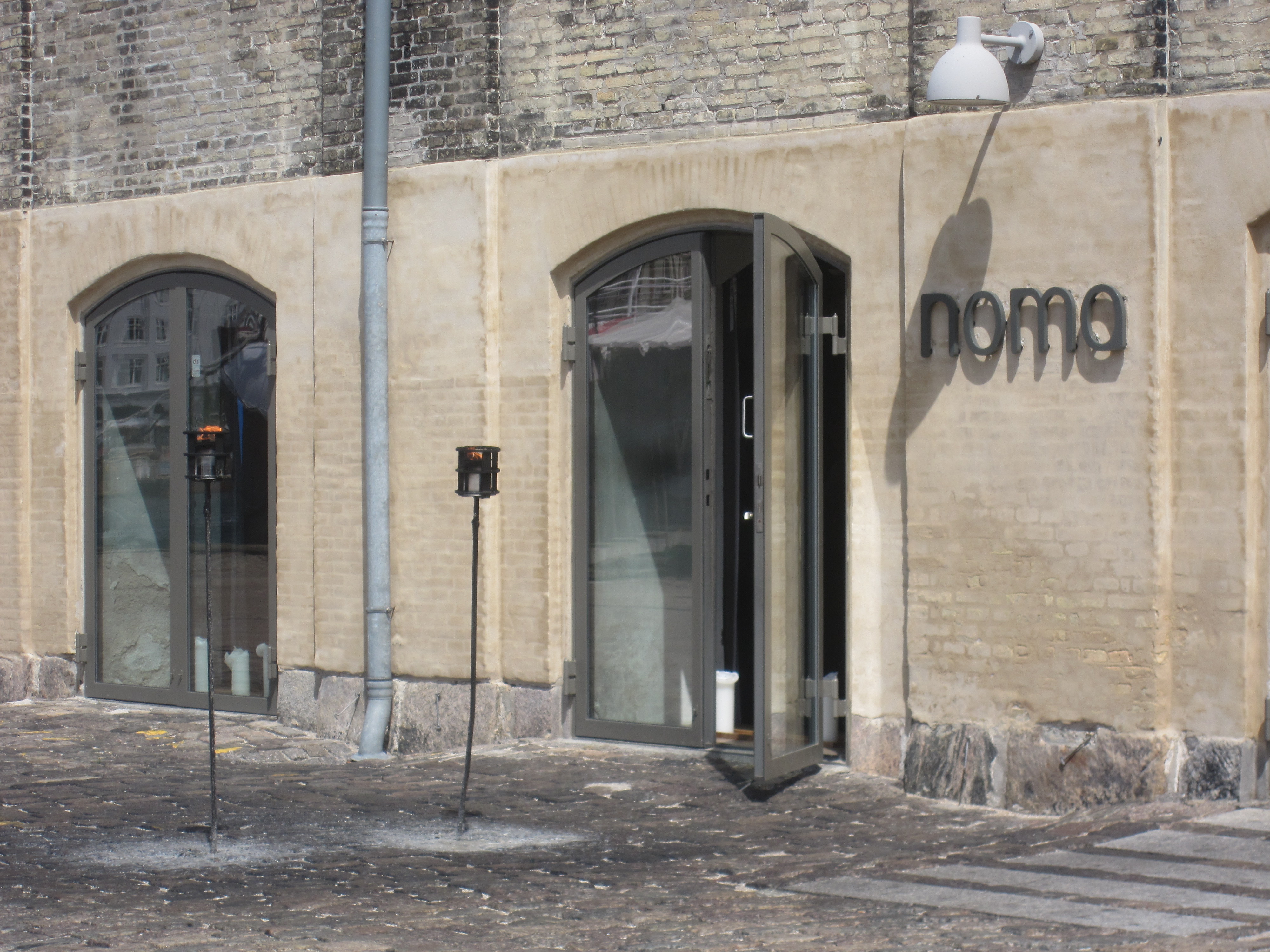
It’s never easy to be the best. Nobody likes you, but everybody envies you when you’re number one. It’s even harder to be the best restaurant in the world, because everybody will have a separate opinion as to what constitutes the best restaurant. “Foodies” worldwide will claim that their neighborhood bistro is the world’s best, or that it is absolutely ludicrous that Mugaritz or the French Laundry are not “better” than Noma, as if it’s possible to really say if “Hey, Jude” is the better song than “Let It Be.” At least in sports, the team that wins the Super Bowl or the gold medal is the best. Debates will ensue, but the champion is the champion.Continue reading “Restaurants: Noma, Copenhagen”

Beer of the Week: Lervig Aktiebryggeri, Stavanger, Norway, Rye IPA

Nogne Ø and Aegir are the red hot craft brewers in Norway that have made their way to the States, following the hoppy path from Scandinavia to our local craft brew bars paved initially by Mikkeller from Copenhagen.

During a recent visit to Norway, I conducted a grand tasting of various Norwegian (and one from Mikkeller) brews, mostly consisting of IPAs, porters, and a few barley wines or strong ales for comparison purposes. With how cold and rainy if often is here, porters and barley wines just sound so much more tempting than a hefeweizen.

Have a half pint or six–furthest right is the Lervig Rye IPA. Yes, more people than myself were present.

Nogne Ø’s saison and IPA are standards to judge others by and Aegir’s Sunbel porter actually received the highest rating during this tasting at Henrik’s, an incredibly stocked craft beer bar in Bergen, Norway, where when I visited there were 5 times as many beers on draft (roughly 45) than people in the bar on an early Saturday night.

However, the one that everybody left talking about and for the rest of the trip we couldn’t stop comparing others to, was the Rye IPA from Lervig Brewery, Norway’s third largest city (Oslo is first, then Bergen). A brilliant head caps the more amber colored body than a typical IPA. Plenty of hops with grapefruit peel dominate the nose and follow through in taste, with a finish reminding me a bit of sesame seeds. The rye notes come through with the maltiness that compliments the hops. The hops are smoother because of the rye, not as sharp and bitter. It almosts adds a slight element of fruitiness.

Yes, rye IPAs don’t need to taste like they’re meant to be the bread for a pastrami sandwich. IPAs can also be hoppy and under control. Norway may be known for its strong ales and earthy, vividly espresso tasting stouts and porters. Lervig has now demonstrated how to expand the IPA repertoire, without going crazy for an imperial IPA. This is a smooth, comforting, also intriguing brew.

Wine of the Week: Les Larmes de Divona Bourgogne Rouge, 2008

The color of this fascinating unfiltered Pinot noir is its first striking feature. An almost dark orange hue glows in the background of the deep rose meets burgundy body. The unfiltered nature of the wine provides a cloudy element that when combined with these contrasting colors provides the same striking appearance of when dark, ominous storm clouds start to make way for a calming sunset.

Or, you can just say the wine looks like a perfectly balanced Kir apertif.

At just 11.5 % abv, this is far from a heavy, prodding Pinot noir that strives to be more of a Malbec or Cabernet sauvignon. This is far from rosé or fruit juice either. The tannins and oak are very present, making this an absolute lock for a salmon with blueberry sauce or lamb burger with harissa mayonnaise.

The year old wine bar in Copenhagen, Manfreds & Vin, recently poured this wine, one of many in its extensive and awe-inspiring French collection. I didn’t see a wine not from the old, often forgotten country that still knows how to make world class and exciting wines. The Les Larmes de Divona is more rugged than the typical Burgundy, but it shows that the classic regions such as Burgundy and Bordeaux may be dominated by heavy hitter heavy, luxurious wines, but there are young winemakers striking a new balance between elegance and innovation.

You can’t fairly call this wine a Pinot noir. It is entirely its own species, in a magnifique way. Then order from Manfreds excellent menu to enjoy with this wine. Or, just savor a few sips and enjoy dinner across the street at Manfreds’ big brother, Relae, where New Nordic cooking and even more excellent French wine awaits.

Cocktail of the Week: Trinidad Sour from Bar Boca, Oslo, Norway

When the bartender and co-owner of Bar Boca, a charming, quirky bar-coffee shop-cafe in Oslo’s hip Grünerløkka neighborhood, asked for my cocktail preferences, I talked about my dislike for crushed ice, how I enjoy something spirit forward, but a touch of sweetness. In other words, not a mai tai and not a Manhattan. She asks about bourbon. no problem at all.

Somehow from my vague preferences she crafted the perfect drink that seemed identical to what my palate seeked, but couldn’t put into words. The drink had just the right bourbon expression, with hints of spice, fruit, and nuttiness. And of course, served up.

Afterwards I requested the recipe and she enthusiastically wrote it down. The recipe was shocking.

4 cL each of Angostura bitters, orgeat syrup, and fresh lemon juice, with just 1 cL of bourbon (forget the type she used, potentially Knob Creek). Angostura bitters are usually just used for a finishing touch, merely a few drops. Orgeat syrup? It’s best known from flavorless mai tais and the artifical syrup in Starbucks almond flavored lattes. Lemon juice, now that’s a great ingredient anywhere.

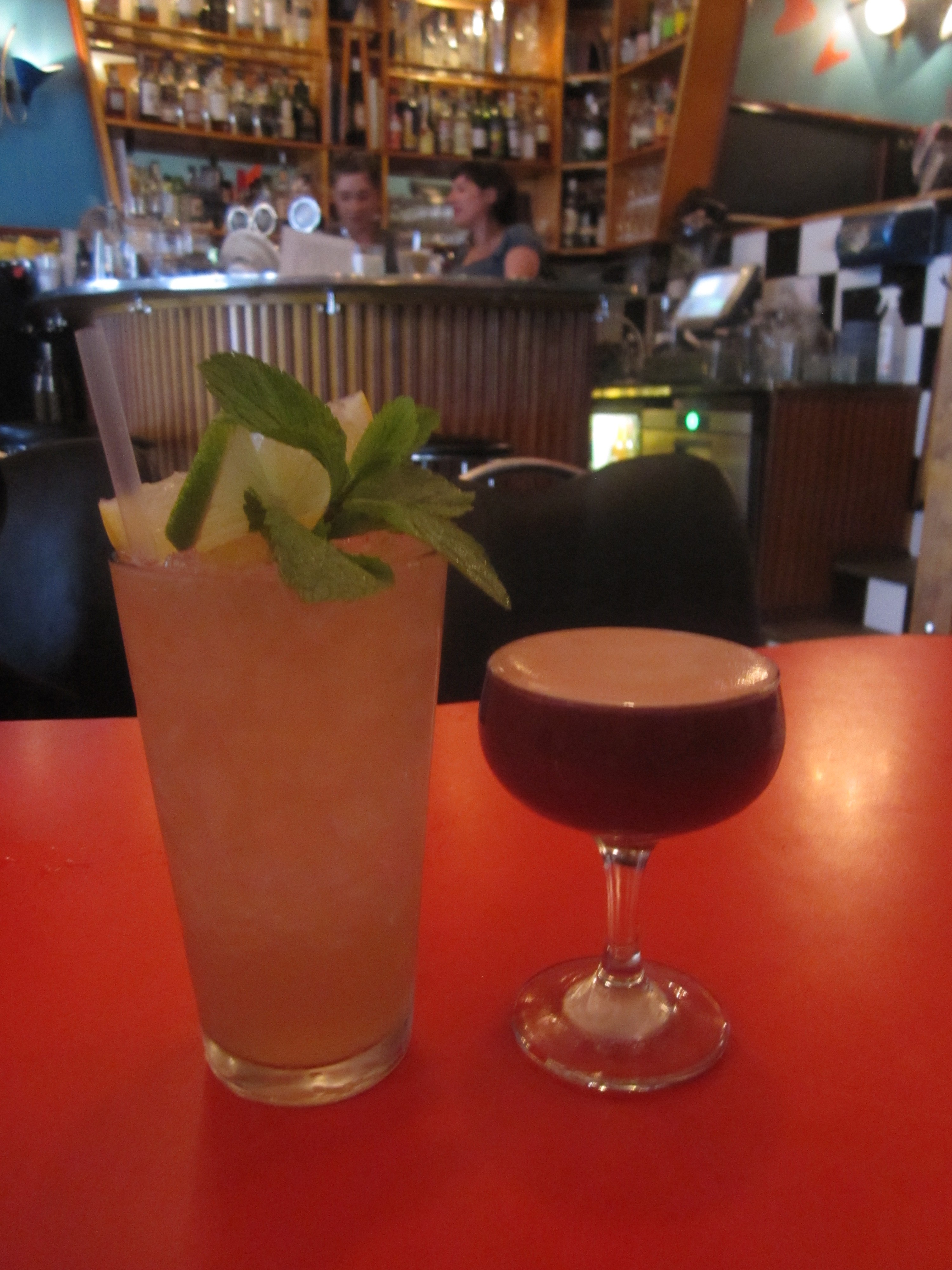
Bar Boca’s Trinidad Sour on the right, a Hemingway Swizzle to the left

But, the bourbon, whose taste is clear in the drink, relegated to being just 1cL? It’s as if the Angostura bitters and bourbon swapped spots.

Either way, the drink is flawless. The orgeat’s almond notes provide smoothness to the bitters’ spice, and the smokiness from good ol’ bourbon. The drink channels Kentucky through the tropics, enjoyed in Norway. It’s a small, small world.

Yet the real shock is the revelation of how impressive Angostura bitters can be as a cocktail’s headline ingredient. After some research, the Trinidad Sour was first created by Giuseppe Gonzalez of Brooklyn’s Clover Club, one of our fine drinking country’s premier bars. It’s a variation on the Trindad Especial, based on pisco. Gonzalez’s recipe is 1 ounce each of Angostura bitters and orgeat syrup, 3/4 oz. fresh lemon juice, and just 1/2 oz.  of rye whiskey. I can certainly seeing a peaty Scotch such as Laphroaig working too.

Everything works and even if it seems like the drink hides the bourbon, it doesn’t. Norway may have some fascinating beers to dominate your attention during a visit, but the mixology circuit from San Francisco to Brooklyn has now made it to Oslo, with an assist from Trinidad.

Tuesday’s Project: Caprese: The Dynamic Duo of Tomato and Mozzarella

It’s the final day of July, which means the latter half of summer unofficially is about to begin. Peaches, corn, cherries, and those other signs of early summer will soon bow down to the summer produce king: tomatoes. For the past 8 or 9 months, much of the country has either preached the Alice Waters gospel and avoided tomatoes altogether or been like me and grin and bear it through the occasional hothouse Roma or Campari tomato to add color (not taste in the case of these tomatoes…) to salads or garnish a sandwich. The current box Campari tomatoes I’m looking at here in the kitchen comes from Mexico (only 1,00o miles away!), yet somehow was delivered through a distributor based in Ontario, Canada.

Let’s just say now that it is hours from being August, it’s time for real tomatoes that express sensational citrus meets earthy notes, bursting with the juice that covers your plate when you try to cut through an heirloom slice in a caprese. Soon I can look the other way at the tomato box from Mexico and shift full time to our tomato garden that is showing excellent promise after the usual weeks of July California sunshine.

Caprese at Trattoria Popolare in Oslo, Norway

A few trickles of cherry tomatoes arrived right after I returned from Scandinavia recently and since Trev’s Bistro is about to hit the road again for a few weeks, it’s time to use as many of the first of the crop tomatoes. There still aren’t nearly enough to make a gazpacho. We’re still in salad and hamburger garnish territory. And in the case of last night’s appetizers, that wonderful Italian summer staple: caprese.

Caprese is as basic as it gets: fresh tomatoes, mozzarella, fresh basil for garnish, olive oil drizzled on top, and perhaps a spritz of sea salt on top. O.K., a dash of pepper can help too. Sure, you can have your interesting variations on the caprese, perhaps liquid mozzarella and spherified tomatoes à la José Andrès, or you can turn a panini or an omelette into a caprese. Even recently, David Tanis, former chef at Chez Panisse and now a writer with The New York Times wrote about evolving caprese into an antipasto spread.

Ultimately, it’s the quality of the ingredients that determine how special your caprese would be. You can get caprese with industrial grade olive oil, rubber mozzarella from a Ohio warehouse, hothouse tomatoes from Guatemala, and dried basil at The Olive Garden.

Then there are several different steps that can be taken to achieve the blissful summer heights that a caprese can easily reach. Fresh tomatoes, perhaps Early Girl or Cherry (Sweet 100 or Sungold) or Brandywine or Yellow Pear, are pivotal. The darlings of chefs are the heirloom tomatoes, for both their sweetness and spectacular colors.

Mozzarella ranges dramatically as well, from the ethereal creamy Burrata to more structured smoked mozzarella you’re more used to the almost watery Fior de latté from cow’s milk. At home, the mozzarella di bufala from water buffalo’s milk is preferred, slightly tangy compared to burrata, and much less creamy, easier for cutting with tomatoes. Of course you could just look at the menu for Nancy Silverton’s brilliant mozzarella bar at Los Angeles’ Osteria Mozza for a whole, definitive guide to mozzarella and its best pairings (it’s hard to ever pass up the burrata with bacon, caramelized onions, and bitterness from marinated escarole, pure genius).

Of course McEvoy Olive Oil’s nuttiness or a pristine E.V.O.O. from Italy or Sicily will transform the caprese even further, along with the fresh basil. Sea salt works wonders when topping the creamier mozzarellas, such as Burrata.

Of course caprese is just one way to enjoy this summer’s King produce. Go crazy with gazpacho and B.L.T.’s, or be innovative like a “B.L.T.” recently enjoyed at San Francisco’s Park Tavern where the “B” is smoked raw tuna, evoking bacon without the crunch or grease. It didn’t hurt to have superb butter lettuce as the “L” and, oh yes, sensational heirloom tomatoes as the “T.”

Then there are always Bloody Marys…

Happy Tomato Season!

Restaurants: Relae, Copenhagen, Denmark

Romaine lettuce is usually an afterthought, hardly the focus of a salad like its glitzier lettuce siblings Little Gems and mizuna night be. It almost seems romaine lettuce gets the adrenaline pumping like iceberg lettuce.

Then after you’ve sampled around a bit in the restaurants of Copenhagen’s New Nordic cuisine generation that swept the city off its feet a few years ago and now the rest of the world is striving to replicate, much like molecular gastronomy beforehand, you’ll never look at any ingredient the same way again. Whether the ingredient is a plant or animal, in the hands of these champion foragers and visionary chefs, fungus, moss, and ants are all ripe for the picking. And little did you know, they pack sensational tasting rewards.Continue reading “Restaurants: Relae, Copenhagen, Denmark”

Restaurants: AQ, San Francisco

Barbeque pork with shelling beans and corn bread speaks of hot, lazy summer days. With a glass of lemonade in hand and Vin Scully narrating baseball on the radio, here you have the glorious season where the days are long, the nights are warm, and the fields and orchards thrive. Summer means water balloon fights and kayaking on lakes. It’s the season for outdoor camps and family trips to the beach and to Europe. It’s the season for blockbuster, mega budget films.

Now that the seasons have turned another page from spring to summer officially, so too has the menu and the atmosphere at the intensely seasonal restaurant AQ. Many restaurants follow the usual local, seasonal, organic, on, and on script, pioneered in the 1970’s by the likes of Moosewood and Alice Waters. The nearly year old AQ takes the seasonal focus to an entirely different, very literal level. The entire restaurant changes every four months from the decor to the menu crafted by the gifted chef Mark Liberman to the attire worn by servers. AQ’s concept follows the dining as theater ideology best exemplified by Chicago’s Next, where the menu completely changes every three months and may involve a theme of Kyoto kaiseki followed by “Childhood.”

Here, it’s the seasons that act as the narrative for this theatrical piece. Unlike Next, there are no tickets to attend this play. AQ is a theme restaurant without feeling like there is any theme. Everything here feels natural. The decor speaks of the time and place. That time is summer. That place could perhaps be the Provençal countryside. The place certainly is not where AQ actually is located, just south of Market, along a still gritty stretch of Mission Street, not far from the future Twitter headquarters in one direction and the edgy Sixth Street corridor in the other. SoMa is a vast district of San Francisco, with some of the most glittering blocks in the city and some of the most struggling. AQ quite possibly is the most glittering restaurant presently in the city. Just a block away is still one of the city’s most challenging urban renewal projects. Whether Mayor Ed Lee can succeed in turning Market Street and Sixth Street into the successful gentrification projects that his predecessors did with other areas of South of Market (SoMa) remains to be seen. It certainly helps to have game changing restaurants like AQ with these projects.

Despite AQ being the work of a rookie restaurateur Matt Semmelhack, the experience at AQ is one of the smoothest and well-thought out the city has to offer. Too many restaurants strive to cut corners. That’s not the case here. Prices are where they should be. The menu is the right size. Servers know every detail of every dish, save for a few cocktails. Hostesses are actually glad to see you, such a strange concept these days. This place clicks much like the 2010 Giants in October. Everything is organized and compliments each other, with a few dashing stand outs along the way, with a dose of joie de vivre to keep matters light and fresh.Continue reading “Restaurants: AQ, San Francisco”

Cocktail of the Week: Fool’s Wager, AQ, San Francisco

Many of my good friends refer to the spirit driven cocktails I often order as “brown drinks.” Whether intensely smoky from mezcal or bitter from amaro or elegantly strong from bourbon, these drinks tend to not branch too far from the central spirit à la martinis and manhattans.

Then there are the apertif drinks that are far less stiff, yet still let you know what spirit should be the focus. Negronis are a perfect example of blending Campari with gin, where despite having the same amount of each with the one to one to one ratio of a traditional negroni, the juniper notes of the gin shine through and contrast directly with the herbal twang of Campari.

The excellent, hyper-seasonal restaurant AQ in San Francisco, changes its atmosphere and menu entirely every season. When the leaves change, the servers’ uniforms change too. With the Summer Solstice just passing by last week, in came the new food and cocktail menu, complete with all your summer favorites from peach and watermelon to summer squash and corn. One of the new cocktails is quite possibly the most beautiful cocktail yet I’ve tasted so far this year. Then again, I couldn’t have sampled the “Fool’s Wager” in March.

“Fool’s Wager” is a riff on the negroni, where the only usual negroni ingredient involved is Beefeater Gin. The gin receives a smoky sidekick from Ardberg 10 Year Scotch. The Campari and sweet vermouth make way for punt e mes and gran classico, adding a touch of cinnamon and an alluring caramel note in place of the brash sage fields Campari provides. A summer bent completes the twist with the addition of peach bitters, adding a delightful fruity edge and of course, a major indication of what season we’re in.

You’d never think you’re having a negroni here. It’s the spirit of balance and refreshing, yet jolting that the negroni thrives at and so too does the “Fool’s Wager.” The drink is indeed one of those “brown drinks” without being potently spirit driven. In fact, it’s more in line with the apertif category in terms of being a smooth, slick sipper. This is a far superior summer drink to box wine sangria and lawnmower beer. Hurry, there are just under three months left to enjoy this. Don’t be the fool who misses out.

Beer of the Week: Pacific Brewing Laboratory’s Nautilus Hibiscus Saison

Pacific Brewing Laboratory might sound like a craft brewing operation from the Stanford Linear Accelerator, but actually is the result of dedicated home brewers Bryan Hermannsson and Patrick Horn. The pair started brewing in their garage and now the lab’s concoctions can be found at numerous craft brew bars in San Francisco.

I first sampled their beers a few months with Squid Ink Black IPA, where porter notes meet hops delightfully. It wasn’t until this summer however that I realized their full potential, courtesy of a sensational Belgian saison, called the Nautilus Hibiscus Saison. The Squid Ink brings to mind rugged, aggressive notes, and the color of the night sky. Nautilus is summer elegance.

Floral notes are everywhere, from the slightly pink hue to the body to the rose petal aroma, from the addition of hibiscus to the brew. Hefeweizen’s banana and clove notes came through strongly, along with a truly buttery mouth feel that made the beer immensely smooth. In fact, some of the taste even seemed like butter, possibly from the unfiltered nature of saison beers.

The usual knock on saison and session beers is the lack of spark to them. That is far from the case here. You’ll be transported to the gardens and the islands from the hibiscus. All together, a beautiful summer beer from pioneering home brewers that pushes what one thinks of a saison.

Wine of the Week: Monje Hollera Listan Negro 2010, Canary Islands

http://www.spanishtablewines.com

Listan negro is a brash, bold grape that slightly brings to mind Zinfandel with a deeper fruit flavor. It’s the marquee grape for the burgeoning Canary Islands wine growing region, where volcanic soil allows for the vines to not be grafted. Somehow when I visited the Canary Islands two years ago, I never even tried a local wine. That’s a big regret. These wines have one of the strongest expressions of terroir, with a taste and texture nowhere else can come close to replicating. This gives the wines strong spice and fruit notes, with firm structures, but very few if any tannins. Since the wines, such as this 2010 from Monje Hollera, are inspired by France’s Beaujolais nouveau production, the wines are served young. Luckily, they achieve a maturity well beyond their years.

This 2010 Listan negro is tannin free, with a strong taste of ash and hefty nose of plum. Some allspice notes come through along with bing cherries. Since I think of Zinfandel as a fair comparison in structure and earthy notes, here is a fine companion for your next rack of lamb. It’s a wine that makes you think, in a good way. Listan negro might be young and still just getting its footing, but watch out for an eruption of wines from the Canary Islands.