Food and Wine’s Best New Chefs 2013

Congratulations to this year’s Food and Wine Magazine Best New Chefs class announced this morning.

You’ve heard of some of the names from television and some of the names probably from the numerous “rising star” lists and awards handed out each month. You’ve also probably never heard of some of these incredible young chefs. Known outside of their home city or not, they are already leaders in the industry and role models for next year’s class.

Michael Voltaggio's Ink
Michael Voltaggio’s Ink

And voilà:

Danny Bowien, Mission Chinese Food, New York, NY

Justin Cogley, Aubergine, Carmel, CA

José Enrique, Jose Enriqué, San Juan, PR

Matthew Gaudet, West Bridge, Boston, MA

Jamie Malone, Sea Change, Minneapolis, MN

Chris Shepherd, Underbelly, Houston, TX

Alex Stupak, Empellón Cocina, New York, NY

Andy Ticer & Michael Hudman, Andrew Michael Italian Kitchen, Memphis, TN

Jason Vincent, Nightwood, Chicago, IL

Michael Voltaggio, Ink, Los Angeles, CAContinue reading “Food and Wine’s Best New Chefs 2013”

Greetings from…San Diego!

San Diego often plays the calmer supporting role to its flashy marquee headliner big brother Los Angeles an hour to the north. San Diego sprawls– but it doesn’t sprawl to the extent of the San Gabriel Valley. San Diego has professional sports– but the Padres and Chargers have never been the Dodgers and Lakers. San Diego has no shortage of freeways and rush hour traffic– but it’s nothing like the 10-101-110 connector at 5 pm (or any time of day, any day of the week really).

At the same time, being the quieter, “smaller” town (San Diego is the eighth most populated city in the nation  after all) allows San Diego and its surrounding communities, including La Jolla, Bonita, Escondido, and more to relax and forge their own distinct personalities. San Diego doesn’t have any James Beard finalist chefs and chances are if you haven’t been to San Diego, the only cornerstone of dining in the area you’ll know about is fish tacos. Well, yes they do love their fish tacos here. But, there is much, much more beyond fried mahi-mahi in flour tortillas.

IMG_0201

San Diego happens to have one of the most interesting, under the radar dining scenes in the country. No restaurant or chef grabs all the headlines. None of the restaurants require a reservation a month in advance. It’s not an arduous sport just to get into any restaurant. Like San Diego itself, dining out here provides amble unique niches, at a much more relaxed level than its bigger, louder metropolitan cohorts.

Will restaurants ever be the major feature of San Diego? Probably not. That honor always belongs to the city’s beer scene and the San Diego Zoo, two of the most important, if not the premier of their respective genres in the U.S.. A visit to one of the 50 plus (I counted 52 breweries in San Diego County, but sources differ…) and some quality time with the Zoo’s pandas and giraffes will prove that point. Shamu, the celebrity killer whale at Sea World in Mission Bay, just north of Downtown, might even be this city’s most famous resident (in the Hollywood golden years, many stars such as Gregory Peck called La Jolla home). Now, whether or not Shamu and the pandas prefer Stone IPA or Ballast Point Sculpin IPA is another story.

Continue reading “Greetings from…San Diego!”

Restaurants: Azul Condesa, Mexico City

It’s always striking to think about how basic, yet profound some of the world’s most revered dishes are. A croissant isn’t a whole lot more than crescent shaped butter. Well then, you try making one at home. Sushi is fish with rice, whether it’s from a supermarket in Topeka or right next to the sea in Vancouver. However, there is a reason that every fortunate diner to emerge from the domain of a Tokyo sushi master appears with the same life-changing daze that resembles the first few hours after your first kiss.

The world unfortunately views fajitas, Margaritas, and five pound behemoth burritos as the “cuisine” of Mexico. Not once did I encounter any of those in Mexico City, except the Margaritas. Let’s just say a Margarita in the Capital crafted by the hands of a Tequila-centric expert is a different story than the frozen slushies with the same name in Pensacola. Spring Break!

IMG_2085

I’m not going to boldly pronounce a certain dish the “official” one for Mexico. Much like pimento cheese might be the unofficial dish of the South, I was told in Mexico City that tacos al pastor are the unofficial dish for that particular city. Cochinita pibil is regarded as the Yucatan’s unofficial dish, while mole negro represents the state of Oaxaca. Consider this an evolution of Hilary Clinton’s diplomatic food corps, where dishes act as senators.

The immensely gifted chef Ricardo Muñoz Zurita is little known outside of Mexico City, like most of Mexico’s “celebrity chefs.” In the U.S., the young and talented Enrique Olvera is starting to become a commonly known name within gastronomic scholar circles. Still in the U.S., the most recognizable names within Mexican cuisine today remain Rick Bayless and Diana Kennedy. It is incredible what impact they have had on bringing one of the world’s most exceptional and under-appreciated cuisines across the border to the north. But, it’s a completely different audience when cooking mancha manteles inside the Loop instead of for discerning  locals who know their moles inside and out.Continue reading “Restaurants: Azul Condesa, Mexico City”

Mexico City Bites: Tacos al Pastor at El Huequito

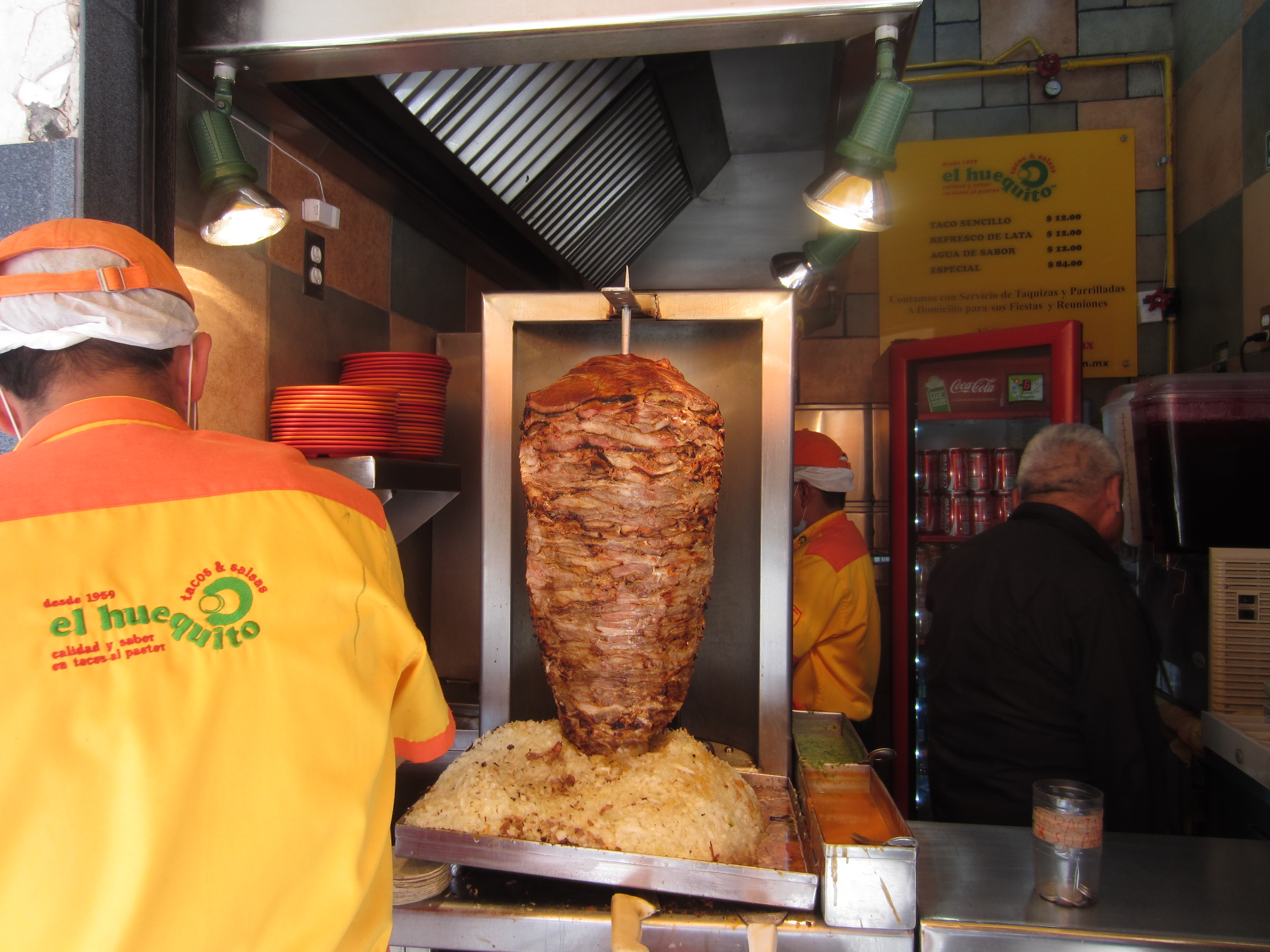
During my food writing days in Los Angeles, I spent many nights driving from taco truck to taco shack to taco truck, across East L.A., near Downtown, and all over Mid-City, sampling often very common renditions of street tacos. Sometimes a lengua taco would stand out, other times it might be a cabeza specialist, or an expert in the art of carne asada. The orders usually differed from place to place. Except, if there was the golden beacon of a vertical rotisserie spit evident. That meant there were tacos al pastor to be found. When al pastor, freshly shaven off the vertical spit, glistening with pork grease and pineapple juice, was available, that would mean you order a few tacos filled with it. No questions asked. It was my main basis of comparison for taqueria to taqueria. Debates in Los Angeles food circles about the premier al pastor rage with abundant pork-fille passion. At El Taurino with the killer spicy salsa? At Leo’s Truck?

IMG_1444

There will never be an end to that debate. Which then brings us further south to Mexico City, where it turns out that tacos al pastor is actually the unofficial dish of the Capital. Indeed almost every block of this massive city has at least two taco stands and the rotisserie spits light up the night like gaslamps do for Paris. Yet, when I researched for one al pastor stop on my quick, frenetic day in the city, unlike with L.A.’s debate, all signs seemed to point to one stop: El Huequito. In Spanish, the name means “the little hole.” The name isn’t kidding.

Tucked into the heart of the chaotic Centro Historico not far from the Torre Latinoamericana (“Mexico City’s Empire State Building”), you’ll finally spot El Huequito with its bright yellow awning, a portable table with two types of salsas and room for maybe three plates, and of course, the alluring rotisserie spit. I like to consider myself a “savvy traveler,” but I couldn’t find the place after numerous circles until I asked a very kind police officer for guidance. It turns out that I had been mixing up the street number for a nearby ceviche place with the street name of El Huequito. Well, I made it anyhow.

IMG_1445

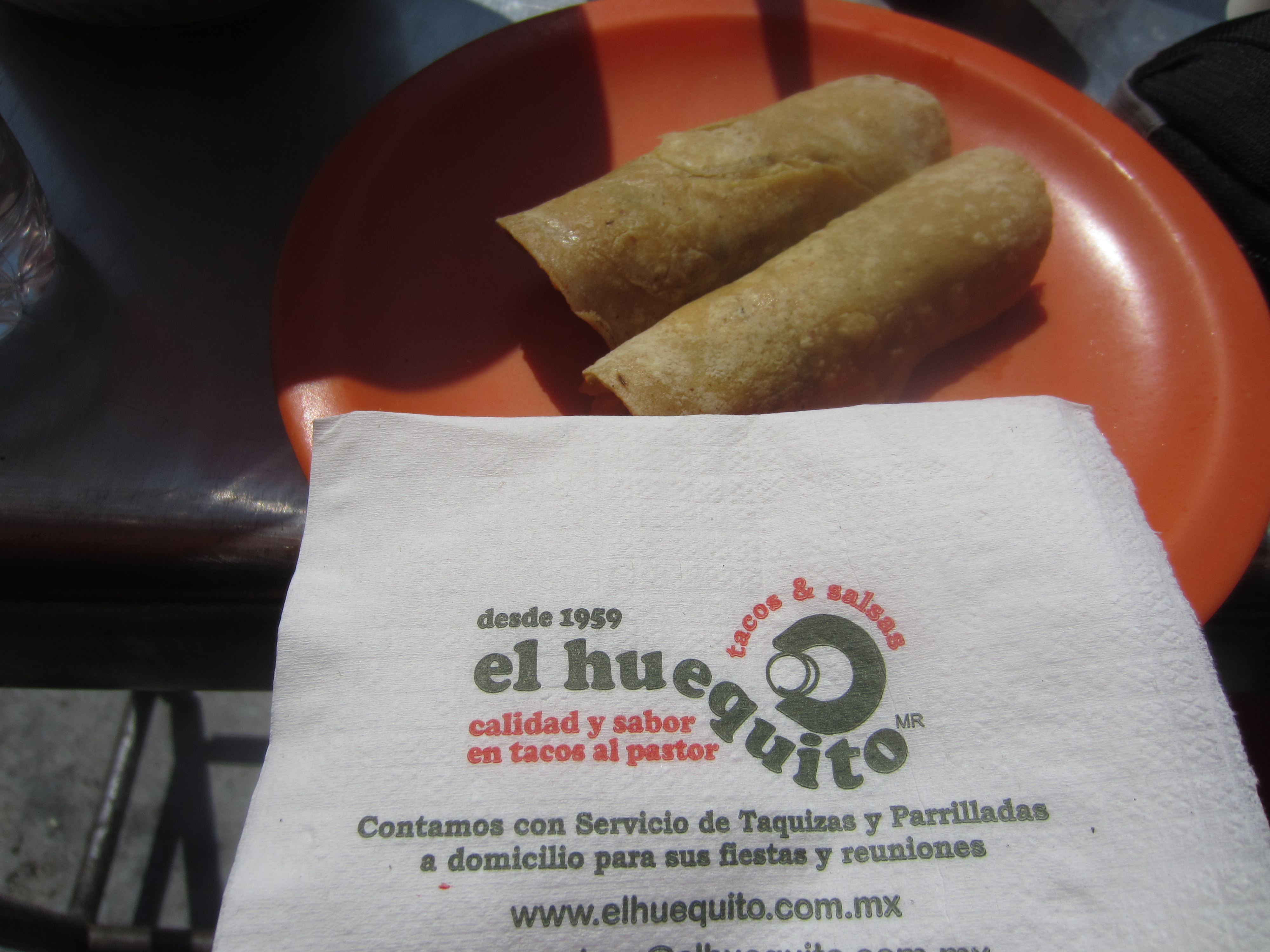
The options are pretty basic at El Huequito. It’s not whether you want tacos al pastor. It’s how many tacos al pastor you’d like. The only other question is deciding between a Mexican Coke or a Horchata to accompany the tacos. They’ve been doing one thing perfectly since 1959. Why change?Continue reading “Mexico City Bites: Tacos al Pastor at El Huequito”

The New Café: Where Biking and Jogging Meets Coffee

Not long ago, a coffeehouse was, well, just a coffeehouse. Think “Central Perk” from “Friends.” Think about the coffeehouses that dot university towns, with stressed out students sprawled out on couches and fliers covering every inch of the walls.

A coffeehouse was a meeting place and a place for reading. As time went by with the wi-fi generation wanting coffee to go with their Facetime chats or work on their laptops, the coffeehouse became a de-facto anti-social computer lab, the complete opposite of the social epicenter that coffeehouses once were.

Would you like some bike and sugar with your coffee?

What to call a nondescript Starbucks or Peet’s? They are what they are, the same in Topeka or Temecula. They are somewhere in between a coffeehouse and laptop center, where at least half the customers don’t even consume the coffee on the premises.

With the rise of the “Third Wave” coffee movement (a global movement of local, small batch coffee roasters who seek out higher quality beans and often have their own cafés) over the past decade, the actual coffee has been surging in quality. In turn, the idea of a coffeehouse has had both a renaissance and a complete re-imagining. These are the cafés where your barista is both expert and artist, where your precious Ethiopian single origin pour-over arrives ten minutes and five dollars later, and where your espresso’s blend has been sorted with the meticulous care a fine Bordeaux winemaker will do with his grapes.

To accompany the loftier coffee, coffeehouses, including Sightglass and Four Barrel in San Francisco, now are combating the anti-social laptop crowd by not having wi-fi available. Here, it’s about socializing, reading, and of course, the coffee.

Palo Alto, CA's Zombie Runner
Palo Alto, CA’s Zombie Runner

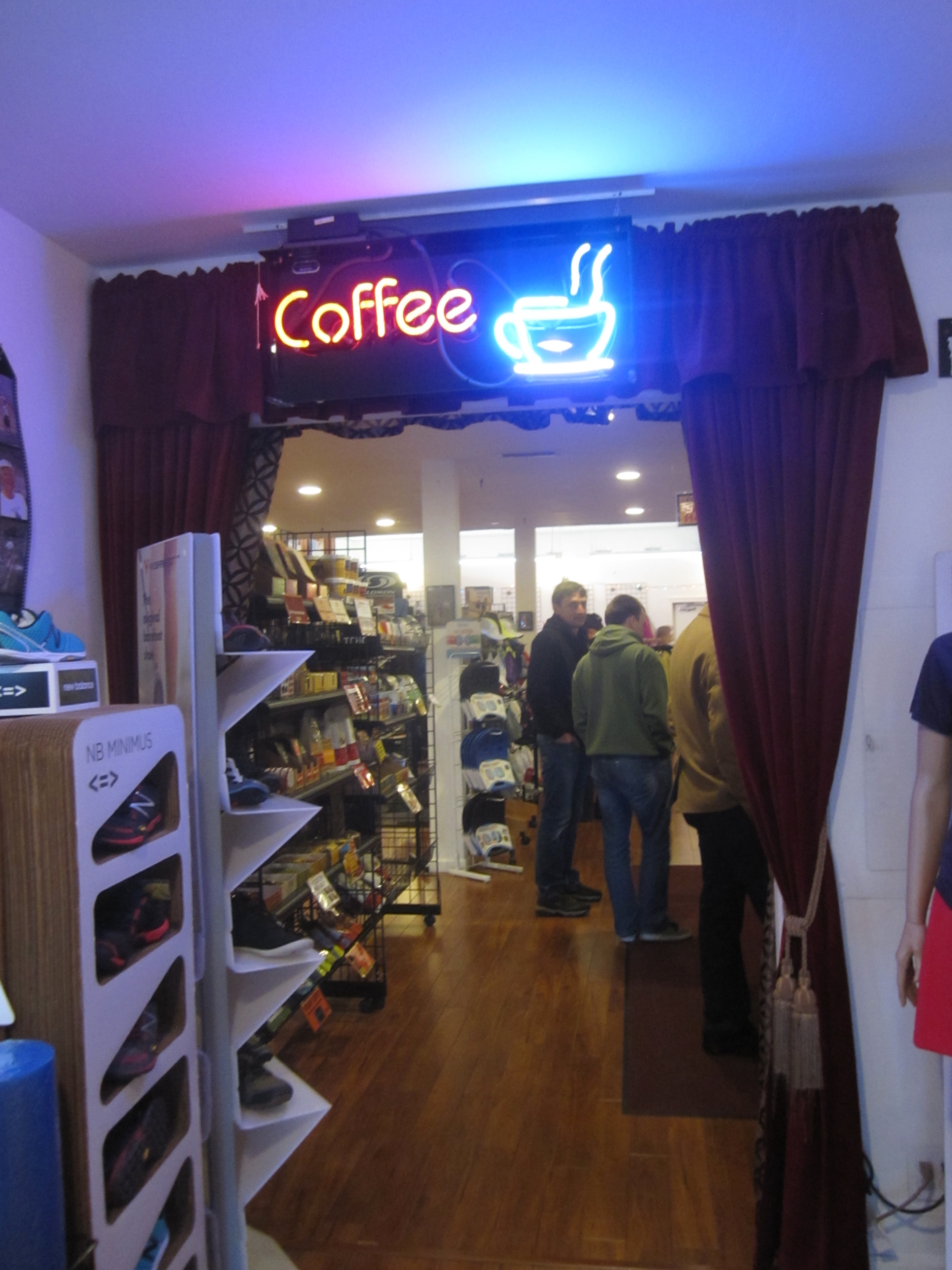
Yet in the past few years, the concept of the coffeehouse has been taking an even more peculiar turn. Forget about the old coffeehouses of couches and tables. Welcome to the generation of where bike shops and running stores co-exist with coffee shops. In many cases, these hybrid shops even roast their own beans. One thing is for certain at these “cycle cafés” and “jogging cafés,” you will be wide awake for that next bike ride or run. Continue reading “The New Café: Where Biking and Jogging Meets Coffee”

Restaurants: Pujol, Mexico City

It’s profound to think about the changes in gastronomy since Escoffier’s 19th Century heyday, an evolution that the master chef himself would probably warm up to over time after expressing initial ghastly disapproval. There are the initial, on-the-surface changes that are very easy to point out: where art thou white tablecloths, tuxedoed waiters, and diners dressed in your special occasion finest? Truffles, heavy cream, and foie gras, where have you gone? (Oh, they made WHAT law in California?)

Then there are the technical steps and new beloved ingredients of today’s pioneering chef tier that the father of haute cuisine would slowly welcome into his repertoire. I’m sure he would eventually grow to accept sous-vide cooking and would not abuse the vacuum sealing process, as is too often seen today.

IMG_1977

And finally, you come upon the little jolts that show just how rewarding dining is today because chefs know how to be daring, while also being thoughtful. Try to think of a more daunting industry to succeed in. Colleges divide themselves into departments of arts and sciences. Forget about separating the two if you’re a chef. Running a restaurant and cooking on a nightly basis is an art and science together.

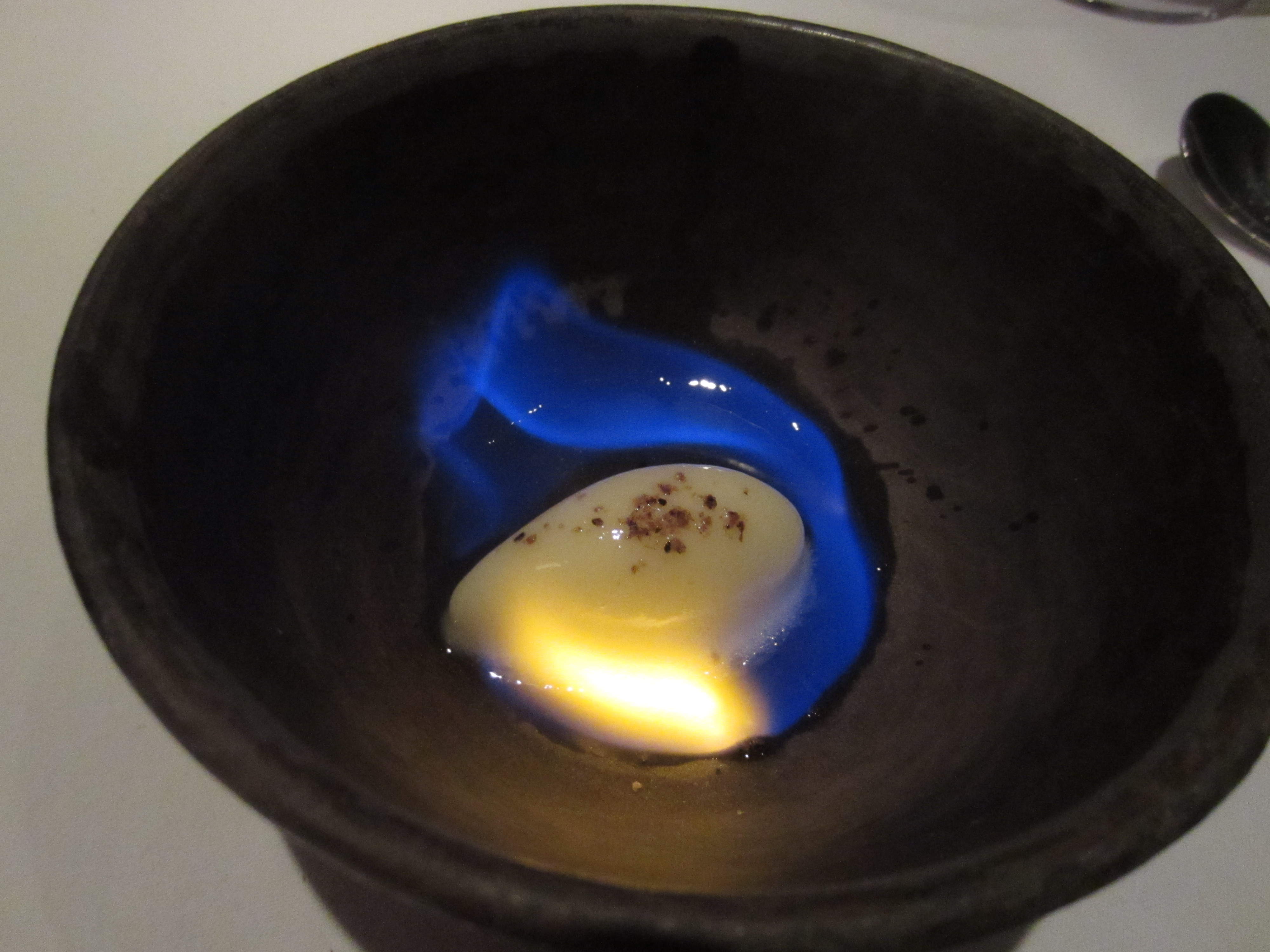
That brings us to the sometimes subtle, sometimes you wish it was subtle, high-wire acts that chefs and restaurateurs are presenting these days. There are card games involved with dessert. There are dishes that are strictly meant to be smelled. No part of any living species, animal, plant, or neither, is not explored and foraged as a potential component for tonight’s menu.

And, speaking of the menu, a menu usually is one of the more straightforward, less roller coaster rides of a meal, outside of the price listings. It tells you what is being offered from the kitchen, unless of course the kitchen does not want you to know the upcoming omakase flurry. There might be a logo on the menu. The dishes might be written in a particularly elegant font.
IMG_2016

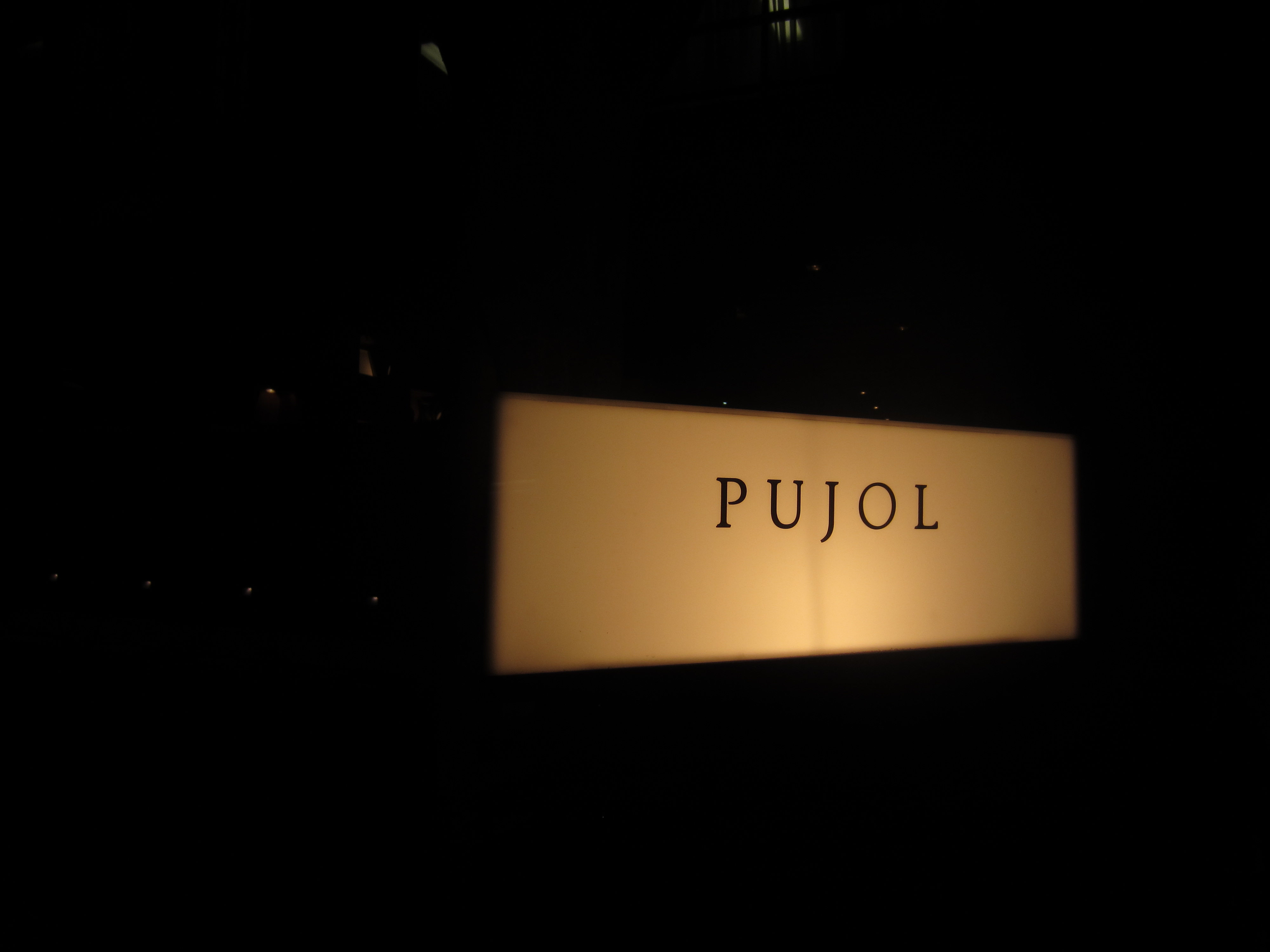
Or, there might be a big old stinkbug right on the front of the menu. That’s the case with the jumil, a prized type of beetle, in Mexico, that presently graces the cover of what is often considered Mexico’s finest restaurant today, Pujol. Some tables might receive a menu covered with the slightly more appetizing chapulín (grasshopper), a common ingredient in Mexican cooking. Less known is the six legged and two tentacled jumil, eaten in a tortilla (as you might eat some carne asada) by natives of Taxco, Mexico, who believe that the jumil has spiritual properties that will aid the body’s energy. On the menu at Pujol, the jumil appears almost cuddly, like the best friend you had back in kindergarten but your parents told you to never get near it again. Even when you start to analyze the black and white sketching of the jumil, a tiny horizontal heart is apparent near its center. I’m no biologist, but I have seen enough heart x-rays over time to know an actual heart is not “heart shaped.”Continue reading “Restaurants: Pujol, Mexico City”
Mexico City Bites: Churreria El Moro

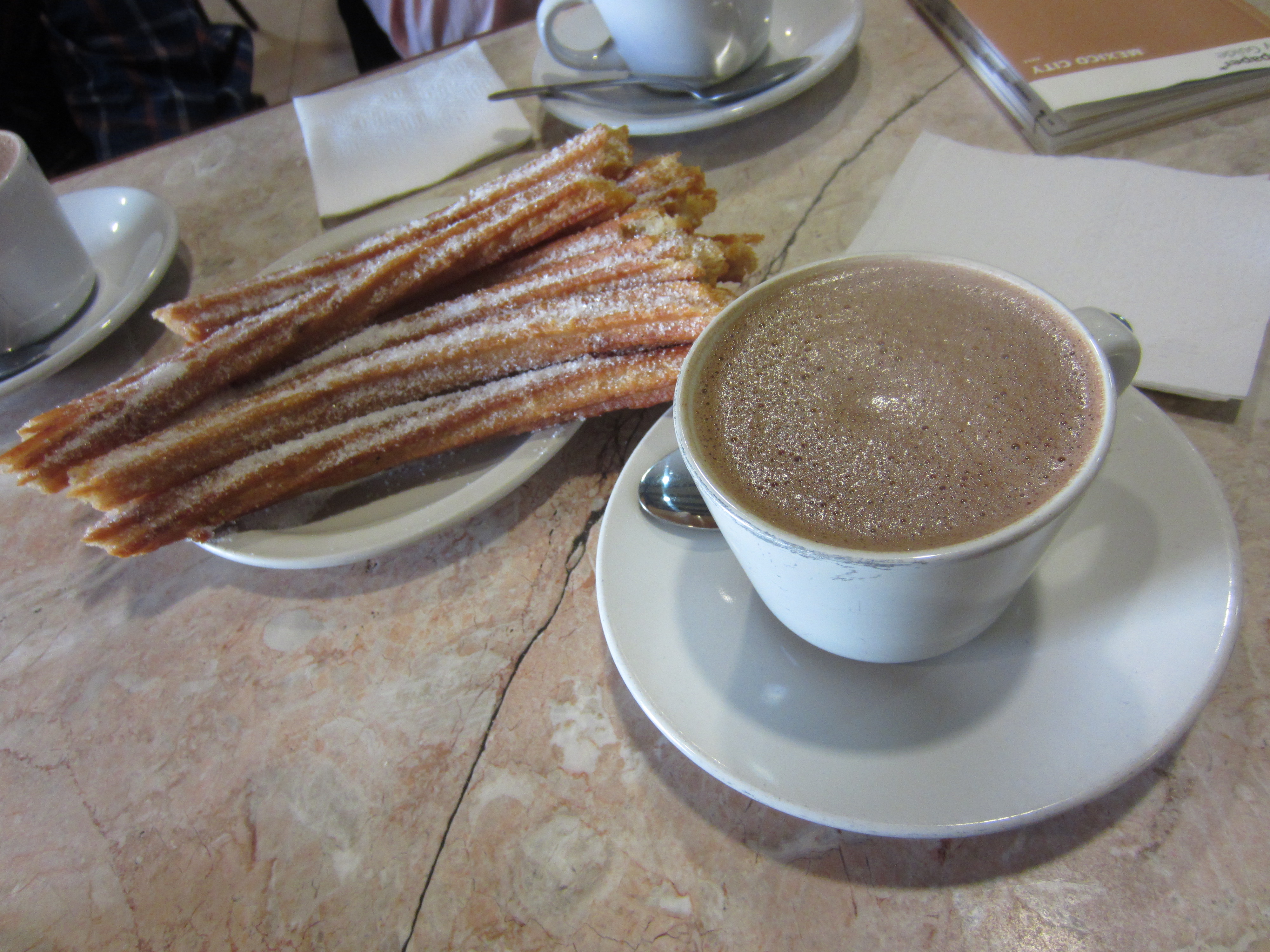
Churros and chocolate deserve more publicity. They don’t necessarily compliment each other, like say peanut butter and chocolate or red wine and chocolate, because you are combining sugar with more sugar when the churro is dunked into the hot chocolate cup. That’s why in Spain the churro comes usually without sugar. Mexico seems divided between to sugar or not to sugar.

But then in Spain, those churros are dull crullers on their own. At the same time, the meager hot chocolate is dull on its own. The cafés there need to takes lessons from Angelina in Paris or a number of cafés in Mexico City that know the best sipping chocolate and dunking hot chocolate must almost be as thick as a chocolate mousse. There is no such thing as excess when it comes to churros and chocolate. Don’t get me started on the watery hot chocolate at the revered San Gines in Madrid. Even at 3 am, it’s unacceptable hot chocolate for churro dunking or sipping.

IMG_1436

A few cities in the U.S. now are fortunate enough to have cafés specializing in this dynamic duo (Xoco in Chicago, Churros Calientes in Los Angeles to name a few). Often, you’ll find pastry chef versions of churros, filled with dulce de leche or crème anglaise, or perhaps with Grand Marnier spiking the chocolate sauce for an extra level of sophistication.

In the U.S., at least as I grew up, churros were always thought of as “Mexican doughnuts” that you eat at baseball games. They were long sticks of crisp fried dough filled with a very thin soft, uncooked dough.

Yes, churros are fried dough (butter, flour, eggs, sometimes vanilla for health benefits), but they are nothing like the doughnuts you’ll find Homer Simpson eating or being served at the local coffeeshop. Churros really are more like pastries. Hence, they should be treated as such, like is done in Spain and Mexico. Churros are served with your hot chocolate or coffee as part of a mid-morning or mid-afternoon snack, or an early siesta inducing breakfast.

There is no officially correct method for eating a churro or a specific time mandated by food law to eat a churro. There are only recommended guidelines.

IMG_1431

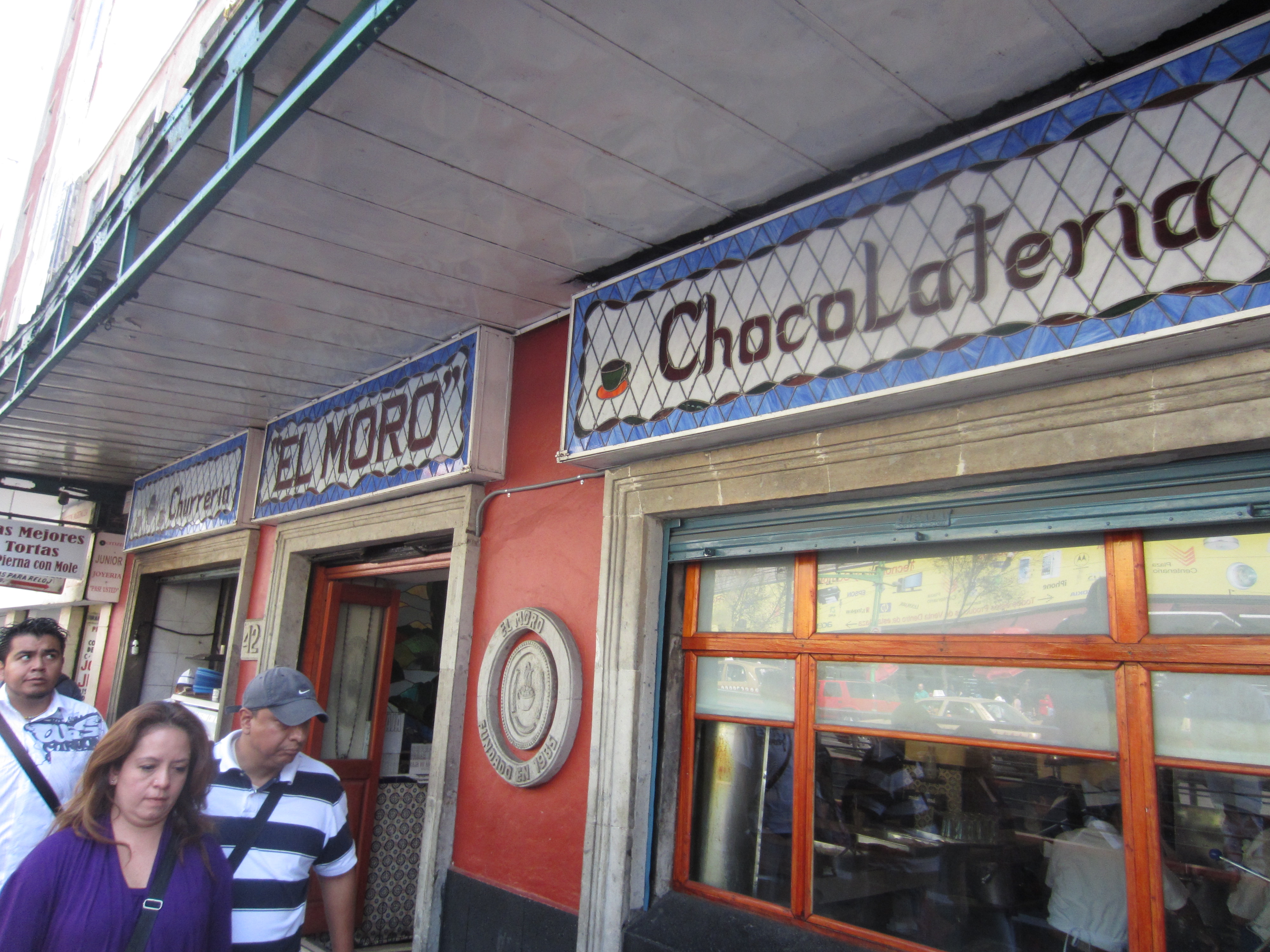
Which brings us to Churreria El Moro, the legendary churros and chocolate cafe in chaotic heart of Mexico City’s Centro Historico, a congested area that makes Midtown Manhattan seem as tranquil as Tahiti. El Moro has been frying the grooved cylinders of dough for 24 hours a day since 1935. Name the time and churros are ready to be fried and cut for you here.Continue reading “Mexico City Bites: Churreria El Moro”

Restaurants: Commonwealth, San Francisco

Perhaps chronicling an evening at San Francisco’s Commonwealth Restaurant turned me into a giddy eight year old again, but I feel like starting with dessert. No, that’s not because a doughnut is the first image diners see upon arriving at the restaurant on a still very edgy stretch of Mission Street, a street in the heavily gentrified Mission District where no stretch doesn’t boast a majority of businesses with gated windows. It’s true, Commonwealth’s predecessor at the space was the Hunt’s Donut Shop.

Hunt’s wasn’t exactly the new age style of haute doughnut, perfected across the country from Dynamo in San Francisco to Blue Star in Portland to The Doughnut Plant in New York. Hunt’s doughnuts were meant to be consumed, usually under some influence of something. They were not meant to be eaten and savored. You could get a dozen for a dollar. Talk about a good deal for breakfast each morning, future angioplasties unfortunately cost a bit more later.

IMG_8945

There were eight doughnut shops in the eight block stretch of Mission Street between 16th and 24th Street back in the early 1990’s, long before the Mission was on any dining radar for those seeking a James Beard award winning restaurant experience. Maybe Hunt’s Quality Donuts was the best of the box of eight?

I haven’t found any evidence of that. I have however learned that Hunt’s was the “epicenter of crime” for this area with no shortage of drug dealer, pimps, and whatever else happened at night. Hunt’s operated 25 hour days apparently. We can infer what we want from that.

Restaurateurs today love being archaeologists when creating new restaurants, discovering sketchy pasts, uncovering atmospheric layers that showed the venue once was a saloon, or a warehouse, or a 19th century mansion, or a 1920’s brothel, or in this case, Hunt’s Quality Donuts. Before Commonwealth took over the property, the venue was a Mexican restaurant with an exterior decor of flashy orange tiles that covered the Hunt’s signage.

The doughnuts have departed, and fortunately, so has the “epicenter of crime” stigma here at the restaurant on Mission, just north of 18th Street. The theme of desserts, however, has not left the building.

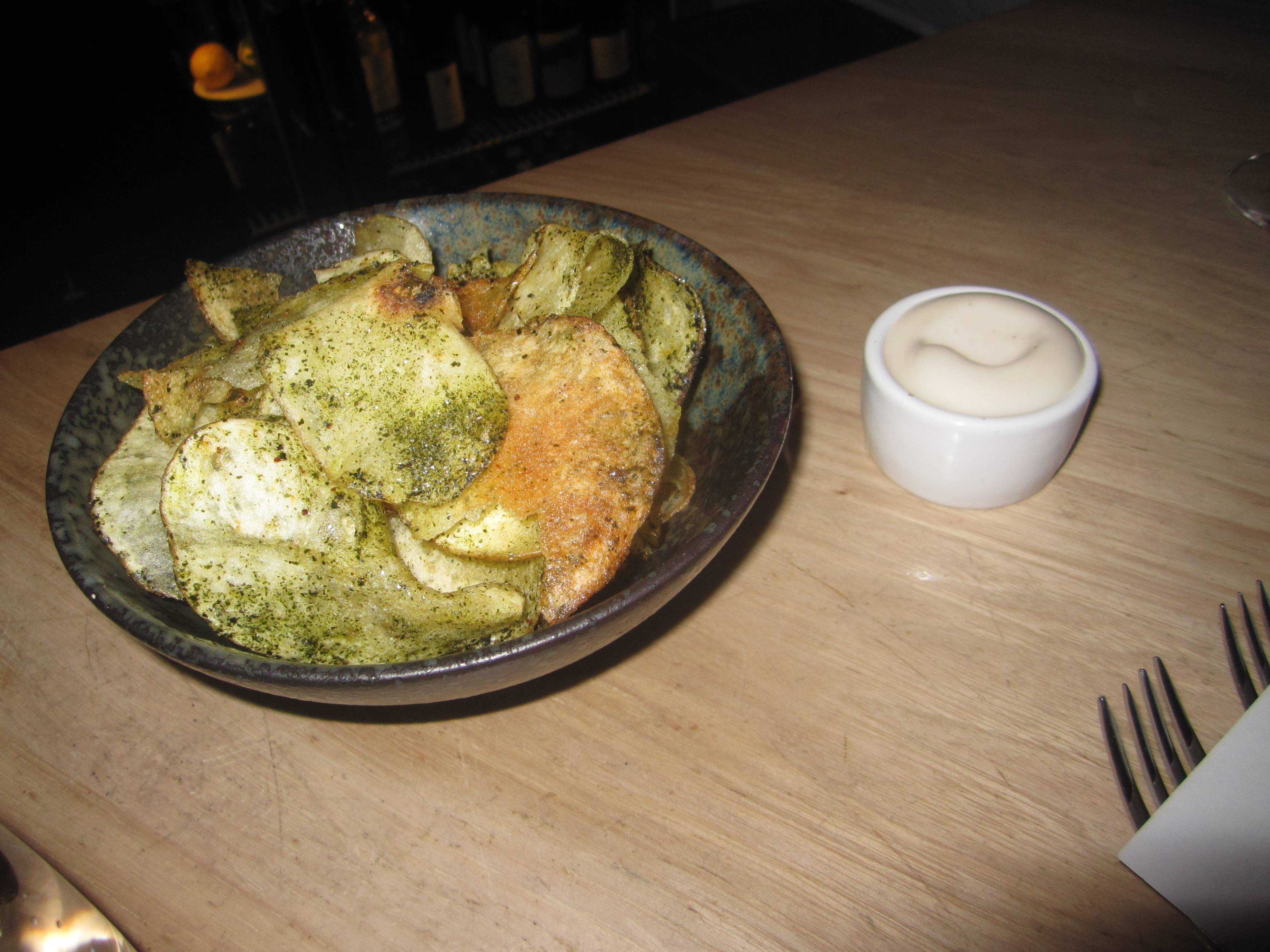
Housemase Potato Chips and Malt Vinegar Foam

The dessert on my mind is Jason Fox’s interpretation of a Reese’s Peanut Butter Cup, which may or may not have been on Fox’s mind when creating the dish. No meal is complete at Commonwealth without the peanut butter semifreddo, coated with chocolate ganache, and garnished by frozen popcorn. It’s been on the menu since Commonwealth opened in the summer of 2010. It seems to appear on every table, one per person. It’s everything a dessert is supposed to be. You will not share it.Continue reading “Restaurants: Commonwealth, San Francisco”

Plat du Jour, Wednesday February 27, 2013: Thoughts on the 2013 James Beard Awards Semifinalists

Lots of news happened the past few weeks (what meteor?) while your faithful writer was on assignment outside of the country (it is amazing how liberating and efficient each day is when traveling without a phone or computer!). For the purposes of this food and drink savvy audience, of course the big news was last week’s unveiling of the 2013 James Beard Foundation Awards’s restaurant and chef awards semifinalists. The James Beards are considered the “Oscars” of the restaurant world. They are every bit as anticipated by the industry and every bit as controversial. Take your pick as to which is harder: seeing every film made in the year or dining at every restaurant in the country (that would be considered for an award, so Olive Garden doesn’t count).

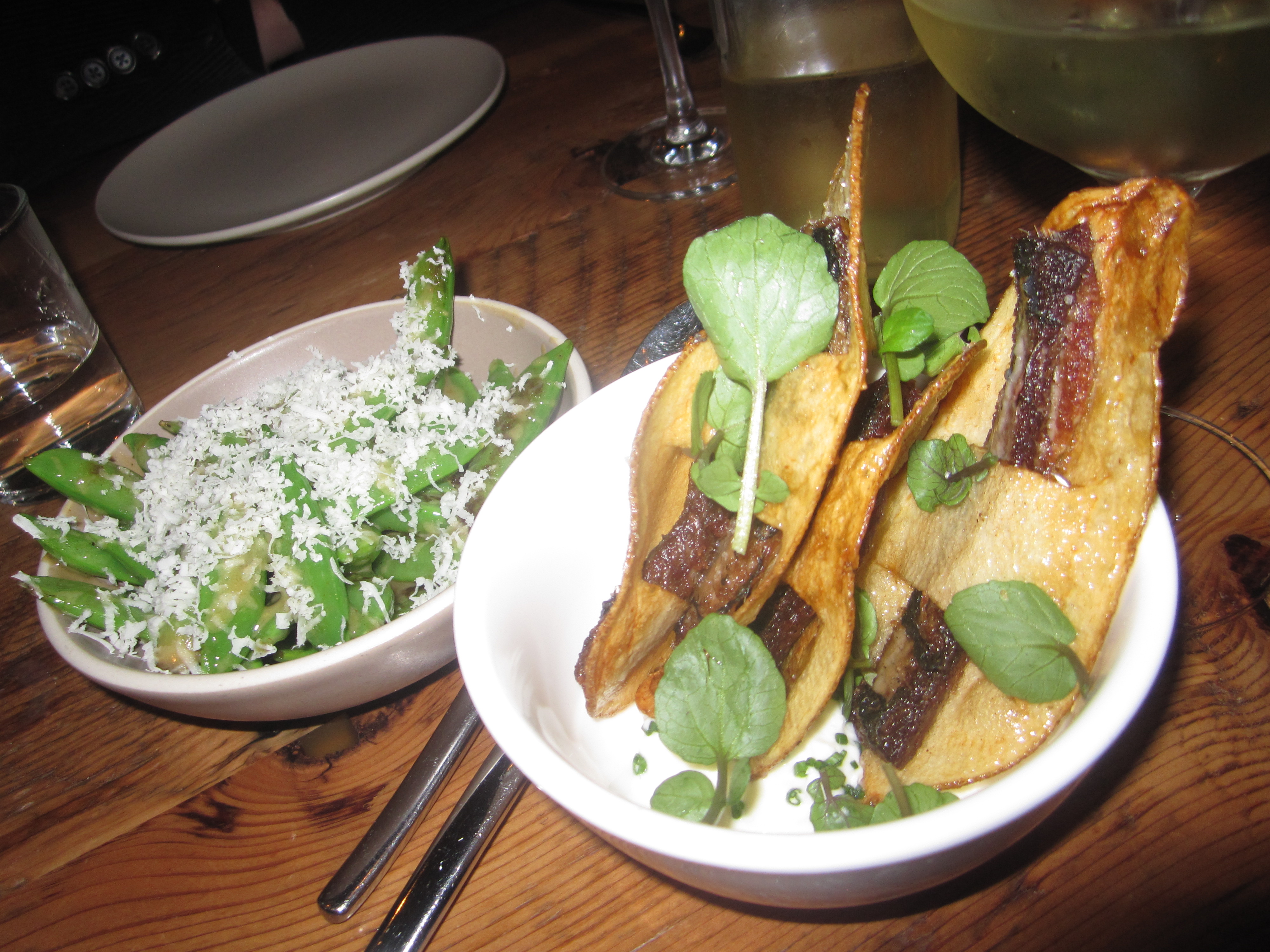
Rich Table’s Sardine Chips

As a food writer, I’ve probably been to more of the nominated restaurants than the majority of the dining public, but that doesn’t mean I’ve even made a slight dent into the list of semifinalists. I know about most of the chefs and restaurants. I just cannot tell you for instance that Khong River House is a far better experience among the nominated best new restaurants compared to The Whale Wins. I can say that Rich Table would get my vote over Ox and State Bird Provisions, but all of them are very worthy honorees. Maybe The Whale Wins, though, would beat out Rich Table?

IMG_8581

The key to take away from this list and the final winners of the James Beard Awards in May is that this is a more a list taking the pulse of the dining scene right now than it is the Olympics awarding legitimate Gold, Silver, and Bronze medals. If the 2012-2013 season for restaurants showed me anything and is demonstrated by the semifinalists, it’s that creative small plates with lots of modern and ethnic flares are most in vogue and can be found all over the country from Mateo Tapas in Durham, N.C. to Bierbeisl on the outskirts of Beverly Hills.

I’m most excited about the “Outstanding Bar Program” category, the only category that seems very focused and accurate, and the one I’ve actually sampled through roughly half of the nominees and each one is stellar. My personal vote goes to Anvil Bar & Refuge in Houston, but how dare anybody make me choose that over The Cedars Social in Dallas, Cure in New Orleans, New York’s Pegu Club, or Clyde Common in Portland. Add to that Abbott’s Cellar, the beer bar in San Francisco that has changed everyone’s concept of a beer and food pairing restaurant. Continue reading “Plat du Jour, Wednesday February 27, 2013: Thoughts on the 2013 James Beard Awards Semifinalists”

Tasting Notes: New Belgium Brewing, Fort Collins, CO

“I’ll have a Fat Tire and that IPA from Fat Tire.”

I’ve heard that sort of request numerous times from beer drinkers who aren’t even novices to the genre. It’s the craft beer specialty mindset where one specific beer from a brewery achieves such an exalted status that the beer’s name supplants the actual brewery’s.

Quick, who brews Fat Tire Amber Ale? That’s a lot harder to swiftly think about compared to the brewer of the Lagunitas IPA.

Perhaps Lagunitas IPA cannot be included in this discussion, though it very much fits amongst its colleagues for iconic beers. I for one knew about Arrogant Bastard years ago, but had no clue who actually brewed the beer. The same for Black Butte, Pliny, and Fat Tire. These are the flagship beers of the craft beer movement that has swept across the country from beer epicenters like Portland and Denver to the tiniest towns of West Virginia and Delaware (can you think of a Delaware craft brewer? Don’t think too hard.).

Yours truly may almost always be the only writer behind these articles, but trust me, there were others tasters present.

These are also the beers that are starting to verge on over-expansion. Like with restaurant chefs, craft breweries can very quickly expand its output to too high a level and the product begins to be noticeably compromised. I always use the airport as an example when this really starts to be the case. Just ask Wolfgang Puck. And now, it almost seems you can find Lagunitas IPA and Fat Tire Amber Ale at as many airport bars as Stella Artois and Shocktop.

That’s a good thing in that travelers get decent to good craft beers, instead of the mass produced messes they used to be stuck with. That’s also a bad thing because what were often exceptional, very personal small batch beers are now a fraction of what they once were.

My family, many of whom live near New Belgium in Colorado, treat Fat Tire Amber Ale with the same reverence as John Elway.

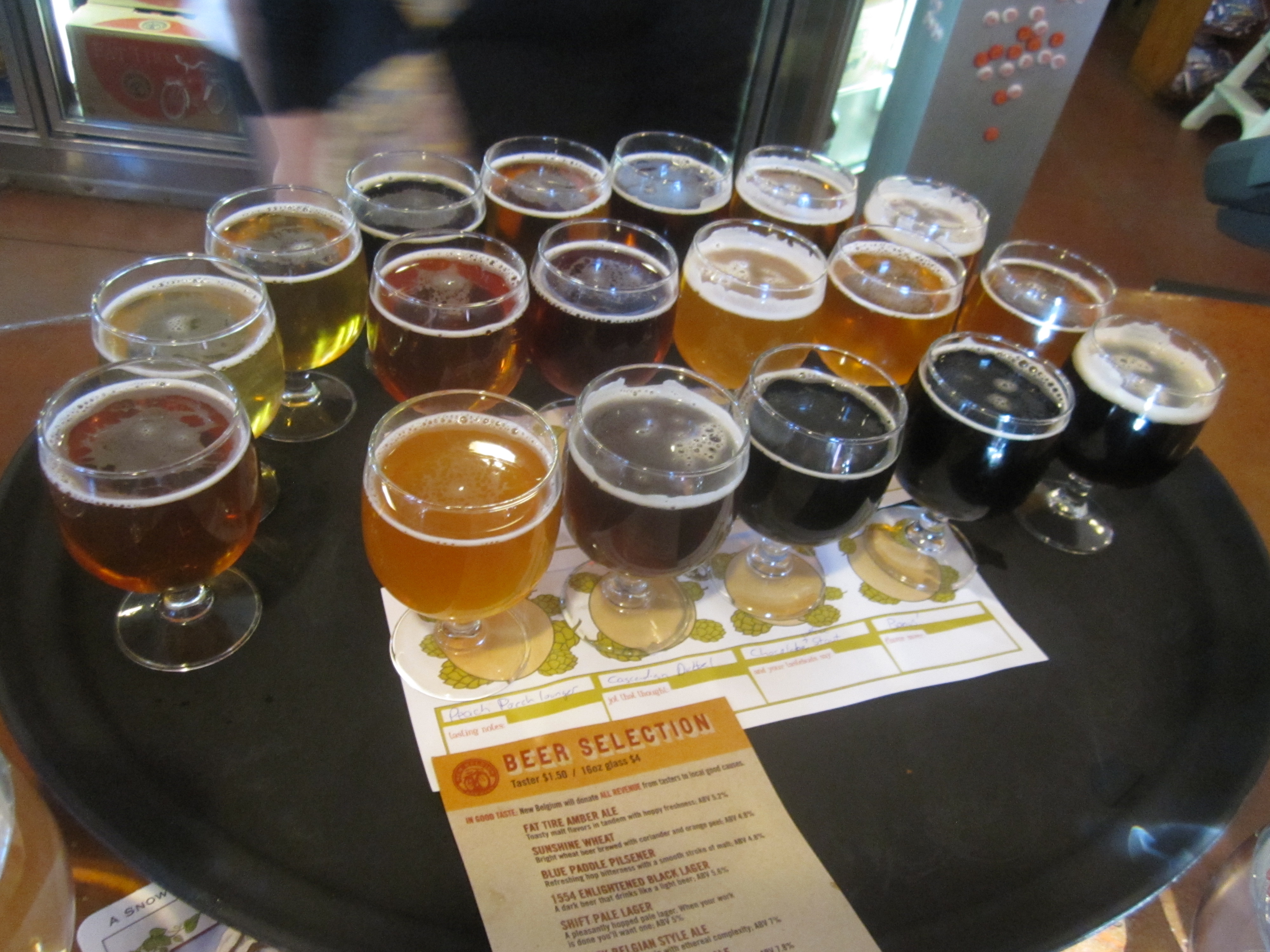
IMG_8898After sampling all 17 beers recently on tap at New Belgium’s Brewery in Fort Collins, Colorado, it’s fair to say Fat Tire is very much in the middle of the pack at its own brewery. It’s not that it’s a poor product. It’s just nothing special. That was a universal opinion. The signature beer of a craft brewery shouldn’t be one you don’t remember at the end of a tasting, even with all of the stouts and Belgians pyrotechnics over the course of the sampling journey.Continue reading “Tasting Notes: New Belgium Brewing, Fort Collins, CO”