Monday’s Neighborhood: Silver Lake, Los Angeles

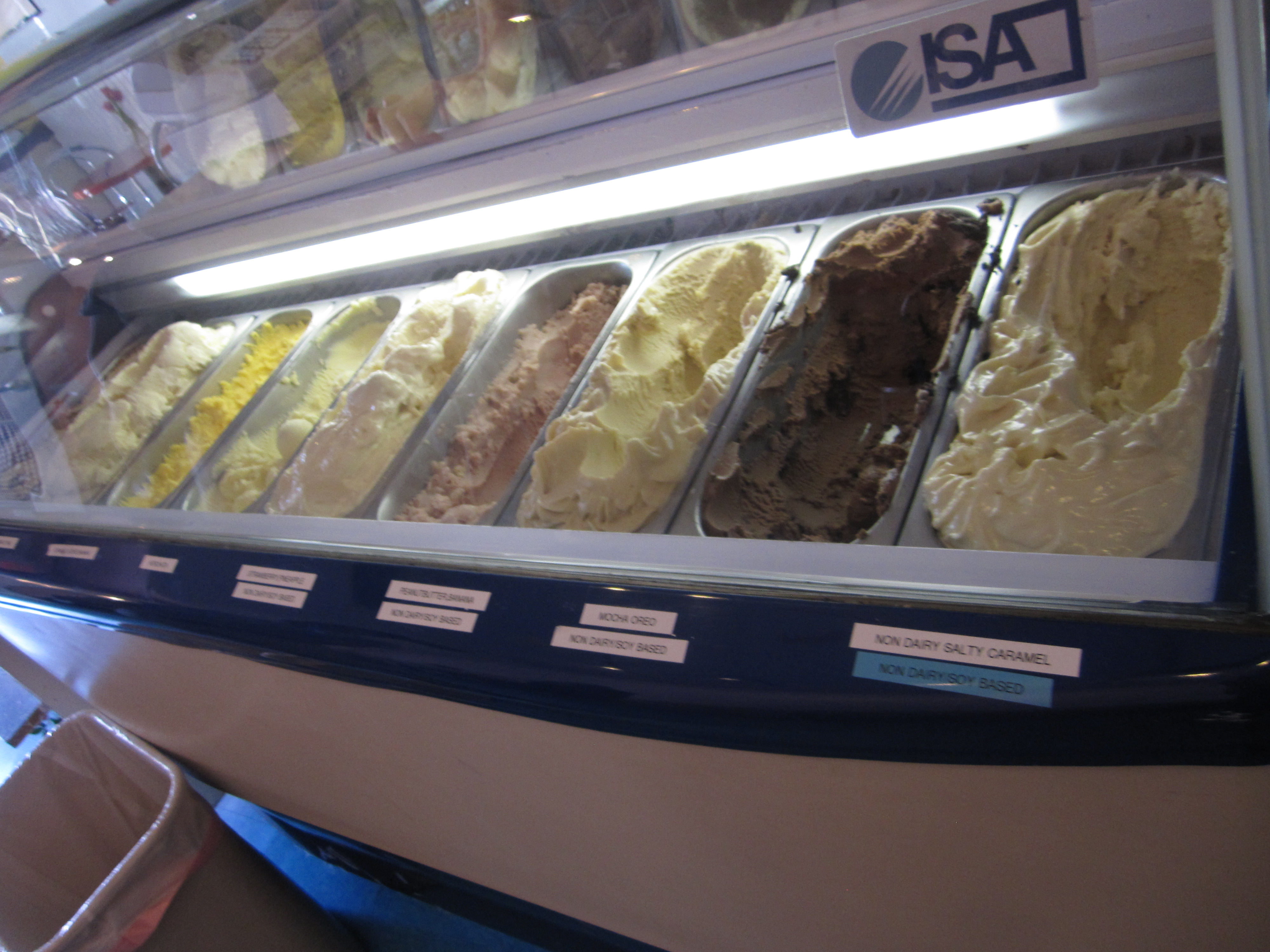
Flavors at Scoops

Nestled quietly just northwest of Downtown and right outside of Chavez Ravine from Dodger Stadium, Silver Lake is one of those non-glamorous, mostly middle class neighborhoods that nearly every major city has, but nobody ever envisions flashy, expansive Los Angeles to have. Los Angeles doesn’t do subtlety. Somehow, Silver Lake has powered along to become one of the city’s most pleasant places to live. It has also become one of the premier neighborhoods for dining. All the while, Silver Lake has remained nothing but subtle, appreciating its steep hilly solitude, just outside of the chaos that is the nation’s second most populated metropolis.

Directions in Los Angeles must always be provided in reference to its beloved freeways, or at least that’s how I studied the city when living there. Silver Lake resides between “the” 101, “the” 2 and “the” 5, also known as the Hollywood Freeway, the Glendale Freeway and the Golden State Freeway. Similar residential communities Los Feliz and Atwater Village, both excellent destinations too for dining purposes, resides to Silver Lake’s northeast and northwest respectively. Silver Lake Boulevard and Subset Boulevard are the primary thoroughfares. Sunset runs somewhat parallel to 101 in a slanted-weaving north-south trajectory. Silver Lake Boulevard is the main exit from 101 that leads to the main commercial stretch near…yes, the Silver Lake Reservoir.

There is no fishing or swimming in Silver Lake. In fact, the fence in some areas along its perimeter must be at least 20 feet tall. On sunny days (as in every day in Los Angeles) the dirt path around the lake is filled with joggers and walkers, the Los Angeles equivalent of the Central Park Reservoir in Manhattan or Green Lake in Seattle. The winding, hilly streets of the neighborhood are some of the steepest in Los Angeles, sometimes seeming like Nob Hill and Lombard Street combined in one. It is essentially like the Hollywood Hills without the grandeur, mega estates, and privacy. Areas of Portland, Oregon, Seattle, and Marin County come to mind when comparing Silver Lake. Its most resident was Walt Disney, back in the mid 20th century.

Silver Lake’s dining and drinking scene happens to be as eclectic as the neighborhood itself: running from the country’s premier tiki bar to L.A.’s best coffee cafe to excellent Cuban and Vietnamese. And an ice cream shop where the flavors can be popcorn or avocado (or both in one).Continue reading “Monday’s Neighborhood: Silver Lake, Los Angeles”

Plat du Jour: Monday June 18, 2012: A Look At A Wedding Dinner

The countdown is on until Summer officially swings around at the end of the week. Food-wise and weather-wise with the plentiful hot temperatures nationwide and ripe apricots, figs, and sweet corn in the markets, it really is summer already.

A week ago, summer came very early to the Monterey Peninsula, south of San Francisco. It is an area of immense natural beauty, along with frigid temperatures and immense fog banks this time of the year. Somehow for the wedding day, the weather Gods intervened and made the day cloudless and in the 80’s. With the backdrop of the Pacific glittering behind the altar, the setting was nothing short of magical.

Everybody was in a blissful, celebratory, and sunburned state all afternoon. The question is, how did the Hyatt Carmel Highlands, just south of Carmel and north of the Big Sur coastline, perform for the dining critics?

It’s never easy to choose a dinner menu for any large gathering. Chances are the dinner will be over $100 a person, so comparing this banquet meal to an equivalent price at a sit-down restaurant is impossible. $100 for eating at Le Bernardin goes a lot further than any Hyatt ballroom. Somebody doesn’t eat tomatoes while somebody else is afraid of carbs, and somebody else only will eat plain salmon. With all of these challenges, you often see more diplomatic, safe options on the menu, like chicken, salmon, crab cakes, and salads with maybe some bacon and bleu cheese for a little pizazz.Continue reading “Plat du Jour: Monday June 18, 2012: A Look At A Wedding Dinner”

Restaurants: Baker & Banker, San Francisco

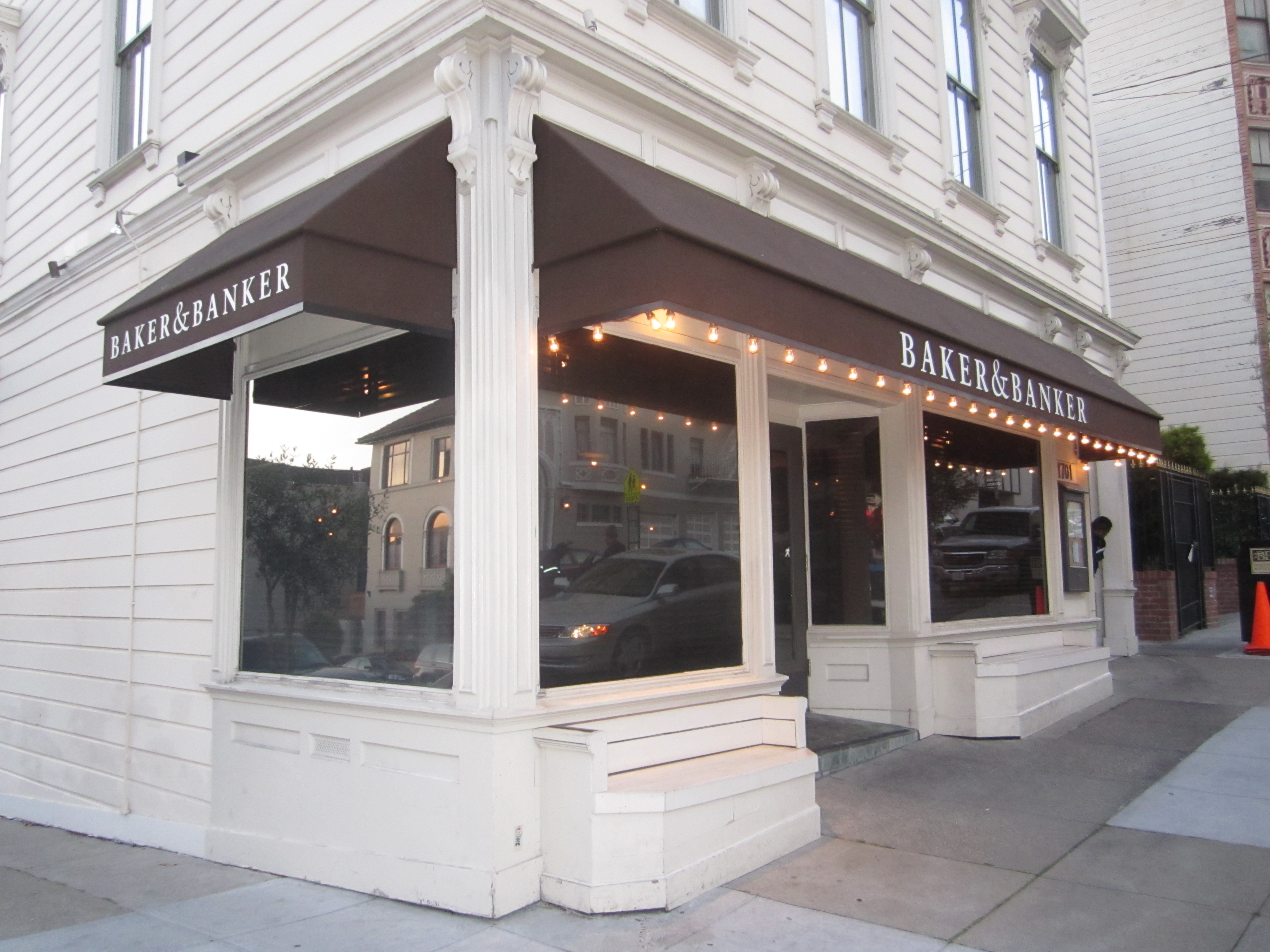
No, Baker & Banker is not a law firm. That’s the first impression every diner has upon learning of this charming 2 1/2 year old restaurant run by husband and wife tandem Jeff Banker and Lori Baker. He runs the finances and she runs the baking.

In reality, at least half of that is actually true, though it’s unknown who is in charge of the finances for the restaurant. It is known, however, that Banker is the man in charge of the savory items, deftly blending California purity with vibrant global accents for some of San Francisco’s definitive personal cooking. Baker is indeed the baker of the superb bread that comes to the table at the meal’s start, along with some of the city’s most notable desserts that, like the savory items, speak of regional homey simplicity with a global accent.

It’s a team that works in personal life and restaurant life, a fantastic duo that San Francisco truly appreciates, and shows it by filling all 50 seats of the bustling, cramped bistro nightly. The historic former apothecary building with caramel colored walls is a truly handsome setting, complete with chalkboards announcing special wines and beers offered that evening to create the cozy bistro setting so many restaurants strive for, yet seldom succeed at. The go to seats seem to be the curved leather booths in the front corners  next to Octavia Street or for couples and walk ins, the stools at the bar facing the kitchen at the rear end of the dining room. It feels as if you’re at a family’s home with the antique furniture and celebratory feel permeating throughout. Well, in a way, you are at a family’s home.Continue reading “Restaurants: Baker & Banker, San Francisco”

Cocktail of the Week: Beet & Co. from Windsor Court Cocktail Bar, New Orleans

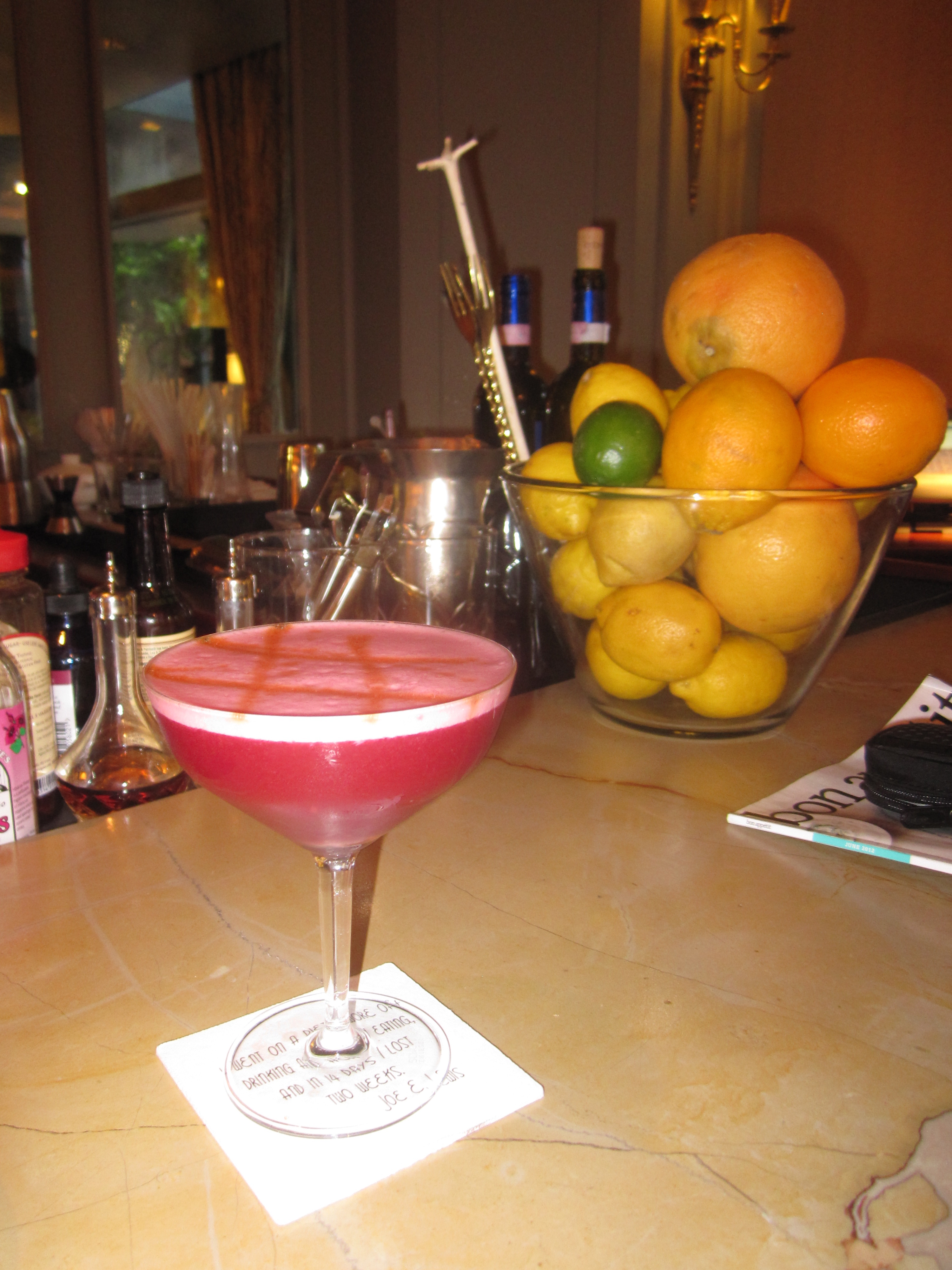
Windsor Court’s Beet & Co.

Beet juice tends to be relegated to the same 1970’s health fad corner as wheat germ and kale chips. It happens to be an excellent base for new riffs on classic cocktails, in addition to adding a spectacular purple hue to the usual clear or dark color scheme of cocktails. I have always gone on record as saying the absolute peak of my cocktail life came at the Jade Bar at Scottsdale, Arizona’s Sanctuary on Camelback Resort, where a Gimlet goes to the blissful absurd with beet juice and yuzu juice. If beet juice works in a Gimlet, it must prove worthy too in a pisco sour.

A pisco sour, best known as the national apertif of both Chile and Peru, is a truly perfect drink on its own. A small egg white provides the froth for pisco, lemon juice, and simple syrup. Shake them together, pour into a coupe or a martini glass, top it off with a few dots of Angostura bitters, and there you have a fantastic drink for all occasions. Unlike the martini and its dreaded offspring the choco-tini, the bikini-tini, the berry-tini, and such, pisco sours tend to be straight shots. There’s no reason to add fruit juice to something perfect.

Leave it to the daring, bold vision of Christine Jeanine Nielsen to shake up the pisco sour world. Nielsen to begin with has a daring, bold vision to create a small corner of craft cocktails in the otherwise regular luxury hotel lobby of the Windsor Court. The setting seems more appropriate for afternoon tea than The Lion Amongst Ladies with Damiana and sous-vide “2 hour” kumquat infused tequila. In a city that treasures its classic drinks from the Sazerac to the Vieux Carré, Cure and its new sibling Bellocq are the oasis for craft cocktails. Start adding Nielsen’s creations to that list. Unfortunately almost nobody is noticing yet, but that will certainly change. Old, classic hotels can still have young drinking legs.

Nielsen uses agave in place of simple syrup, providing a bit more of a tangy sweetness instead of a sugary focused one. The beet juice plays perfectly with the subtle taste of pisco, both subdued by the egg white mixed with them. A checker board of Angostura bitters drawn into the egg white froth is a proper cap for this artistic take on one of the world’s premier classic cocktails.

Why is the drink called Beet & Co.? That’s a good question, perhaps a reference to the famed New York bar Death & Co. or going back to the Beat Generation? Whatever it is, it’s hard to believe, but a Beet & Co. beats a traditional pisco sour.

Beer of the Week: Avery Brewing Co.’s 2011 Samael’s Oak-Aged Ale, Boulder, CO

At what point is a beer still a beer compared to a fortified wine? Avery’s Samael, in theory an oak aged English strong ale, is one of the strongest, most refined beers you will encounter. Stronger than any traditional wine, Samael’s is indeed akin to a Port wine. As Avery says, this is the best Port you will ever have. I won’t go that far having sampled some very fine Port wines. This won’t be tasting like a Sandeman Tawny or Graham’s Ruby, yet it maintains the same mellow structure with flavors of toffee mixed with gushing fruits that makes Port such a pleasing apertif or digestif.

Avery is best known for Colorado’s definitive IPA and its strong beer “Dictator” series with the likes of the Czar Imperial Stout and Maharaja Imperial IPA. However, having recently tasted a number of selections at the excellent tap room next to the brewery just outside downtown Boulder, Colorado, it’s the complex, barrel aged offerings where Avery truly hits its specialty stride. The taste avoids being a boozy, bourbon influenced one, though the oak from the barrel is very apparent. Hints of maple pop up as an aroma, never making it to the body. The body itself is more of a carbonated malt than the syrupy thickness of a Port. The taste and look remind you of Port, not the structure. At 15:31 % abv, you won’t be drinking this beer all day. That’s fine though, it’s a luscious beer worth sipping on before dinner or with dessert. Beer or Port or Port beer, Samael’s is worth savoring like a most elegant wine.

Wine of the Week: 2006 Baron de Ley Reserva Tempranillo, Rioja

Tempranillo is an often misunderstood grape. Usually banished like Pinot noir to being a lighter, meager varietal, a genuine Tempranillo can hold its own with a variety of meats from game to poultry to beef. A perfect example would be this bottle from Baron de Ley, one of the larger winemaking houses of Rioja. Started in 1985, Baron de Ley is a group of Spanish investors and winemakers who wanted to emulate the grand cru chateau style of winemaking that Bordeaux and Burgundy are known for. The grapes are aged longer in the barrels after remaining on the vines until the end of the harvest, accounting for the higher alcohol content and thicker tannins once poured into the glass.

Usually it’s a turn-off when you visit a winery’s website and see “investment portfolio” and “stockholder” information front and center. That’s not usually a promising sign for an intimate, promising wine. Luckily, the execution here is spotless, a good thing for those stockholders. Mendavia, a region of Rioja, is where the grapes come from, 100% estate grown by Baron de Ley. Baron de Ley does not filter the Reserva, allowing for sediment to stay in the bottle, producing a stronger berry preserves mouth feel at initial taste. Aged for 20 months in American oak, then remaining in the caves for an addition two years, the wines do have the elegant structure of a Bordeaux instead of a brash, wild Rioja that is often seen. Think of this as bocce ball compared to the usual bull fighting– more pensive, less flare.

Lovely caramel notes mix with some raspberry and blackberry for a harmonious tart-fruity roundness throughout the body. The color is a slightly lighter deep red than a Bordeaux, more like a ruby port’s hue than a tawny port’s.

The Reserva matched perfectly with the San Francisco restaurant Baker & Banker’s quail wrapped in speck, but also held its own with duck and lamb dishes. I can even see the Reserva on the table for the next summer barbeque or formal dinner. It’s an elegant wine that also knows how to let its hair down. Tempranillo can be the opera or the flamenco club.

Where To Drink in San Francisco for the U.S. Open

Continuing in the same theme from our guide to dining for this weekend’s U.S. Open at the Olympic Club in San Francisco, here are the 18 holes of beverages for (after) watching a round of golf.

Speakeasy Brewery

Hole 1: Speakeasy Brewery

Possibly creating the best beers currently in San Francisco’s rapidly emerging craft brew scene, you can sample the Prohibition Ale, Payback Porter, Big Daddy IPA, and much more at the brewery’s tap room, which really is the brewery itself. Being only open Friday and Saturday afternoons from 4-9 pm, and also near Candlestick Park, this is the perfect post round spot for a brew.

Hole 2: Sam Jordan’s

Not exactly part of the craft cocktail movement, but this essential, classic bar in Bayview is a city landmark, perfectly located like Speakeasy for a post round drink. Best of all, the barbeque is terrific. Go for an Old-Fashioned here.Continue reading “Where To Drink in San Francisco for the U.S. Open”

The 18 Places to Eat This Week for the U.S. Open

The 112th United States Open starts tomorrow at San Francisco’s Olympic Club, a prestigious private club and golf course that almost every San Franciscan has heard of, but very few know where it’s located, and even fewer have ever set foot on the property, your truly included. Far, far away from the tourist circuit, the Giants-Embarcadero area, North Beach, the Financial District, the Mission, Civic Center, and pretty much any well known destinations in the city, Olympic Club lies in the city’s southwest corner with the Zoo, San Francisco State, and Sunset District to the north and Daly City, that vibrant fog covered suburb, to the south. What is around the Olympic Club? The ocean is just across Skyline Boulevard on the western edge of the club and more golf can be played just north of the Olympic Club at the public Harding Park, along Lake Merced, which happens to be one of city’s premier destinations for jogging and walking.

Unlike if you’re going to a Giants game at AT&T Park, dining and drinking options are far from plentiful in and around the tournament. The USGA will be handling concessions, who I am sure outsources those concerns to the likes of Aramark or Sodexho instead of Thomas Keller. Many golfers at the Olympic Club grab the famed Bill Burgers between the 9th and 10th holes, a small shack serving burgers on hot dog buns. There will be no burgers served there during the tournament, sorry Tiger. Instead, you can get a “faux” Bill Burger from the concessions.

Food, drink, and golf are a terrific trio. Can you think of another sport where you can drink beers  and eat a hot dog while playing? That is, if you’re not David Wells or Mark Sanchez.

In honor of the 18 holes of golf, here are the 18 destinations to visit over the course of the tournament, for before and after watching golf, before and after if you and your fellow 30,000 golf fans have to park over at Candlestick Park and take the shuttle to the Club, and whether a tourist or local, some terrific choices somewhat near Olympic Club, and then a few that are simply the most exciting right now in quite possibly America’s most exciting dining city. A sequel to this will follow, with the 18 holes of bars. That, sounds like a game I once played at a University of Illinois fraternity.Continue reading “The 18 Places to Eat This Week for the U.S. Open”

Tuesday’s Project: Barbequed Ribs, Missouri-Style

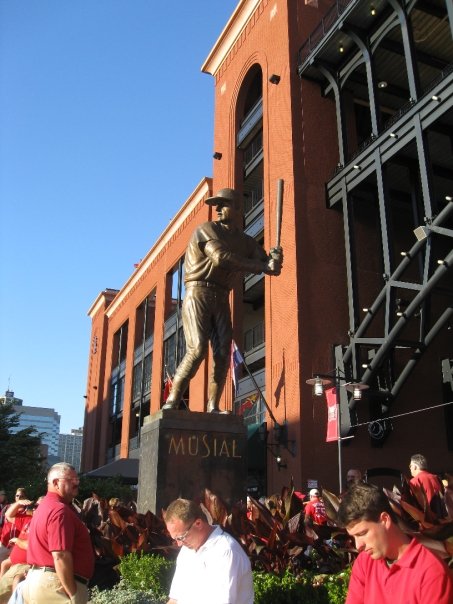
What Would Stan the Man Define as Missouri Barbeque?

Regional cooking variations debates are intense– stay away– was one of the first pieces of advice I received as a food intern at a San Francisco newspaper. Trying to say the merits of this pizza versus this pizza or this form of carnitas taco compared to the next will always evolve into a debate of what is authentic and what is attempting to be authentic, which in turns leads to a vague Sartre versus Camus philosophical debate along the lines of, “What is life?”

So for my family’s beloved baby back ribs recipe, we don’t call them Kansas City barbeque or St. Louis barbeque. Or Memphis or Texas. Or Santa Maria or North Carolina. Then again, it does have to be some style, right? The sauce is not tomato based nor is it strictly a dry rub or heavily vinegar based. Nor is this brisket slathered in a sweet sauce. Well, it’s not Texas, North Carolina, or Memphis then. How about Kansas City or Atlanta? These baby back ribs didn’t resemble the heavily sauced meats I sampled in the city years ago at Gates and Fiorella’s Jack Stack. There is sauce, just not a lot of it. Then I did a barbeque doubleheader in St. Louis, sampling the famed pig snout at C&K, along with superb ribs at the newly opened at the time, now nationally known Pappy’s Smokehouse, just west of Downtown.Continue reading “Tuesday’s Project: Barbequed Ribs, Missouri-Style”

Monday’s Neighborhood: Bellavita, Taipei, Taiwan

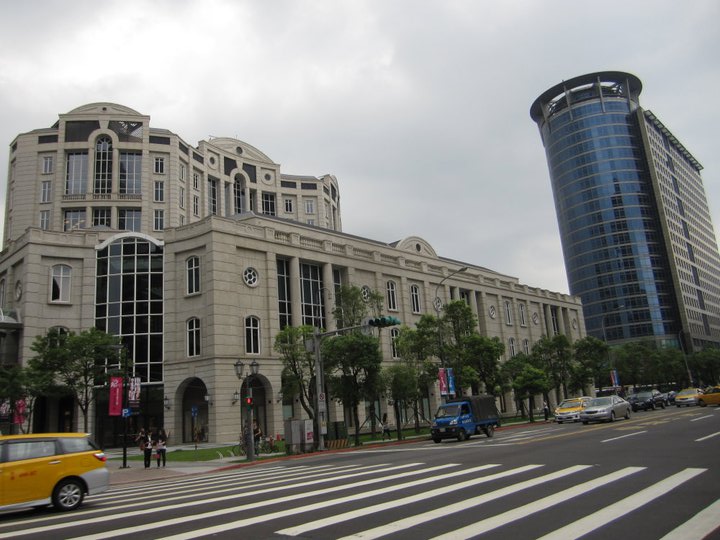
This time last year I was sipping a mai tai inside of a New York inspired cocktail bar inside of a Las Vegas influenced Italian palazzo shopping center in Taipei, Taiwan.

Indeed, that mash up of cultures envelops the senses inside the Bellavita Shopping Mall, which in theory is not a neighborhood in a civic government sense, but really is a distinct tiny community in its own right. It’s a community of Hermès, Tiffany’s, Jöel Robuchon, and Taipei’s Lamborghini dealer.

Taipei is a truly underrated city. From its extremely efficient and clean subway system to its distinct, diverse neighborhoods, and for our purposes, an enviable food culture from eating stinky tofu and “frog eggs” at night markets to the classic beef soup and multi-course, pastry heavy breakfasts that have now made their way towards Europe and the U.S. Then there is always boba tea and Din Tai Fung’s xiao long bao dumplings. The former is in theory Taiwanese, but that is always up for debate. The latter is a Shanghai originated specialty that acquired worldwide fame from a restaurant chain that perfected the dumpling art, where its original location is in Taipei.Continue reading “Monday’s Neighborhood: Bellavita, Taipei, Taiwan”